Last summer I participated in MotherReader's 48 Hour Book Challenge, which was an awesome experience (can't wait to do it again!). Though I didn't get to read as much as I'd hoped to, what I read was fantastic stuff, and probably my favorite title was Sheila O'Connor's Sparrow Road, her debut in children's literature. The book was not only beautifully written, it featured a host of interesting characters, the kind of people you just want to know more about.
So when I saw that O'Connor had a new title for children out this fall, I was, to say the least, pretty jazzed. Of course there's always that worry that the next book won't be as good, that it will feel like a repeat or fall flat in one sense or another. But that worry didn't prove out with O'Connor's latest title, Keeping Safe the Stars, a family story that's as tender as it is compelling.
The novel opens with thirteen-year-old Pride, the oldest of the three Star children, trying to decide just what she's going to do about the family's current situation. The kids -- Pride, her sister Nightingale and their brother Baby -- have had a hard road in life, losing their parents already and now living with their somewhat reclusive grandfather Old Finn on his remote patch of land. Old Finn is wonderful for the Stars, teaching them all sorts of things that most kids never get to know and always remaining sensitive to their uniqueness. (His reclusiveness comes from his criticism of the government, particularly President Nixon who at the time of the novel is on the verge of resigning.)But now Old Finn has been stricken with a brain infection, taken to the hospital in Duluth, and the three Stars are left alone on the land, with only the ancient Miss Addie for supervision -- though truthfully, Miss Addie needs more supervision herself.
Pride's got to keep the family going, she knows that. And most importantly, she's got to keep the Social Services people away. Otherwise she, Nightingale and Baby will end up with fosters, and there's no guarantee that those fosters will be the sorts of people Old Finn is, or that the Stars can stay together if they have to leave. Still, how's a young girl, barely thirteen, supposed to look after her siblings and a senior citizen, not to mention find the money to keep everyone fed, all while hiding Old Finn's absence from outsiders?
This novel reminded me of Cynthia Voigt's Homecoming, and Pride of Voigt's heroine Dicey Tillerman. Like Dicey, Pride is stubborn and driven, determined to keep her family together no matter the cost. And like Dicey, Pride results to any means necessary to provide for the Stars and protect them from the frightening graveness of their situation. But Pride is her own person, and the Stars wholly individual as well. Though the resolution to their situation could strain the realms of believability, in O'Connor's skilled hands it comes off as natural, inevitable. And though there are certain stereotypes reinforced here -- parent-like older sibling, smart but quirky middle sibling, reckless baby of the family -- the Stars never feel like cut-outs of some more well-worn cloth.
Though the historical setting may be a stretch for some, I think this would be a hit with readers who favor independent, resourceful narrators. Pride isn't perfect, and therein lies her charm; while she makes mistakes, and knows even as she does some things that she's gone off the past, ultimately she's motivated by her huge heart and love for her entire family. As she did in Sparrow Road, O'Connor has once again created a novel that's driven by careful plotting and intriguing characters, the sort you hope to return to, if only to see how they all turn out.
Keeping Safe the Stars by Sheila O'Connor, published by G.P. Putnam's Sons
Ages 9-12
Source: Library
Sample: "Mama used to say I came to earth a doer. Nightingale a dreamer. Baby came to earth a darer -- it's why he tried to fly and why he had twelve stitches in his chin. / Still, different as the Stars were, all of us were part of the same heart -- Mama's heart -- and even gone, her love kept us a family. No matter what, we hardly ever fought. I didn't want to fight with Nightingale now."
Recommended
Showing posts with label historical fiction. Show all posts
Friday, January 4, 2013
Saturday, June 23, 2012
Circus Circus
This one I blame on Olivia. That sassy pig is just so darn enticing, we couldn't help checking out Olivia Saves the Circus during a recent library visit. And while we loved that book, it raised a lot of questions from Sprout about just what a circus is anyway. As with so many other things in life, it's a lot easier to show about circuses than it is to tell, so suddenly we've found ourselves reading an elephant-sized pile of circus tales.
First up was Olivia Saves the Circus by Ian Falconer. In this entry, our porcine heroine takes her turn at telling her class about her vacation. Naturally her story is vastly entertaining, as she relates the tale of stepping in to save the circus when all the performers were sick (with ear infections). Think Olivia the clown, Olivia the trapeze artist, and of course Olivia the Tattooed Lady. In typical Falconer fashion, it's the story behind the story that the pictures truly reveal. A fun entry in the preschooler-friendly series!
To the Big Top by Jill Esbaum was a great way to really explain to Sprout what a circus is. Set in the early 1900s, the story follows Benny and Sam as they experience the circus that rolls into their small town. From helping to set up the tent and watching the circus parade, to walking through the midway and encountering one cheeky monkey, this book is a real romp. The whiff of nostalgia is carried throughout David Gordon's illustrations, which really bring an old-style show to vivid life. Though a bit long (better for older ones than toddlers), this one hearkens back to yesteryear and is a great snapshot of history.
A better circus-themed read for the younger set is author/illustrator Johanna Wright's The Secret Circus. This is a gentle tale, set in Paris, of a circus so secret that only the mice know about it. Only the mice know when to go, how to find it, or what they'll see there. Each spread features charming depictions of mice families getting ready to go, flying to the circus in a hot air balloon, and taking their place among the spectators. The soft color palette and whimsical illustrations make this a good choice for slowing this down just before bedtime.
For a tongue-in-cheek selection, try Little Rabbit and the Meanest Mother on Earth by sisters Kate and M. Sarah Klise. Little Rabbit's mother insists he must tidy up his playroom before he can go to the circus. Well, that's just impossible, and Little Rabbit has a bit of a meltdown. And then he gets an ingenious notion - he'll join the circus, that's what, and he'll sell tickets so everyone can see the Meanest Mother on Earth. That'll show Mother! Soon Little Rabbit's Mother seems not only mean, but downright ferocious. But what will happen when the crowds meet the real Mother? The moral of the story is pretty clear, but revealed with the lightest of touches. And the pictures are as cute as can be (Sprout likes the Dalmatian ringmaster best of all).
If storytime feels in a rut, maybe it's time everyone ran off to the circus. . . we've certainly enjoyed the show!
Sunday, April 15, 2012
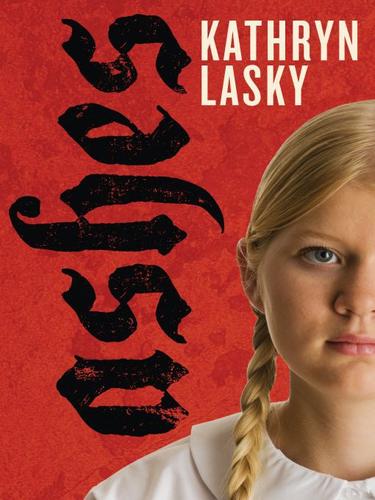
YA Review - Ashes by Kathryn Lasky
Some time periods in history are so widely written about that it hardly seems as if we need more books about it. World War II is arguably one of these. It's not that it isn't worth reading titles set during this timeframe, it's just that with so many quality options already on the shelves, are there still other viewpoints we haven't examined?
In Ashes, Kathryn Lasky manages to give us a different perspective - that of Gaby Schramm, an upper class German girl who gets an inside look at the formation of Hitler's Third Reich. Gaby's parents are close enough to the social elite that they know many powerful people in Germany's upper echelon. Professor Schramm is a colleague of Albert Einstein, and the two families vacation together during summers in Caputh. The Schramms watch with growing horror as Einstein and other prominent scientists are singled out for their "Jewish physics", as friends are banned from social events due to their ethnicity, and as those who make the wrong comment in a public setting suddenly disappear.
Gaby herself despises Hitler and all his government stands for; and yet, she finds herself going along with the required "Heil Hitler" salute when it becomes part of her school day. Though she refuses to join the Hitler Youth, it is not until one of the Reich's new policies touches close to home that Gaby finds the courage to really define her opposition, and to turn with her parents toward another life.
I picked Ashes up looking for something like The Book Thief; while I found Zusak's book more compelling, Ashes is still a strongly written title with a unique take on the events of Nazi Germany. As the heat gradually turns up around the Schramm family, Lasky shows us how the political events combine with Gaby's own internal struggles to give her an increasing awareness of the world at large. Forced to confront the effect that politics has on her own household, Gaby grows up very quickly - maybe too quickly, as she often has insights that seem beyond her own years. And yet, in times such as these, doesn't maturity come all too suddenly?
Though some libraries shelve this in the children's section, there are themes here that seem more suited to teens, particularly a plotline revolving around Gaby's sister Ulla and her boyfriend Karl. The overall message, too, is one that will speak to young adults in a more immediate way -- that of reconciling the world you've grown up with alongside that you've come to know, which in Gaby's case is one that conflicts in nearly every aspect with her pampered childhood. Lasky ties in connections to actual historical figures, weaving them into her cast of characters so seamlessly that the events of Nazi Germany come alive as we read.
Ashes is, above all, a subtle and unforgettable piece of historical fiction, and a worthy contribution to the canon of World War II literature.
Ashes by Kathryn Lasky, published by Viking
Ages 12 up
Source: Library
Sample: "I thought of that swirl of sugar on the kitchen floor from years before. How could Hitler cause so many problems? I put down the binoculars. The scrap of moon had slipped away, making the dark even darker and the stars even brighter. They scorched the blackness with their fire. Ninety-two elements to bake a universe and one madman to blow it up?"
Recommended
Labels:
Germany,
girls,
growing up,
historical fiction,
racism,
secrets,
YA
Friday, January 6, 2012
Novel in Verse - Inside Out and Back Again by Thanhha Lai
Rarely am I at a loss to describe a book, or even to write a review of it.
Rarely does an author so take my breath away that upon finishing her work, I am immediately moved to reread it.
Rarely does a book like Thanhha Lai's come along.
If you haven't read a novel-in-verse, you may be put off by the format. I was, for a very long time, until reading Karen Hesse's Out of the Dust. In a word, that book was stunning - it captures the experience of living in Dust Bowl Oklahoma in a voice that is spare and beautiful. Since then I've read a few others, but none quite comes close to Lai's Inside Out and Back Again.
Lai's debut novel (winner of the National Book Award) is a story based on her own experience, that of ten-year-old Ha, who with her family escapes Saigon in the wake of the Vietnam War. Ha's life is marked by loss - her father went missing in action before Ha's first birthday, her mother has drawn gradually away with the stress of supporting the whole family. And now the war - Ha's best friend flees with her family, and the loss continues. At last it becomes clear that Ha's family also must go, but with no clear idea exactly where they will end up. The escape, the boat journey, the terror of floating aimlessly with no rescue in sight - this is all part of Ha's story, as is her arrival in a strange land called Alabama, where not even a taste of her favorite fruit can bring back the feeling of her homeland.
Lai tells Ha's story with a fierce tenderness that speaks to the personal nature of the tale. Her decision to write the novel in verse is, in my estimation, a brilliant one, as it allows for the kind of stark imagery that brings the entire experience to vivid life. Bursts of humor break the tension, but never do we forget that this is a journey not only of physicality, but also of identity and of learning to find one's place in a strange land.
Like Lai's prose, Ha herself instantly captures you. She's sneakily brilliant: on the first morning of the new year, Ha tells us, male feet should touch the floor first, for luck -- but Ha wants to be the first, so she creeps her toe out of the covers to tap the ground. She's determined: her strength shines through every line, every thought, every vignette. Though the world she knew gradually slips away from her, Ha clings to her faith in herself and her family. Never does her beautiful, bright determination waver, never does her spirit become worn away.
I read this in one quick burst -- I couldn't help it -- but then went back and read shorter portions, savoring the language, the imagery, the sense of place and time and personality. This is a gorgeously written portrait of a girl whose experience echoes over and over in refugees the world over. Absolutely compelling - one of my new favorites.
Inside Out and Back Again by Thanhha Lai, published by HarperCollins
Ages 9 up
Source: Library
Sample: "Water, water, water / everywhere / making me think / land is just something / I once knew / like / napping on a hammock / bathing without salt / watching Mother write / laughing for no reason / kicking up powdery dirt / and / wearing clean nightclothes / smelling of the sun."
Highly recommended
Bonus: Thanhha Lai's interview with Publisher's Weekly
Friday, December 9, 2011
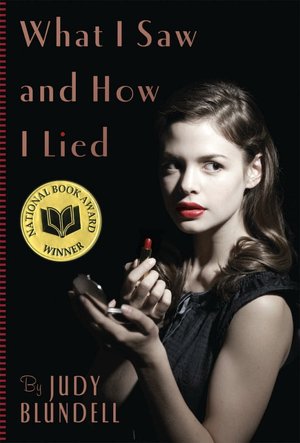
Audio Review - Strings Attached by Judy Blundell
Atmosphere -- as a character in one of her books might say, Judy Blundell's got it in spades. Her books are like a step back in time, literally. You are so transported to the place and time she's writing about that it will likely be a shock for you to look up from the book and realize you're not in a smoky 1940's nightclub. If you want to be totally swept away from your life for a bit, Judy Blundell can do that for you.
I've listened to both of Blundell's books on CD now, and both are simply amazing. What I Saw and How I Lied won the National Book Award, and it's easy to see why -- though I didn't review that one because honestly? I wasn't sure I could say much other than "read it, read it, read it now". It's that good.
And Strings Attached is a very, very close second. It's 1950, the war years are over, and Kit Corrigan has left her hometown of Providence, Rhode Island with no looking back. Kit's going to make it on Broadway, though when we meet her, she's dancing in the chorus of "That Girl from Scranton" and not making much of anything doing it. But then she runs into her ex-boyfriend Billy's father, who makes her an extraordinary offer. Nate Benedict is connected, and he's willing to use those connections to help Kit open some doors. Almost before she knows it, Kit's installed in a swank new apartment and working as one of the "Lido Dolls" at the most famous nightclub in New York. But the glamorous life comes at a price, as Kit quickly discovers -- and suddenly Kit's realizing that behind the velvet curtains is a world she's not sure she's ready for.
Oh, but this is good, historical fiction at its very best. In fact, I'm hesitant to even use the term "historical" because it might scare some readers away. And even though Kit's life and her struggles are very much couched in the issues and mores of the day, these are familiar themes even today. Kit's the kind of person who jumps in first and thinks it out later, and as a result she soon finds herself down a road she never intended to follow. Blundell is unsparing in her depiction of Kit, and of the other characters -- though you may at times want to scream at them, they are always true to their own motives and their own perceptions of the world as they know it. This is what makes for great fiction, and for the kind of story that lingers in readers' minds well after the story's end.
I loved having the audio version of this -- Emma Galvin's voice captures Kit's youth as well as a bit of world-weariness that comes from having lived life absent of softness. The other characters are shaded just as well -- Billy's edgy distrustfulness, Nate's smooth veneer, Delia's commanding righteousness. We are bound up with these characters for the entire course of the narrative, and soon we, like Kit, can hardly tell what's real and what's just what we want to believe.
Blundell's definitely not for the younger set (though not graphic, these are novels with teens in adult situations) but she's got a whip-crack sense of timing and the environment couldn't be richer. Be forewarned though -- once you crack the spine, you're not likely to put it down until you turn the last page.
Strings Attached by Judy Blundell (audio narrated by Emma Galvin), published by Scholastic
Ages 12 and up
Source: Library
Sample quote: "Nate hung up with a soft click. No chance for me to say no. It was like he knew whatever I'd say would be a waste of his time. He knew I wouldn't turn this down. He knew I'd be crazy to say no. I didn't like him knowing all that. I didn't like how staying here suddenly made me available to him whenever he felt like calling. I hadn't counted on that."
Highly recommended
I've listened to both of Blundell's books on CD now, and both are simply amazing. What I Saw and How I Lied won the National Book Award, and it's easy to see why -- though I didn't review that one because honestly? I wasn't sure I could say much other than "read it, read it, read it now". It's that good.
And Strings Attached is a very, very close second. It's 1950, the war years are over, and Kit Corrigan has left her hometown of Providence, Rhode Island with no looking back. Kit's going to make it on Broadway, though when we meet her, she's dancing in the chorus of "That Girl from Scranton" and not making much of anything doing it. But then she runs into her ex-boyfriend Billy's father, who makes her an extraordinary offer. Nate Benedict is connected, and he's willing to use those connections to help Kit open some doors. Almost before she knows it, Kit's installed in a swank new apartment and working as one of the "Lido Dolls" at the most famous nightclub in New York. But the glamorous life comes at a price, as Kit quickly discovers -- and suddenly Kit's realizing that behind the velvet curtains is a world she's not sure she's ready for.
Oh, but this is good, historical fiction at its very best. In fact, I'm hesitant to even use the term "historical" because it might scare some readers away. And even though Kit's life and her struggles are very much couched in the issues and mores of the day, these are familiar themes even today. Kit's the kind of person who jumps in first and thinks it out later, and as a result she soon finds herself down a road she never intended to follow. Blundell is unsparing in her depiction of Kit, and of the other characters -- though you may at times want to scream at them, they are always true to their own motives and their own perceptions of the world as they know it. This is what makes for great fiction, and for the kind of story that lingers in readers' minds well after the story's end.
I loved having the audio version of this -- Emma Galvin's voice captures Kit's youth as well as a bit of world-weariness that comes from having lived life absent of softness. The other characters are shaded just as well -- Billy's edgy distrustfulness, Nate's smooth veneer, Delia's commanding righteousness. We are bound up with these characters for the entire course of the narrative, and soon we, like Kit, can hardly tell what's real and what's just what we want to believe.Blundell's definitely not for the younger set (though not graphic, these are novels with teens in adult situations) but she's got a whip-crack sense of timing and the environment couldn't be richer. Be forewarned though -- once you crack the spine, you're not likely to put it down until you turn the last page.
Strings Attached by Judy Blundell (audio narrated by Emma Galvin), published by Scholastic
Ages 12 and up
Source: Library
Sample quote: "Nate hung up with a soft click. No chance for me to say no. It was like he knew whatever I'd say would be a waste of his time. He knew I wouldn't turn this down. He knew I'd be crazy to say no. I didn't like him knowing all that. I didn't like how staying here suddenly made me available to him whenever he felt like calling. I hadn't counted on that."
Highly recommended
Monday, November 28, 2011
Chapter Book Review - Sylvia & Aki by Winifred Conkling
Winifred Conkling's Sylvia and Aki is a deceptively slim little book, the kind kids are drawn to for book reports or school projects because it's so skinny. And yet, for all its brevity, Sylvia and Aki packs a punch.
The story is a fictionalized account of the lives of Sylvia Mendez and Aki Munemitsu, opening in 1941. Aki's family has been evacuated from their farm, sent to a Japanese internment camp in the furor that resulted from the bombing of Pearl Harbor. Aki's father is taken away first, with no notice -- she is terrified that she will never see him again, that their family will always be separated. Because of the restrictions about what the family could take with them, Aki has had to leave some of her most precious things behind, including her favorite doll, which she tucks onto the shelf in her closet, hoping she'll be back to reclaim her.
Each family struggles. Each girl feels lost, alone, uncertain. But as time passes the girls come into contact with one another, and a friendship slowly blossoms, borne of shared hardship and isolation. Life for the girls is not easy, but knowing that there is someone else, someone like them who feels on the outside of things, makes it all just a little easier to bear.
Conkling weaves the girls' stories together skillfully, showing how both Sylvia and Aki were outsiders because of something they had no control over, the color of their skin. Aki's time in the camp is particularly poignant, as we feel with her the pain of loss and the fear that her family will never be whole again. Like Aki, Sylvia is made to feel foreign, an outsider, as school district officials assume she is unclean or tell her to go back to Mexico (with the irony being that she is American). Conkling depicts the quiet heroism mirrored in each girls' individual heartbreak. Because the girls experience a similar day-to-day reality, as victims of prejudice and open racism, when they find friendship in one another, it is all the more sweet.
One of the readings in my multicultural kidlit class last week pointed out that children's books with a diverse cast almost always include white characters in the mix. This hadn't occurred to me, but flipping through some of Sprout's books I can see it's true. Sylvia and Aki is that rare thing, a book that examines racism from the inside without casting a white person in the role of savior. For these girls, breaking down barriers just meant living the lives they dreamed of. It's hard to think of a more inspiring tale, no matter what your skin color.
Sylvia and Aki by Winifred Conkling, published by Tricycle Press
Ages 8-12
Source: Library
Sample quote: "Then Aki said good-bye to the nurse, picked up her suitcase, and took her mother's hand. She missed her father. She missed her home. She missed the life she used to have. But when she felt her mother's hand in hers, she knew that she was ready to face Poston."
Recommended
The story is a fictionalized account of the lives of Sylvia Mendez and Aki Munemitsu, opening in 1941. Aki's family has been evacuated from their farm, sent to a Japanese internment camp in the furor that resulted from the bombing of Pearl Harbor. Aki's father is taken away first, with no notice -- she is terrified that she will never see him again, that their family will always be separated. Because of the restrictions about what the family could take with them, Aki has had to leave some of her most precious things behind, including her favorite doll, which she tucks onto the shelf in her closet, hoping she'll be back to reclaim her.
Sylvia finds Aki's doll, on a very bad day when she is in need of comfort. Sylvia and her family are renting the farm from the Munemitsus, and Sylvia's father is the boss, something the family is very proud of. But the day Sylvia's aunt takes the children to enroll in the closest school, they discover that Mexicans must attend the migrant school. Everything about the Hoover School is second-best, from the rundown buildings to the battered supplies. And Sylvia's father is determined to get his daughter into the Westminster School, which so far is white students only.
Conkling weaves the girls' stories together skillfully, showing how both Sylvia and Aki were outsiders because of something they had no control over, the color of their skin. Aki's time in the camp is particularly poignant, as we feel with her the pain of loss and the fear that her family will never be whole again. Like Aki, Sylvia is made to feel foreign, an outsider, as school district officials assume she is unclean or tell her to go back to Mexico (with the irony being that she is American). Conkling depicts the quiet heroism mirrored in each girls' individual heartbreak. Because the girls experience a similar day-to-day reality, as victims of prejudice and open racism, when they find friendship in one another, it is all the more sweet.
One of the readings in my multicultural kidlit class last week pointed out that children's books with a diverse cast almost always include white characters in the mix. This hadn't occurred to me, but flipping through some of Sprout's books I can see it's true. Sylvia and Aki is that rare thing, a book that examines racism from the inside without casting a white person in the role of savior. For these girls, breaking down barriers just meant living the lives they dreamed of. It's hard to think of a more inspiring tale, no matter what your skin color.
Sylvia and Aki by Winifred Conkling, published by Tricycle Press
Ages 8-12
Source: Library
Sample quote: "Then Aki said good-bye to the nurse, picked up her suitcase, and took her mother's hand. She missed her father. She missed her home. She missed the life she used to have. But when she felt her mother's hand in hers, she knew that she was ready to face Poston."
Recommended
Friday, September 16, 2011
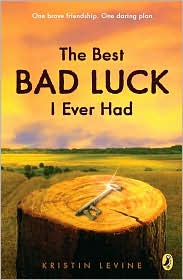
Chapter Book Review - The Best Bad Luck I Ever Had by Kristin Levine
Historical fiction is somewhat of a mixed bag. Successful historicals allow you to inhabit an alternate reality, just as you would in a fantasy novel, so that the reader comes away with knowledge that you would get if you had lived it. Less inviting are novels that are little more than recitations of fact, or those who overlay modern values and feelings into historical settings. Much better are books where it's apparent that a novelist has done his or her homework, and the details of daily life are woven seamlessly into the narrative.
In The Best Bad Luck I Ever Had, author Kristin Levine builds on the life of her grandfather to create a compelling and engrossing novel for middle graders. It's 1917 and life in Moundville, Alabama has a predictable rhythm for twelve-year-old Dit Sims. When a new family moves into town, Dit's hoping for a boy his own age, and he's too busy being mad that the postmaster has a daughter to care about the fact that the Walkers are Black. Emma seems just like nobody Dit could ever possibly be friends with, and he's only nice to her because his mama says he has to be. Spending time with Emma starts Dit thinking, though, and he realizes that not everything in Moundville is exactly the same for everyone. Before long Dit and Emma are pulled into events that are way beyond their control, where life and death literally hang in the balance.
What Levine does in this book is very subtle, slowly revealing the actual themes of her novel to the reader at the same pace that the conflicts arise for Dit. She introduces Moundville as a town much like any other. It is only once the characters begin to examine their own town in closer detail that the reader begins to see the prejudice and racism that bubble just beneath the surface. Dit has grown up here, he knows the people as well as he knows the heft of his slingshot or just how to catch the fattest perch. But seeing things through Emma's eyes, Dit is troubled by the inequality that exists there for people of color like Doc Haley and his son Elbert. Like Dit, readers may begin to look around and wonder what life is really like for people who might be on the outside of society, whether that is due to skin color, religion, income, ability or other factors.
The other thing that impresses me about Levine's debut is the way she deftly threads historical detail into the plot. Kids aren't immediately hit with the idea that this is a historical -- though you know it, by virtue of elements like the excitement of an arriving train, or Dit's mama boiling wash in the front yard -- you're never hammered over the head by the foreignness of these elements. This is the type of book that works well for kids who think they don't like history. Because Levine's story is so character-driven and emotionally charged, readers are pulled along with the plot without stopping to think about time and place.
The Best Bad Luck I Ever Had raises thought-provoking questions about acceptance and equality, about those who are part of the inner circle and those who are forever kept on the outside. This is a finely nuanced novel that raises the level of tension almost imperceptibly; I blazed through this compelling novel in one sitting, as captivated by the story as I was by the characters who set events in motion. Can't wait to see what Levine writes next!
The Best Bad Luck I Ever Had by Kristin Levine, published by G. P. Putnam's Sons
Ages 9-13
Source: Library
Sample quote: "Didn't see much of Emma for a while after that. She'd been okay on the fishing trip, and maybe we'd even had a little fun, but I still didn't want to be her friend. What'd we have in common? I loved the outdoors; she liked to sit on the porch all day. But my mama had a rule -- we didn't have to like anyone, but we had to be nice to everyone. That's exactly the kind of rule grown-ups make up, ain't it?"
Recommended
In The Best Bad Luck I Ever Had, author Kristin Levine builds on the life of her grandfather to create a compelling and engrossing novel for middle graders. It's 1917 and life in Moundville, Alabama has a predictable rhythm for twelve-year-old Dit Sims. When a new family moves into town, Dit's hoping for a boy his own age, and he's too busy being mad that the postmaster has a daughter to care about the fact that the Walkers are Black. Emma seems just like nobody Dit could ever possibly be friends with, and he's only nice to her because his mama says he has to be. Spending time with Emma starts Dit thinking, though, and he realizes that not everything in Moundville is exactly the same for everyone. Before long Dit and Emma are pulled into events that are way beyond their control, where life and death literally hang in the balance.
The other thing that impresses me about Levine's debut is the way she deftly threads historical detail into the plot. Kids aren't immediately hit with the idea that this is a historical -- though you know it, by virtue of elements like the excitement of an arriving train, or Dit's mama boiling wash in the front yard -- you're never hammered over the head by the foreignness of these elements. This is the type of book that works well for kids who think they don't like history. Because Levine's story is so character-driven and emotionally charged, readers are pulled along with the plot without stopping to think about time and place.
The Best Bad Luck I Ever Had raises thought-provoking questions about acceptance and equality, about those who are part of the inner circle and those who are forever kept on the outside. This is a finely nuanced novel that raises the level of tension almost imperceptibly; I blazed through this compelling novel in one sitting, as captivated by the story as I was by the characters who set events in motion. Can't wait to see what Levine writes next!
The Best Bad Luck I Ever Had by Kristin Levine, published by G. P. Putnam's Sons
Ages 9-13
Source: Library
Sample quote: "Didn't see much of Emma for a while after that. She'd been okay on the fishing trip, and maybe we'd even had a little fun, but I still didn't want to be her friend. What'd we have in common? I loved the outdoors; she liked to sit on the porch all day. But my mama had a rule -- we didn't have to like anyone, but we had to be nice to everyone. That's exactly the kind of rule grown-ups make up, ain't it?"
Recommended
Friday, July 22, 2011
Audio Review - One Crazy Summer by Rita Williams-Garcia
If you're looking for quality reading choices for yourself or your kiddo, checking out awards lists is a great place to start. Last semester I took a children's lit class and one of the assignments was reading one title from each of ten different awards lists. For those of you who think it begins and ends with Caldecott and Newbery, guess again. There are a TON of fantastic awards programs in kidlit, recognizing everything from novels to nonfiction to picture books and lots more in between. (A great comprehensive source for kidlit awards is the list maintained by the Cooperative Children's Book Center, found here.)
As part of that assignment I chose to listen to the audio version of One Crazy Summer by Rita Williams-Garcia. Williams-Garcia is herself the recipient of numerous awards, including the PEN/Norma Klein Award, and One Crazy Summer has been honored multiple times: Newbery Honor book, Coretta Scott King Winner, Scott O'Dell Award Winner, ALA Notable Recording for 2010. But as we all know, award-winning books can be critically acclaimed and still fall curiously flat in the real world.
Luckily, that's not the case for One Crazy Summer. This is a novel that delivers.
Premise: It's the summer of 1968. Delphine and her sisters Vonetta and Fern are on their way to Oakland, California to spend the summer with their mother Cecile, who ran out on the girls when Fern was just a baby. At eleven, Delphine remembers enough of their mother to be afraid about what they are in for. And when they first head home with Cecile, nothing is as she thought it would be. Now transformed as the poet Nzila, Cecile seems more interested in social change and protests than in reacquanting herself with her girls. And the Black Panther Day Camp where she parks her daughters is not at all what Delphine had in mind. Revolution? No thanks. As Vonetta puts it, "We didn't come for the revolution. We came for breakfast."
And that in a nutshell embodies all there is to love about Summer. Williams-Garcia manages to paint a story about very personal relationships on the grand stage of civil rights, social protest and upheaval that characterized Oakland in the 1960's. Even as we watch Delphine, Vonetta and little Fern try to navigate this strange new world, and their stranger mother, we see the shifting racial climate and the tensions that were produced. The girls come from a world where assimilation is the goal, and their grandmother cautions against making themselves a "grand Negro spectacle". Oakland, though, is all about standing up and speaking out, fighting for your rights and being proud of yourself. And the struggle being played out on the larger scale is personified in the girls' own struggle to reconcile the two ideologies within themselves.
So, big social themes, and lots of great historical detail. But none of that would be worth a bit without the characters. Oh, what great characters Williams-Garcia brings us! From distant and often frightening Cecile, to worrier Delphine, to look-at-me showoff Vonetta, and obstinate little Fern, these are characters you just can't forget. While Delphine slowly awakens to the prejudice and injustice that surrounds her, so too will readers. More importantly, kids will recognize bits of themselves and their friends in these children, who are just about as real as kids can get. As they see the girls living in the balance, making new friends and considering new ideas, readers will be moved to learn more about this tumultuous time -- and isn't that the mark of a great historical novel?
I'd be remiss if I didn't mention the fantastic narration of the audio by Sisi Aisha Johnson. Listen, this woman is a masterful reader, and she will hook you from the first line. Johnson becomes each of the girls in turn, bringing out layers of their personalities that I might otherwise have missed. Even the most minor characters, like Crazy Kelvin and Mean Lady Ming, have their own distinct turn of phrase, and Johnson doesn't miss a trick. Kids who might be on the fence about reading a historical could easily be persuaded to give this a try on audio, and I wouldn't be surprised if they are as sad to see it end as I was.
Bottom line: An excellent historical novel with characters as fresh as if they lived today. And an audio worth a second (or third!) listen to boot.
One Crazy Summer by Rita Williams-Garcia, published by HarperCollins (audio read by Sisi Aisha Johnson)
Coretta Scott King Winner, 2010
Ages 9 up
Source: Library
Sample quote: "It wasn't at all the way the television showed militants -- that's what they called the Black Panthers. Militants, who from the newspapers were angry fist wavers with their mouths wide-open and their rifles ready for shooting. They never showed anyone like Sister Mukumbu or Sister Pat, passing out toast and teaching in classrooms."
Highly recommended
Sunday, June 26, 2011
YA Review - Okay for Now by Gary Schmidt
You know when you read a novel, and almost from the first chapter you know it's going to be one of those that stays with you, the kind you recommend to everyone and end up rereading just for the pleasure of it?
Yep, I love that too.
Confession time: I have not read Gary Schmidt's Newbery Honor book The Wednesday Wars, despite the high acclaim it has received AND despite the fact that I actually own a copy, somewhere. And so I'm not sure why exactly I moved Schmidt's new novel, Okay for Now, up to the top of my TBR list, so much so that I brought it along on vacation. But many thanks to the mysterious forces at work that led me to do so, because wow, is this an incredible book.
For Doug Swieteck, moving to a new town just makes his crummy life that much harder. There's his brother Christopher, he of the "twisted criminal mind" who torments Doug at every opportunity. There's school, where Doug will do almost anything to hide his difficulty reading. And there's his father, whose abusive nature gets worse now that he has a regular drinking buddy. It all adds up to be just about more than Doug can bear.
But then beauty enters Doug's life, in the form of an original John James Audubon book at the Marysville Public Library. Doug is captivated by the prints and Audubon's technique, and compelled to learn all of what it takes to capture the images as vividly as Audubon does. And wouldn't you know it, those birds begin to crack the hard shell Doug has formed around himself, and before long there are new friends (a girl!), books to read, relationships with adults, and all kinds of good things taking the place of beatings and desperateness.
Okay for Now pulls together pieces -- Audubon prints, domestic abuse, Joe Pepitone's jacket, a Broadway play, learning disabilities -- that in any other author's hands would be little more than a disconnected jumble. But Schmidt knows what he's doing here, and he makes it all flow together like only the best storytellers can. It works, in that indefinable magic way that really fine novels do, so the reader is never aware of the machinations behind the scenes.
Yep, I love that too.
Confession time: I have not read Gary Schmidt's Newbery Honor book The Wednesday Wars, despite the high acclaim it has received AND despite the fact that I actually own a copy, somewhere. And so I'm not sure why exactly I moved Schmidt's new novel, Okay for Now, up to the top of my TBR list, so much so that I brought it along on vacation. But many thanks to the mysterious forces at work that led me to do so, because wow, is this an incredible book.
For Doug Swieteck, moving to a new town just makes his crummy life that much harder. There's his brother Christopher, he of the "twisted criminal mind" who torments Doug at every opportunity. There's school, where Doug will do almost anything to hide his difficulty reading. And there's his father, whose abusive nature gets worse now that he has a regular drinking buddy. It all adds up to be just about more than Doug can bear.
It's not all rosy and it's not all easy. There are still "wrong days", the kind of day when Doug just doesn't try to approach his father for anything. And there are still things that Doug makes a mess of, and that make a mess of him. But the difference is that there's hope there now, where it wasn't before, and maybe things will start to turn around, just a little, because suddenly Doug knows he has a lot of people on his side.
Okay for Now pulls together pieces -- Audubon prints, domestic abuse, Joe Pepitone's jacket, a Broadway play, learning disabilities -- that in any other author's hands would be little more than a disconnected jumble. But Schmidt knows what he's doing here, and he makes it all flow together like only the best storytellers can. It works, in that indefinable magic way that really fine novels do, so the reader is never aware of the machinations behind the scenes.
Gary Schmidt is more than just a great writer, he's a great writer for kids. There is a huge difference after all, because adults will give even the most unintelligible mess of a novel a chance on the basis of critical acclaim or a friend's recommendation. But kids -- kids are different. Grab them right away, make them care and then keep on making them care, or they are on to something else. Schmidt knows how to make kids see beyond the surface. We know from the start that there's a lot Doug isn't telling us, a great deal of pain he is hiding behind his tough exterior. And I think that is something many boys will relate to, the societal pressure to hide their real feelings under a veneer of "I don't care" bravado.
I'll be extremely surprised if Okay for Now doesn't make the Newbery list this year. It's certainly going to be on my personal short list. What I do know is this is one I will save for Sprout when he's old enough, anticipating his objections with a note that says "I know. Just read it."
Okay for Now by Gary Schmidt, Clarion Books
Ages 10 up
Sample quote: "This bird was falling and there wasn't a single thing in the world that cared at all. It was the most terrifying picture I had ever seen. The most beautiful."
Highly recommended
Highly recommended
Subscribe to:
Posts (Atom)