Showing posts with label debut. Show all posts

Monday, August 4, 2014

Chapter Book Review - The Meaning of Maggie by Megan Jean Sovern

How do you find out about great books? That's a question people often ask me, and it's kind of weird for me to answer, really, because so much of my life is steeped in bookish-ness. I keep close tabs on the publishing industry for work, but also because I'm just plain nerdy, and I can't help myself. Along the way I've picked up a number of fantastic blogs and websites that I follow (someday I will write a detailed post of all of them, honest), as well as trade publications. And when I start to see the same title cropping up in all my usual haunts, well then, I feel sure it's a sign from above pointing me toward that particular book.

'Cause that's how fate works, right?


Today's title is one that I first heard about through the goddess of all kidlit bloggers, Betsy Bird, when her blog Fuse #8 premiered the trailer for The Meaning of Maggie by Megan Jean Sovern. I mean, that book trailer -- I defy anyone to watch that sucker and *not* want to start reading the book immediately. So I waited somewhat impatiently for the book to arrive at my library and then downed it in one sitting. And subsequently could not stop thinking about the book, it's that good. Definitely a sleeper hit of the year for me.

It's the voice of Maggie, the main character, that really stuck with me. Maggie's entirely original, unlike anyone else you're liable to run across in chapter books. She's self-assured and knows what she wants -- to be the president of the US, a Wall Street tycoon (starting with her first share of Coca-Cola stock) and also to fix her dad. Because the thing is, Maggie's dad's legs started to fall asleep a while back, and now they're all the way asleep. And some other stuff is happening too, like Maggie's mom getting a job at a hotel, Maggie's sort-of long-lost grandmother coming to visit, and Maggie's sister kissing a boy on the couch. Oh, and that guy Clyde who Maggie can't get out of her head. Wow, is middle school a crazy time -- you can understand why a girl gets upset when her Halloween candy stash runs low.

The Meaning of Maggie is Sovern's debut, but you can tell by the end of the first chapter that this author has some serious chops as far as novel-writing goes. She keeps the pace moving along, and strikes a nice balance between emotion and hilarity. Maggie's family is dealing with some tough stuff -- we find out about halfway through that her dad has MS, and it's getting progressively worse -- and kids who have been in a similar situation will find much to relate to here. But this is a great title for all kids, all people really, to read, in order to build empathy and help people understand what it's like to love someone with a disability. Maggie plainly adores her dad, and the toll his disease takes on her whole family is tough. But through it all, the family sticks together, and their bond just continues to grow.

Like Wonder and Mockingbird, The Meaning of Maggie is a novel that can start conversations: about ability, difference, emotions and the meaning of "normal". Read this smart, sassy, very real novel now, then share it with every kid you know -- Maggie's the kind of girl who needs all the readers she can get.

The Meaning of Maggie by Megan Jean Sovern, published by Chronicle Books
Ages 9-12
Source: Library
Sample: "I'm feeling about a million things at this moment. And I guess the only thing I'm not feeling now is hungry because I just ate that entire Little Debbie even though I double swore to myself that I'd wait until Dad woke up to share it. But I couldn't help it. I'm tired. I slept on a floor last night. In a hospital waiting room. Next to my sister who kicked the dickens out of me with her perfect legs all night long."
Recommended

Tuesday, July 29, 2014

Chapter Book Review - The Great Wall of Lucy Wu by Wendy Wan-Long Shang

Confession: I do not long for the bygone days of my youth. For the most part, they weren't all that great, and I've no secret longing to relive them in any way, shape, or form. But I do sometimes find myself hankering to have one childhood experience once again: that of picking up a book you've never read and cracking the spine to find yourself peeking back at you.

Ever had that happen? If you ever were a misfit somewhat-on-the-fringe bookworm like I was, it might just have been your biggest relief. Seriously, there was little I found more comforting than knowing that I surely couldn't be the only one for whom middle school was pretty much torture, and then reading a book that showed me someone out there felt the same (and wrote the book about it).


Even today I love finding books like that, because they can be a lifeline for kids who are having the same experience right now. I think that's especially true for kids who stand out in some way, and often that's due to cultural differences in their family life. That's certainly the case for the title character in Wendy Wan-Long Shang's The Great Wall of Lucy Wu. Lucy is relatable, accessible and someone that middle-grade readers will recognize in the mirror, even if they don't share her Chinese-American heritage.

When we meet Lucy, she's primed for a great year in sixth grade. This is going to be her moment to shine, and nothing symbolizes that more than the fact that she'll no longer be sharing a room with her older sister Regina, who's off to college soon. But everything crashes down on Lucy when she finds out that her family will be hosting a visit from Auntie Yi Po, a relative Lucy's never even heard of, much less met. And just guess where Yi Po will be staying, when she's with the family for several months. If you picked Lucy's almost-all-hers bedroom, you win (but in Lucy's view, she loses).

Shang absolutely nails Lucy's experience of feeling like an outsider even in her own family. While her sister Regina "majored in Being Chinese", Lucy can't speak much of the language and finds pretty much all the food more than she can handle. Now with Yi Po in the house, Lucy's off to Chinese school on the weekends and missing out on basketball - and she's not shy about voicing her opinion, just as her parents aren't shy about expressing theirs. Lucy feels the friction of her two worlds, and struggles to find a balancing point between them. It's a realistic struggle, and the dynamics between the family members are always believable. 

I love the resolution that comes about, mostly because it rings absolutely right and true. You can feel Wendy Wan-Long Shang's passion for her subject and her devotion to making sure that young readers have a denouement that is both positive and plausible. Lucy Wu is a character kids will root for and relate to; though Shang is a debut author, her skills speak for themselves. Hand this to kids who love Judy Blume, Grace Lin or Beverly Cleary - and then we'll all be waiting on pins and needles to read more from this talented author!

The Great Wall of Lucy Wu by Wendy Wan-Long Shang, published by Scholastic
Ages 9-12
Source: Library
Sample: "Now the desk and bookcase formed a wall between the two beds. The Great Wall of Lucy Wu. When I lay down on my bed, all I could see was my side of the desk and the front of the bookcase. And I hid my favorite picture of my grandmother, the last one we took before she got sick, in my bookcase."
Recommended

Monday, March 17, 2014

Yes, Let's by Galen Goodwin Longstreth

One of the tasks that's been drawing my attention away from the blog these days is planning for our first family road trip. Travel is pretty important to our family life, and in fact we've figured out that we Kinsers get a bit itchy when we don't have a trip on the horizon. Hubs and I have been wanting to do a road trip for a while, but while Sprout was still pretty little it seemed like it would be more of a headache than anything. (Let's face it -- when your kiddo is potty training, even a trip to the grocery store can require an unplanned stop!) But now that he's almost five (FIVE??!??), it seems much more doable. And so we're planning to hit the road in early summer for a road trip to Utah to see (what else?) dinosaurs. :)


But though our summer trip is going to be several days, there's no substitution for a day heading off into the wilds to have an adventure. Living in the Pacific Northwest, there's a bounty of natural wilderness all around us, and we love to get out and explore. A recent read of ours -- Galen Goodwin Longstreth's Yes, Let's -- introduces kids to just how thrilling it can be to see what nature has in store. (I didn't know until I read her bio that Galen Longstreth is from Seattle, but it totally makes sense!) Right from the get-go, you know this is going to be a fun title; the endpapers are styled like the family's refrigerator, complete with trail map, photos from past outings, lists ("animals to look for") and a grocery list, helpfully amended by one of the young members of the party to include basic staples -- like chocolate chips.

And that's just the beginning of the delightful illustrations by Maris Wicks, who definitely knows how to capture family life. Here we have a family of seven: Mom, Dad and four children, plus their adorable scruffy puppy, and they are out for a day of exploration. "Let's wake up extra early, before the day gets hot. / Let's pack a picnic, hurry up -- ready or not." So begins the adventure, where we see the family cajoling Mom and Dad out of bed, then the whole crew packing lunch (the youngest pouring extra extra chocolate chips into the trail mix. . . hence the grocery list addition!).

The tone Longstreth strikes throughout this one-of-a-kind picture book is spot on. Yes, Let's is all happy excitement, the anticipation of the events buoying the family through. Even though some small mishaps do occur, nothing can deter from the pure delight of experience. The joy of dropping backpacks and shedding layers down to swimsuits, then jumping into the possibly-too-cold-at-first water; the hopefulness of making boats out of sticks and leaves; the laziness of lounging with a book on the riverbank -- it's all here, evoking memories of encounters past for parents, and building the thrill of future outings in the minds of kids. The day winds down as the book does, with a stop for dinner and then a parent toting in a sleeping child. It's a classic summer adventure, the kind captured in photos to remember afterward. Who among us hasn't had days much like this, and long for the same for our own children?

Yes, Let's is a terrific book that deserves a wide audience, because it's about nothing more than enjoying time together in nature, as a family. Read this one now, if you're itching for spring, and start to plan your own summer escapades. It's fun to have adventures together -- so let's!

Yes, Let's by Galen Goodwin Longstreth, published by Tanglewood Books
Ages 3-6
Source: Library
Sample: "Let's hike the trail, hop the stream, and duck the fallen logs. / Let's go this way, we've got all day -- someone call the dog."
Recommended

Monday, February 10, 2014

Paul Meets Bernadette by Rosy Lamb

If your mind is turning to hearts and flowers, that's probably because Valentine's Day is just a few days away. Sprout's seriously excited about Valentine's Day this year, which is interesting considering that it's not a holiday we are overly effusive about around our house. Oh, we do the obligatory cards for his classroom companions (Star Wars Lego themed this year, because homemade cards take time and Mommy is tired). And we get him a couple small gifts -- in particular a book, because I'd rather emphasize International Book Giving Day than a candy-fueled Cupid fest.


And if you're looking for a terrific book to give a child, maybe something that celebrates love but isn't overtly Valentine-oriented, today's pick is a great choice. Paul Meets Bernadette is the debut picture book by author/illustrator Rosy Lamb, and it's one of our current favorites. This is the kind of quiet title that can easily be passed over -- it's pretty unassuming, and the title's one that might or might not stick in your mind. So I really wanted to be sure to call it out here on the blog, because I think the message and the medium Lamb employs for her story are just right for storytime at home or in the library.

The plot is simple enough for even younger preschoolers to easily grasp: Paul is a goldfish, and he's lonely. His life consists of swimming in circles and the biggest variety in his day is changing directions. Then one day Bernadette appears. She's a goldfish like Paul, but she has a decidedly unconventional way of looking at the world. Suddenly Paul is noticing everything, with Bernadette's help of course. And the world is pretty amazing, when right outside your bowl there's a boat, a cactus, and even a family of elephants!

Sprout got a huge kick out of Paul Meets Bernadette, largely because he's at that stage where he finds it hugely funny if we say things wrong on purpose. Like sometimes I'll tell him to wash his face and feet (instead of hands) or Daddy will call him Jasper (the cat's name). So when Bernadette starts identifying the objects for Paul, Sprout can't help but laugh -- considering that the boat she sees is really a banana, the cactus is really an alarm clock, and the family of elephants is a teapot and tea cups. Sprout just howls at this, and I expect he isn't the only kiddo who will do so. Plus this plot device opened up a great opportunity for us to talk about perspective, and how when you don't see much of the world, it's easy to misinterpret what you see, or think that one viewpoint is the only way to see things. Hmm, surprisingly deep insights, no?

And that's why I love kidlit in general, and books like Paul Meets Bernadette in particular. Because picture books like this one work on so many levels - as a beautiful visual treat, as a gentle story of friendship and the power of love, and as an opening to develop critical thinking skills in our young ones. That's why picture books are essential fodder for little minds. So if you really want to give your kiddo a treat this Valentine's, skip the conversation hearts and go for a book like Paul Meets Bernadette instead -- believe you me, it's one they'll remember after the candy is long gone.

Paul Meets Bernadette by Rosy Lamb, published by Candlewick Press
Ages 3-5
Source: Library
Sample: "Paul used to go around in circles. / He made big circles and little circles. / . . . And then one day, Bernadette dropped in."
Recommended

Thursday, January 9, 2014

My Blue is Happy by Jessica Young

If there's one thing librarians like, it's categorizing stuff. We just adore it. Lining everything up in its proper place, classifying a random bunch of things, making order out of chaos, well, that's the cornerstone of our profession. And while some take it a little too far (cue the stereotype of the rigid old lady with her bun pulled too tight), the rest of us see the beauty in organization. After all, if things are classified in a systematic way, it makes everything easier to find, right?

Well, that's true, but it's also the case that authors and publishers love to throw us curveballs. One of the hidden secrets of my own job is the extent to which we all consult to determine how to categorize materials so patrons can find them. Because after all, it's the rare person who comes into a library or bookstore armed with title/author/ISBN/publisher (present company excluded, of course). And so we deliberate over classification, over subject heading and series listings, and all the little moving pieces that make it possible for patrons to head up to a catalog and type in something like "animals train" and pull up Steam Train, Dream Train, for example. (Trust me, it works.)


And then along comes a book like Jessica Young's My Blue is Happy and all that carefully organized classification goes out the window. Oh it's a picture book, all right, that much is clear. But what's the subject? Colors, maybe -- you could easily put it with concepts because Young is describing each color using metaphors, if nonstandard ones, and the book is rich with saturated hues thanks to the illustrations by Catia Chien. Moods, perhaps -- our protagonist is considering the interpretation that someone else has about a particular color and contrasting that with the mood she is sometimes in. Or maybe it's creativity, and how we are all inspired by the same basic elements in different ways. Hmmm.

Luckily we don't have to narrow it down too much, and we can assign subject headings that encompass all of these aspects, and more if we need them. But still this is a tough book to boil down. I would argue that the elemental message of this book is that we all view life through our own unique lens. Even though most people have one association with something, you might have another take on it, and that's perfectly okay. The narrator knows that blue is sad for her sister, but she herself finds it happy, like swimming in the pool on a summer day. Orange might be fun for her cousin, but this girl finds it foreboding, like there's danger ahead. And she's not cheery with yellow, like Mom, but rather worried, like a trapped butterfly.

My Blue is Happy is a great title for talking with kids about how they view the world, and introducing the notion that we don't all see things in the same way. This may be a debut, but Young's confidence in her thesis is strong and her voice follows suit. It's definitely a title that will spark creativity in even the most seriously grounded youngsters (and grownups). Chien takes the same base color -- brown, for example, and shows how one tone of the color brings up one feeling to someone, while another tone has an entirely different connotation. The visuals are strong and impactful, and the message is one that will resonate with kids: being yourself can mean that you have a different view of things, and that's where the beauty and variety of life reside.

For little ones just starting to find their independence, Young's message is reassuring and supports the importance of individuality. Hey, even librarians don't agree all the time -- though I think most would find My Blue is Happy stands out all on its own.

My Blue is Happy by Jessica Young, published by Candlewick Press
Ages 3-5
Source: Library
Sample: "The boy next door says red is angry / Like a dragon's burning breath. / But my red is as brave as a fire truck / And my superhero cape."
Recommended

Tuesday, July 23, 2013

Better Nate Than Ever by Tim Federle

Whew, lots going on around here at the moment! In addition to the Multicultural Kid Blogs Pinterest Scavenger Hunt we are participating in (are you pinning along?), I've recently been promoted to a librarian position at the regional library system where I work. That's a dream come true for me, frankly, and though it isn't a children's services position, I'll still be doing acquisitions for our children's department, so no shortage of new books any time soon. But while I've been adjusting to all of this, the blog has taken a back seat of sorts, and I do apologize for the lack of new content. Fear not, more is coming!


Of all the books I've recently read, though, one is so unique that I couldn't take it back to the library unblogged. In his debut novel for middle graders, Better Nate Than Ever, Tim Federle gives us a fast, funny and oh-so-relatable tale of a fish out of water who may just have finally found his true calling. Nate Foster hasn't always known he wanted to be on Broadway, but he has always felt he didn't quite fit in his hometown of Jankburg, Pennsylvania. With the help of best friend Libby, Nate's finally figuring out that he was born for the stage - and he may be getting his big break, when Libby helps him hatch a plot to sneak off to New York for a Broadway audition. It's for the stage version of Nate's favorite film -- E.T.: The Musical -- and Nate just feels in his bones that he's meant to play Elliott. So Nate screws up all his courage and takes the city by storm. But with every twist and turn, it seems it's not going to be an easy road to stardom. Should Nate give up and head for home, or keep on keeping on to make his big dreams a reality?

This one isn't going to strike a chord with every kid, but for those to whom it rings true, this one may just be a lifesaver. Federle's frank about Nate's struggles to figure out his place in the world; this is an especially good choice for young teens who are gay or questioning. There are lots of other weighty issues as well, including religion, happiness at home, sibling rivalry, bullying and the drama of not fitting in. But lest you think this is a heavy book, far from it. Parts of this warm and witty novel had me laughing out loud, and every single page had me rooting for Nate that he'd find his place in the world, now or later.

Federle's mined his own experiences for the story of Nate, and the truth of his writing shines through on every page. You can't help but smile at a kid who uses failed musicals as curse words, and who's almost single-minded about getting to eat at the Times Square Applebee's. There's the perfect pitch here between adulthood and childhood, between a kid who is dazzled by the white lights of Broadway and one who just wants to, once and for all, find the place he's meant to be. For all of us who've ever felt there was a version of life out there with kindred spirits, and who suffered through some years of being odd one out before finding it, Better Nate Than Ever says it all.

Better Nate Than Ever by Tim Federle, published by Simon and Schuster
Ages 9-13+
Source: Library
Sample: "And now I'm staring out the window at a familiar world zooming past, colors bleeding from grey (Pittsburgh) to bright red and blue (a car accident) to brown (somewhere thirty minutes out of town). Libby shared a really good technique that is thus far working beautifully: Crumple up a bunch of Kleenex and put them on the seat next to yours, and nobody will sit next to you on long bus trips. Try it sometime, guys."
Recommended

Tuesday, July 9, 2013

Night Light by Nicholas Blechman

Concept books are critical, as most teachers and librarians will tell you. They present the building blocks of learning in the context of various subjects, designed to appeal to all the interests young children can dream up. But let's be honest here: most concept books are mind-numbingly boring for the adult, and sometimes even for the child. I mean, how many ways can you present the ABCs or colors or opposites and still make them engaging? Most of us grit our teeth and suffer through even the most dull concept book, because we know the subjects are important for our emerging readers.

But every once in a while you find an author who's taken a familiar concept and reimagined it in a whole new way. These are the concept books librarians dream of, due to the likelihood that they are going to stick in a young child's brain and reinforce the message more strongly than their more mundane counterparts. Think of Eric Carle's 1,2,3 to the Zoo, for example - if you read this one as a child, I'll bet the images of animals and the zoo train are etched in your memory. For my money, a book like that beats a simple count-the-flowers book any day.


And such is the new book by designer and artist Nicholas Blechman, Night Light. The premise is familiar -- seeing vehicles performing their jobs -- but here it's united with the concepts of counting and opposites to add a layer of learning to the reading experience. Overlaying each object with a completely black spread interrupted only by a few diecut holes allows the author to conduct a guessing game with kids, each answer being another vehicle. For the first spread, readers are asked, "1 light, shining bright?", and given a glimpse of the answer through one strategically placed peek-a-boo hole. The answer comes on the following page - train, which is illustrated through bold colors and the use of stylized graphics that are both vintage and fresh. Each new number gives a new opportunity to guess, and kids will love not only trying to deduce the answer, but also seeing how the peek holes are put to use in the reverse (for that first spread, the hole becomes the train tunnel - clever, no?).

Like the best concept books, Night Light is deceptively simple, and that's why I think it's effective. Kids who love things that go will be especially charmed by Blechman's work, so don't limit this one to just the youngest readers. Sprout's obviously beyond the need for counting books, but he was still quite taken by the conceit here, and loved figuring out the answers, most of which were a total surprise. And, in a nice touch, the book comes full circle at the very end, where we see that the boy reading the book is picturing himself in the driver's seat of each vehicle. Very meta!

Add this one to your library list, or pick up a copy for a baby shower or birthday gift. Because -- trust me on this -- here's a concept book even adults will enjoy looking at again and again.

Night Light by Nicholas Blechman, published by Orchard Books
Ages 1-3
Source: Library
Recommended

(For more fresh and retro concept books, check out authors like Laura Vaccaro Seeger, Michael Hall and Lois Ehlert.)

Wednesday, June 12, 2013

Zebra Forest by Adina Rishe Gewirtz

One of the things I love about the interwebs, and blogging in general, is that I come into contact with so many books that I would never otherwise have heard about. Although I don't have time to follow a ton of blogs, I do read my share, and keep a running list of books coming out that I'm interested in. (And I pin some of them too, just for future reference.) It's a very dangerous habit to have, considering that my average workday already brings me into contact with all kinds of bookish goodness, but at least this way I'll never run out of things I want to read, right?


Somewhere in my bloggy travels, I ran across a review for today's pick, Zebra Forest by Adina Rishe Gewirtz. The book stuck in my head, probably as much for the unique title as for the cover art, which is flat-out awesome -- kudos to Candlewick for such an eyecatching cover. And I'm so happy I had this one on my radar, because it's absolutely one of the most incredible middle-grade novels I've read in quite some time.

First off I need to say that this is not going to be everyone's cup of tea. It's far from formulaic in the subject matter, it's historical, and it's got a slow start. Okay, then, so if you're still reading along, let me say that what makes this work is author Gewirtz's absolute fearlessness in her writing. She never pulls a punch, never backs down from a tense moment in the plot and isn't afraid to make her characters inscrutable. You don't often see that kind of bravery in one who writes for such a young audience - not to say that there aren't amazing middle-grade authors out there, but honestly there aren't many who are willing to pull their characters through the wringer with no definitive solution to the crisis in sight. That's guts, my friends.

So on to the plot: It's June, 1980, against the backdrop of the Iran Hostage Crisis. Annie and Rew are living with their grandmother, a loving but reclusive woman who has trouble dealing with everyday life. They remember their mother, who dropped them off with Gran and gave scarcely a backward look. But their father is a blank. Gran tells them he was killed by "an angry man", in a fight gone badly. So Annie makes up possible stories to assuage her curiosity, and in the meantime she pretty much takes care of everything around the house when Gran is debilitated. It's not a perfect situation, but it works.

Until one night there's a noise at the back door, and an escaped convict appears in their kitchen. Annie and her brother are scared witless. It's evident that the man means to keep the little family hostage. And then Gran comes downstairs, and in a flash Annie and Rew discover that what they thought they knew about their lives is all swept away. In its place is a new reality, one each child approaches from a different perspective.

I won't give away the secrets here, but suffice to say Gewirtz employs multiple layers of issues to drive her story along. There is gorgeous imagery here, the kind that makes you want to reread entire passages to catch all of it. The character development unfolds slowly; though their roles may be familiar, their personalities are wholly unique. Annie herself is an unreliable narrator at times, and she admits it. In fact, honesty and truth are a running theme throughout, as readers discover that the lives of these characters are as variegated as the Zebra Forest that sits behind their home. There are no easy answers, just like in real life, a facet of this novel that I particularly appreciate. It would be simple for Gewirtz to wrap things up with a bow, but that wouldn't be true to the spirit of her characters. Lucky for us, Gewirtz chooses authenticity.

In the Zebra Forest, chocolate oak and white birch trees mingle to give the wood a striped light-and-dark element. In the same way, Zebra Forest the book threads conflict and heartache with hope and truth. Watch out for this one, it'll get under your skin.

Zebra Forest by Adina Rishe Gewirtz, published by Candlewick Press
Ages 9-13
Source: Library
Sample: "Gran never went out there except near dusk, when the shadows gathered. She usually didn't go out in full sunlight, and told me once she didn't like the lines the trees made. Gran was always saying stuff like that. Perfectly beautiful things -- like a clean blue sky over the Zebra -- made tears come to her eyes, and if I tried to get her to come outside with me, she'd duck her head and hurry upstairs to bed. But then it would be storming, lightning sizzling the tops of the trees, and she'd run round the house, cheerful, making us hot cocoa and frying up pancakes and warming us with old quilts."
Recommended


Monday, June 25, 2012

Chapter Book Review - Wonder by RJ Palacio

"I know I'm not an ordinary ten-year-old kid. I mean, sure, I do ordinary things. I eat ice cream. I ride my bike. I play ball. I have an XBox. Stuff like that makes me ordinary. I guess. And I feel ordinary. Inside. But I know ordinary kids don't make other ordinary kids run away screaming in playgrounds. I know ordinary kids don't get stared at wherever they go."


Thus begins RJ Palacio's Wonder, an aptly named middle-grade novel that just may be my favorite book of 2012.

And that's saying something, because I've read some fantastic stuff this past year. But Wonder is like nothing else -- funny, heartbreaking, emotional, and absolutely an all-around incredible piece of work. I've seen a lot of hype about this one in the blogosphere, and having just turned the last page, I can tell you that all that high praise is richly deserved.

Wonder is Palacio's debut, and it's hard to know where she'll go from here, because she's definitely set a high mark for herself. The novel tells the story of August "Auggie" Pullman, who is in every way a pretty normal fifth grader, with the usual interests of a boy his age. But there's one thing very, very different about Auggie - he was born with a rare genetic disorder that manifests itself in a "craniofacial abnormality", as his older sister Via describes it. Auggie and his family have spent their lives dealing with Auggie's condition, through multiple surgeries and treatments to the looks and whispered comments from others when they first see Auggie. And the Pullmans have gotten pretty good at handling all of it.

But when Auggie starts fifth grade, his parents decide it's time for real school. No more homeschooling with his mom. Auggie's not sure he's ready, and he's more than a little nervous about how things will go with the other kids. Will he make any friends? Will the other kids ever get past Auggie's face and look at who he really, really is?

Palacio completely nails the experience of being the one who doesn't blend into the crowd. And still, she never makes Auggie a pathetic character or someone to be pitied - far from it. Writing from the point of view of Auggie, as well as several other pivotal characters, she tells Auggie's story as it impacts everyone. His presence at Beecher Prep not only changes Auggie's life, but many other people's as well, in ways that no one could have foreseen when the school year started. The reader begins to understand how Auggie's face serves as a mirror to all those around him; looking at Auggie, you see yourself in unexpected ways. How each character deals with that unexpected reaction provides the narrative drive for the story, and is what makes this an outstanding novel for everyone, not just middle schoolers. I'm hard pressed to think of a book that exemplifies the experience of empathy in such a way, by showing what it looks in real life, not after-school specials.

The center point around which Auggie's story turns is a quote by Wayne Dyer: "When given the choice between being right and being kind, choose kind." It's one thing to talk to our kids about bullying, about the importance of standing up for others and not joining in with the crowd. It's another to show them what bullying looks like. This is a book that can do that, without preaching or shutting kids down. I know it's one that I'll be reading with Sprout when he's older.

Share Wonder with the kids in your life, but read it yourself first. Auggie Pullman is someone you'll want to know.

Wonder by R.J. Palacio
Ages 9-13
Source: Library
Sample: "The thing is, when I was little, I never minded meeting new kids because all the kids I met were really little, too. What's cool about really little kids is that they don't say stuff to try to hurt your feelings, even though sometimes they do say stuff that hurts your feelings. But they don't actually know what they're saying. Big kids, though: they know what they're saying."
Highly recommended

Bonus: Hear what inspired the novel, as NPR interviews author R.J. Palacio

More reviews:
Jen Robinson's Book Page
Fuse #8
100 Scope Notes
More Than True
Abby the Librarian


Thursday, April 26, 2012

Chapter Book Review - The Book of Wonders by Jasmine Richards

Fantasy has, post-Harry Potter, become somewhat of the stock-in-trade of the middle grade section. Series reign supreme, and there are magical elements in even the most seemingly ordinary stories. In fact, it sometimes feels as though realistic contemporary fiction is in the minority. And sometimes it's hard for me to distinguish one fantasy series from another: orphans with special powers being pursued by ubiquitous baddies. If you've read one of those, well, you just might have read them all.


And here's where Jasmine Richards' novel The Book of Wonders breaks from the pack. Because from the very first sentences ("I heard the noise first. A howl, which sounded like all the djinnis in the world were crying out as one") you know you're in for something very different.

In Wonders, Richards takes the Sinbad legends and other elements of Middle Eastern tales and spins them around, adding in characters and sensibilities that harken to another world but still are very much relatable to modern readers. Our heroine Zardi is fascinated by lore of days gone by - days when magic existed in the kingdom of Arribitha, before Sultan Shahryar came to power and banned any mention of mystical occurrences. Zardi contents herself with peering through the window of fantasy here and there, until her sister Zubeyda is captured by the sultan and made to serve as his praisemaker, a position whose only end is death. Zardi must save her sister, and she and best friend Rhidan set off to do the impossible: bring magic back into Arribitha and with it defeat Shahryar once and for all.

Zardi and Rhidan's fates become inextricably intertwined with that of Captain Sinbad, a figure that will be familiar to many but whose role in this novel is unlike anything else I've ever read. Djinnis, medicine women, mysterious amulets and powers beyond compare -- Richards' originality comes through on every page, as she brings the legends of Sinbad to life in a whole new way. Sinbad isn't what he seems, as Zardi and Rhidan soon discover, a lesson that is to serve them in good stead as they journey toward magic and salvation for Zubeyda.

The plotting in Wonders is tight, the pace brisk and the characters as complex as they are believable. Richards makes us care about Zardi, Rhidan and the rest in a way that some fantasy writers, preoccupied perhaps with their magical realms, never quite do. But readers can identify with Rhidan's struggle for identity, with Zardi's drive to save her family, and that connection is what makes this novel truly shine.

And the setup for a sequel? You'd better believe I'll be back for more.

The Book of Wonders by Jasmine Richards, published by HarperCollins
Ages: 9-13
Source: Library
Sample quote: "She surveyed the columns ahead, each one sitting a bit higher than the last, huge rocky steps rising upward. All we need to do is reach the middle. She looked down at the river and the spiky clusters of rocks that stabbed out of the water within the shadow of the arch. And not fall off. . . "
Recommended

Bonus: Interview with Jasmine Richards from Doret at The Happy Nappy Bookseller blog

Friday, January 20, 2012

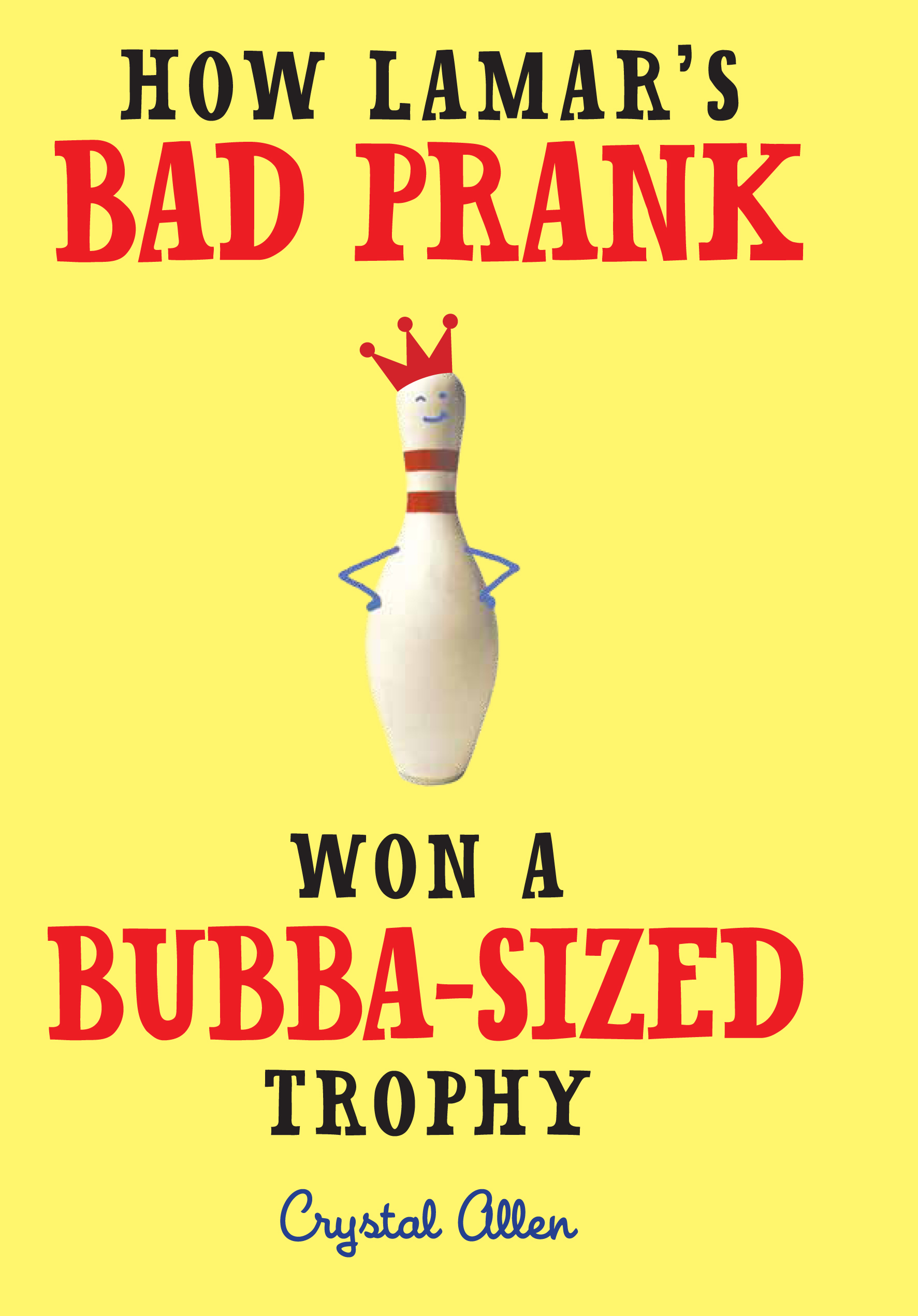
Chapter Book Review - How Lamar's Bad Prank Won a Bubba-Sized Trophy by Crystal Allen

Walter Dean Myers was recently sworn in as the new National Ambassador for Young People's Literature, which to me is an inspired choice. In this capacity, Myers announced that his platform for the next two years is to be "Reading is Not Optional". NPR interviewed Myers and asked him why he chose this particular message to send out. Myers' response:

"Well, the problem is very often books are looked upon as a wonderful adjunct to our lives. It's so nice. Books can take you to faraway places and this sort of thing. But then it all sounds as if it's something nice but not really necessary. And during my lifetime things have changed so drastically. You can't do well in life if you don't read well."

Whether you agree with Myers or not (I happen to agree), most of us can attest to the fact that sparking a love of reading is crucial if we want to really change kids' lives. I firmly believe that there's a book out there for everyone, it's just a matter of putting the right selection into someone's hands. Unfortunately, when it comes to humor, finding well-written books that tackle important themes -- and are also hugely funny -- can be quite the undertaking. Even more so if you're hoping for multicultural titles.


But How Lamar's Bad Prank Won a Bubba-Sized Trophy by Crystal Allen fits the bill, in every way. This is one of those books that will have you laughing on nearly every page, and reading bits aloud to family and friends. Seriously! Allen's protagonist Lamar has a quick wit and a mouth to match - too bad the two aren't always working together.

Lamar is the King of Striker's Bowling Alley, a man with mad skills in the lanes but not such smooth moves when it comes to romance. Looking to impress the "superfine" Makeda, Lamar makes a deal with Billy Jenks, a guy known for jumping in and out of juvie. Lamar figures that Billy's plan to hustle some guys at bowling equals nothing more than quick cash - enough to treat Makeda in style and score himself a pro ball from celebrity bowler Bubba Sanders. But before he knows it Lamar is in way over his head, and for once not even his smooth talk can get him out of this mess.

Allen's bio reveals that she has two sons, and that she practically grew up in bowling alleys. That firsthand knowledge shows. Not only does she capture the buzz and energy of a red-hot bowling competition, she's also got the voice of thirteen-year-old Lamar down pat. And like the best of authors, Allen wraps the heavy stuff so tightly up in the humor and tension that the deeper themes come at you almost without you knowing it. Kids will be laughing alongside Lamar and Sergio (love that the two main characters are African American and Latino!) even as they watch them work through painful emotions and difficult relationships.

I raced through Lamar's Bad Prank and was sorry to see it end. Lamar, like Joey Pigza or Greg Heffley, is the kind of kid you simultaneously root for and cringe with, who sometimes makes bad choices and always has good excuses, and who may or may not end up on top. In other words, a real kid. That and his hilarious banter should gain Lamar (and Crystal Allen) a stable of loyal fans.

How Lamar's Bad Prank Won a Bubba-Sized Trophy by Crystal Allen, published by Balzer + Bray
Ages 9-13
Source: Library
Sample: "I've known Billy Jenks since kindergarten. He's tall on attitude but short in stature. Billy's so low to the ground, I bet his hair and feet smell the same. I'd never seen a person with a square face until I saw his. It's all smashed in, like he got clocked with a can of Spam."
Recommended

Bonus: Crystal Allen's interview with The Brown Bookshelf

Tuesday, January 10, 2012

Chapter Book Review - Vanished by Sheela Chari

I'll admit it -- I'm a sucker for mysteries. I cut my teeth on Nancy Drew, Trixie Belden and the like, moved up to Agatha Christie and Arthur Conan Doyle in middle school, and by high school was reading pretty much any mystery author that could hold my attention. Now, whenever I need a break from schoolwork and a change of pace from kid's books, I'm all about authors like Lee Child, Michael Connolly, Meg Gardiner and Laura Lippman (among many others).

So when Vanished by Sheela Chari cropped up on my radar screen, it was pretty much a must read -- a middle-grade mystery that takes the reader from Boston to India and back again. Neela is pretty much an average musician, but she longs to be world-class. When her grandmother sends her a beautiful and intricately carved veena (a stringed instrument from India), Neela is more than happy to cast off her practice model and play this gorgeous heirloom. But then Neela's veena disappears, and in her efforts to find it, Neela uncovers some unexpected information about a famous veena player who died tragically, and a cursed veena that will never stay with the one who owns it. Could this curse be on Neela's veena? And how will she ever get the priceless instrument back in her family?

What I loved about Vanished is Neela's persistence. Once she gets hold of the idea that there are strange circumstances surrounding her instrument, she just won't let it go, despite getting in trouble at home or receiving threats to give up the hunt. This persistence drives the story, and keeps the reader hanging in with Neela, certain that the truth will turn up around the next corner. Neela's friends add flavor to the plot, from traditional Pavi to unconventional Matt to Lynne, who seems somewhere in between friend and nemesis for much of the book. Neela's parents are proud of their Indian culture and traditions and have taught Neela to be too -- another point I like is that Neela's ethnicity, while it adds depth to the story, doesn't drive the plot. This isn't a "ethnic girl clashes with American society" story -- it's a "creepy guy appears, veena vanishes, what is girl going to do" tale, and that's what will hold a young reader's interest.

For me the plot ran a little thin towards the middle; although I think a strong reader will hang in with it, this slowdown could be a turn-off for reluctant readers or those who aren't true mystery fans. Still, things pick up considerably when the family travels to India, and the change of locale is perfectly timed with the build-up of plot tension. Chari's strength is character, and it shows in people like Lynne, whose unusual mannerisms fit perfectly with her role in the story, and Matt, who turns out to be the right person to help Neela crack the case (even despite his orange hair).

Chari has a solid debut here, and I'll be interested to see what comes next from her. This is a great choice for readers interested in India, strong females, music or just a great character-driven mystery.

Vanished by Sheela Chari, published by Hyperion Books
Ages 9-12
Source: Library
Sample quote: "At the coat closet, she opened the wooden folding door, still thinking of what to say at home, when she stopped. At first she thought she was mistaken. But the closet was so small, the truth was plain and simple. An awful feeling crept over her. She stared at the coat still hanging in the closet, a dark vinyl jacket that Hal had said was his, and the gaping space next to it where her veena should have been."
Recommended

Friday, September 16, 2011

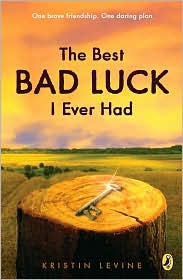
Chapter Book Review - The Best Bad Luck I Ever Had by Kristin Levine

Historical fiction is somewhat of a mixed bag. Successful historicals allow you to inhabit an alternate reality, just as you would in a fantasy novel, so that the reader comes away with knowledge that you would get if you had lived it. Less inviting are novels that are little more than recitations of fact, or those who overlay modern values and feelings into historical settings. Much better are books where it's apparent that a novelist has done his or her homework, and the details of daily life are woven seamlessly into the narrative.

In The Best Bad Luck I Ever Had, author Kristin Levine builds on the life of her grandfather to create a compelling and engrossing novel for middle graders. It's 1917 and life in Moundville, Alabama has a predictable rhythm for twelve-year-old Dit Sims. When a new family moves into town, Dit's hoping for a boy his own age, and he's too busy being mad that the postmaster has a daughter to care about the fact that the Walkers are Black. Emma seems just like nobody Dit could ever possibly be friends with, and he's only nice to her because his mama says he has to be. Spending time with Emma starts Dit thinking, though, and he realizes that not everything in Moundville is exactly the same for everyone. Before long Dit and Emma are pulled into events that are way beyond their control, where life and death literally hang in the balance.

What Levine does in this book is very subtle, slowly revealing the actual themes of her novel to the reader at the same pace that the conflicts arise for Dit. She introduces Moundville as a town much like any other. It is only once the characters begin to examine their own town in closer detail that the reader begins to see the prejudice and racism that bubble just beneath the surface. Dit has grown up here, he knows the people as well as he knows the heft of his slingshot or just how to catch the fattest perch. But seeing things through Emma's eyes, Dit is troubled by the inequality that exists there for people of color like Doc Haley and his son Elbert. Like Dit, readers may begin to look around and wonder what life is really like for people who might be on the outside of society, whether that is due to skin color, religion, income, ability or other factors.

The other thing that impresses me about Levine's debut is the way she deftly threads historical detail into the plot. Kids aren't immediately hit with the idea that this is a historical -- though you know it, by virtue of elements like the excitement of an arriving train, or Dit's mama boiling wash in the front yard -- you're never hammered over the head by the foreignness of these elements. This is the type of book that works well for kids who think they don't like history. Because Levine's story is so character-driven and emotionally charged, readers are pulled along with the plot without stopping to think about time and place.

The Best Bad Luck I Ever Had raises thought-provoking questions about acceptance and equality, about those who are part of the inner circle and those who are forever kept on the outside. This is a finely nuanced novel that raises the level of tension almost imperceptibly; I blazed through this compelling novel in one sitting, as captivated by the story as I was by the characters who set events in motion. Can't wait to see what Levine writes next!

The Best Bad Luck I Ever Had by Kristin Levine, published by G. P. Putnam's Sons
Ages 9-13
Source: Library
Sample quote: "Didn't see much of Emma for a while after that. She'd been okay on the fishing trip, and maybe we'd even had a little fun, but I still didn't want to be her friend. What'd we have in common? I loved the outdoors; she liked to sit on the porch all day. But my mama had a rule -- we didn't have to like anyone, but we had to be nice to everyone. That's exactly the kind of rule grown-ups make up, ain't it?"
Recommended