Let's say you want to write a children's book, and you are doing so because you have a point to make. If you're like many authors, you start out with that point in mind, then whip up a plot that more or less covers the ground you want, populate it with somewhat unique characters, and finish off with a great big ol' teachable moment at the end. Not unlike the ABC After School specials of my childhood, these types of books are somewhat less than subtle, if you get my drift.
And guess what? Kids tune out halfway through reading this type of thing. Oh yeah, you think you've been clever by making the character a monkey who doesn't know how to climb, or whatever, but trust me, kids see through it.
That's what makes Michael Hall's Red: A Crayon's Story such a winner. Hall definitely had a message in mind when he wrote this beguiling picture book, but the story is so well-executed, it totally sneaks up on young readers. It's filled with bold graphics that grab the eye and lots of sly humor. And, best of all, the theme -- that sometimes we're labeled one way, but we really are something else entirely -- is general enough to apply to lots of different scenarios, making this a great choice for school and classroom libraries, since educators can use it with all types of kids.
Our hero is Red, a crayon who doesn't fit in. He tries to do all the things he's supposed to -- draw a red berry, a red ant, even mix with yellow to draw an orange -- but he just can't. The other crayons have lots of opinions on where Red is going wrong. He should press harder, maybe, or not be so lazy. Even the other art supplies get in on the advice, offering to loosen his label or even sharpen him (ouch!). But try as he might, Red just can't do what is expected of him, and he completely blames himself.
In the end, it takes a sharp-eyed crayon called Berry to notice what's up -- Red isn't red at all, he's blue! And once Berry points this out, Red's whole outlook is changed. Suddenly he's drawing blue sky and ocean, and loving every minute of his crayon-y life.
Of course kids are going to see the problem right from the get-go, and they'll cheer like Sprout did when Red finally figures out his true colors. I read an interview with author/illustrator Hall in which he talked about his own childhood being diagnosed as dyslexic, and having written Red: A Crayon's Story in part as a response to that experience, I think Red absolutely works in that context, but in others as well. To be honest, my own first response and that of others I know who've read this book is to think of kids experiencing gender-identity issues. This would be an enormously comforting book to share with a child who didn't feel comfortable in his/her own skin, due to gender or any number of other experiences.
But most of all, Red is a great book to share with all kids, to teach them through a fun, lighthearted story that we are all more than the labels we give one another, and that we need to look beyond the surface to see someone's true colors - and to celebrate them!
Red: A Crayon's Story by Michael Hall, published by HarperCollins
Ages 4-6
Source: Library
Highly recommended
Showing posts with label acceptance. Show all posts
Tuesday, March 10, 2015
Monday, December 1, 2014
30 Days of Diverse Picture Books - Each Kindness by Jacqueline Woodson
It's Day 30 of our 30 Days of Diverse Picture Books. Wha?? Did that month pass quickly for anyone else?? I can't believe we're at the end of this year's series already. I hope you've enjoyed all the picks we've shared as much as we've enjoyed reading them. When I started the series this month, my husband remarked that he hoped I'd have enough picks to make it -- and I'm pleased to say that there are several I didn't even get to, so look forward to more titles to come! (But maybe a break first. . . )
So, onto today's pick -- Each Kindness by Jacqueline Woodson. I originally had planned to share this one earlier in the series, but decided to wait, as this seemed like the perfect title to end with. Wilson's story centers around Chloe, who finds it hard to reach out to the new girl in her class. Maya doesn't have as much as some of the other girls, who laugh and make fun of her, and Chloe goes along. Even though Maya desperately wants to a friend, the girls rebuff her - and then Maya is gone from their school, and Chloe's left thinking about kindness, and what might have happened if she'd reached out to this girl who was all alone.
The theme of Each Kindness is a powerful one, one that I feel we all need to read and internalize. It's especially moving for me to read this one now with Sprout, and talk about the importance of understanding others, of walking a mile in their shoes, of demonstrating empathy even if we find it hard to agree. E. B. Lewis did the illustrations, and they are very moving. In particular we like the one that accompanies Chloe's teacher's explanation of kindness, like a ripple moving through a pool of water. It's an image that makes you stop and think in the same way Woodson's text does - quite a message, this.
I encourage you to read Each Kindness yourself, and to your kiddos, and think of it in light of our world today. If you reach out in kindness, to someone unlike yourself, you'll never know how far that kindness can go.
Each Kindness by Jacqueline Woodson, published by Nancy Paulsen Books
So, onto today's pick -- Each Kindness by Jacqueline Woodson. I originally had planned to share this one earlier in the series, but decided to wait, as this seemed like the perfect title to end with. Wilson's story centers around Chloe, who finds it hard to reach out to the new girl in her class. Maya doesn't have as much as some of the other girls, who laugh and make fun of her, and Chloe goes along. Even though Maya desperately wants to a friend, the girls rebuff her - and then Maya is gone from their school, and Chloe's left thinking about kindness, and what might have happened if she'd reached out to this girl who was all alone.
The theme of Each Kindness is a powerful one, one that I feel we all need to read and internalize. It's especially moving for me to read this one now with Sprout, and talk about the importance of understanding others, of walking a mile in their shoes, of demonstrating empathy even if we find it hard to agree. E. B. Lewis did the illustrations, and they are very moving. In particular we like the one that accompanies Chloe's teacher's explanation of kindness, like a ripple moving through a pool of water. It's an image that makes you stop and think in the same way Woodson's text does - quite a message, this.
I encourage you to read Each Kindness yourself, and to your kiddos, and think of it in light of our world today. If you reach out in kindness, to someone unlike yourself, you'll never know how far that kindness can go.
Each Kindness by Jacqueline Woodson, published by Nancy Paulsen Books
Tuesday, November 18, 2014
30 Days of Diverse Picture Books - Viva Frida by Yuyi Morales
It's Day 18 of our 30 Days of Diverse Picture Books. I'm often asked where I find so many great diverse titles to share. The truth is, they are out there but it sometimes takes a little bit of digging to find them! I have an advantage, being that I get paid to spend 40 hours a week working for the library (pinch me!). But I have begun to compile a list of recommended resources -- still a work in progress, so check back often.
Tonight's title is by the incredible artist Yuyi Morales: Viva Frida, a picture book homage to the artist Frida Kahlo. When this book arrived at my library, we really wrestled with where to put it, as it's an unusual take on a biography. We ended up putting it in the picture book section because frankly it's absolutely brilliant and I wanted it to get the widest audience it could, not be buried in biography. So there.
Morales's artwork is on full display here as she pays tribute to Frida Kahlo's life and work. There's an appearance by Diego Rivera, her self-portraits, her mystical realism, all of it. And the arresting imagery is accompanied by snippets of poetry that speak volumes. The final spread merely reads, "Vivo - I live!", but that's all the text that's needed, as Morales's image of Frida surrounded by animals and light and wearing vibrant clothing captures the essence of the artist entirely. It's a tremendous title, and would be the perfect starting place for an art unit inspired by Frida Kahlo's work. (An afterword fills in more details about Frida Kahlo's life.)
Pair Viva Frida with other art-infused picture books like Georgia's Bones or Vincent's Colors for an exploration of life, art and the world at large.
Viva Frida by Yuyi Morales, published by Roaring Brook Press
Tonight's title is by the incredible artist Yuyi Morales: Viva Frida, a picture book homage to the artist Frida Kahlo. When this book arrived at my library, we really wrestled with where to put it, as it's an unusual take on a biography. We ended up putting it in the picture book section because frankly it's absolutely brilliant and I wanted it to get the widest audience it could, not be buried in biography. So there.
Morales's artwork is on full display here as she pays tribute to Frida Kahlo's life and work. There's an appearance by Diego Rivera, her self-portraits, her mystical realism, all of it. And the arresting imagery is accompanied by snippets of poetry that speak volumes. The final spread merely reads, "Vivo - I live!", but that's all the text that's needed, as Morales's image of Frida surrounded by animals and light and wearing vibrant clothing captures the essence of the artist entirely. It's a tremendous title, and would be the perfect starting place for an art unit inspired by Frida Kahlo's work. (An afterword fills in more details about Frida Kahlo's life.)
Pair Viva Frida with other art-infused picture books like Georgia's Bones or Vincent's Colors for an exploration of life, art and the world at large.
Viva Frida by Yuyi Morales, published by Roaring Brook Press
Friday, November 14, 2014
30 Days of Diverse Picture Books - Not Norman by Kelly Bennett
It's Day 14 of our 30 Days of Diverse Picture Books. I have had such a great response to this series, so thank you! It's terrific to have so many folks supporting diverse books in general, and sharing the titles with others - love to see more demand being generated for inclusive books!
Today's pick is one we bought as part of our collection before Sprout came home. I ran into a paperback copy of Kelly Bennett's Not Norman very soon after we got Sprout's referral, and knew we had to add this book to our burgeoning bookshelf in the kiddo's room. I love that the little boy in the book is African American, but that his race is completely incidental to the story. That's a really nice touch, in a world where many picture books focus on issues of equality or identity - not that those things aren't important, but sometimes it's nice to have the story be about something entirely different.
Noah Z. Jones did the pictures for Not Norman, and we love their cartoony vibe. The story surrounds a little boy who's given a goldfish as a pet. It's not at ALL what he wanted, and he begins to scheme ways to trade Norman in for something better. But the more time our hero spends with Norman, the more he realizes this goldfish might just be the perfect pet after all. Bennett's upbeat story sneaks in a couple of lessons -- about being satisfied with what you have, and about not judging others -- and it's all so subtle Sprout never realized this was a book with a message!
Not Norman would be a title to include in a storytime or lesson plan about pets. And while cats and dogs get most of the love, Norman shows that goldfish are pretty awesome themselves.
Not Norman by Kelly Bennett, published by Candlewick Press
Today's pick is one we bought as part of our collection before Sprout came home. I ran into a paperback copy of Kelly Bennett's Not Norman very soon after we got Sprout's referral, and knew we had to add this book to our burgeoning bookshelf in the kiddo's room. I love that the little boy in the book is African American, but that his race is completely incidental to the story. That's a really nice touch, in a world where many picture books focus on issues of equality or identity - not that those things aren't important, but sometimes it's nice to have the story be about something entirely different.
Noah Z. Jones did the pictures for Not Norman, and we love their cartoony vibe. The story surrounds a little boy who's given a goldfish as a pet. It's not at ALL what he wanted, and he begins to scheme ways to trade Norman in for something better. But the more time our hero spends with Norman, the more he realizes this goldfish might just be the perfect pet after all. Bennett's upbeat story sneaks in a couple of lessons -- about being satisfied with what you have, and about not judging others -- and it's all so subtle Sprout never realized this was a book with a message!
Not Norman would be a title to include in a storytime or lesson plan about pets. And while cats and dogs get most of the love, Norman shows that goldfish are pretty awesome themselves.
Not Norman by Kelly Bennett, published by Candlewick Press
Monday, November 10, 2014
30 Days of Diverse Picture Books - And Tango Makes Three by Justin Richardson and Peter Parnell
It's Day 10 of our 30 Days of Diverse Picture Books. I recently read a piece on the Diversity in YA blog about the intersection of banned books and diversity. It was very thought-provoking, and the research done by Malinda Lo, while informal, suggests that there does seem to be a tendency for diverse books to be challenged. I don't know what the answer is to overcome that, but I know one thing: stories like that make me want to read and share diverse books more than ever!
And I'm doing just that with tonight's pick, a fantastic picture book that seems always to end up on the challenge list: And Tango Makes Three by Justin Richardson and Peter Parnell. The story is based on that of Roy and Silo, two male penguins at the Central Park Zoo, who became a couple and thanks to the intervention of a zookeeper looking for a home for an egg, also became parents. The book is lovely and sweet, and a nice reassurance for kids with same-sex parents, even as it introduces other children to the idea in a nonthreatening fashion.
It's probably not hard to guess why the book is challenged, but it makes me very sad. I can't help but think of the message that gets sent to every LGBTQ child or family every time this book ends up on the challenged list. I'm proud to read Tango to Sprout -- especially proud because for him it's more about the fact that the parents are raising a baby than it is about the same-sex aspect. (Plus it's nice to have a solidly affirming adoption book, no matter who the parents are!) There's hope yet that the next generation of kiddos will be open, accepting and loving of all people, period.
Add And Tango Makes Three to your rotation simply because it's beautifully illustrated and perfectly told, and appreciate the fact that it makes everyone's world a little broader in the process.
And Tango Makes Three by Justin Richardson and Peter Parnell, published by Simon and Schuster
And I'm doing just that with tonight's pick, a fantastic picture book that seems always to end up on the challenge list: And Tango Makes Three by Justin Richardson and Peter Parnell. The story is based on that of Roy and Silo, two male penguins at the Central Park Zoo, who became a couple and thanks to the intervention of a zookeeper looking for a home for an egg, also became parents. The book is lovely and sweet, and a nice reassurance for kids with same-sex parents, even as it introduces other children to the idea in a nonthreatening fashion.
It's probably not hard to guess why the book is challenged, but it makes me very sad. I can't help but think of the message that gets sent to every LGBTQ child or family every time this book ends up on the challenged list. I'm proud to read Tango to Sprout -- especially proud because for him it's more about the fact that the parents are raising a baby than it is about the same-sex aspect. (Plus it's nice to have a solidly affirming adoption book, no matter who the parents are!) There's hope yet that the next generation of kiddos will be open, accepting and loving of all people, period.
Add And Tango Makes Three to your rotation simply because it's beautifully illustrated and perfectly told, and appreciate the fact that it makes everyone's world a little broader in the process.
And Tango Makes Three by Justin Richardson and Peter Parnell, published by Simon and Schuster
Wednesday, September 24, 2014
Chapter Book Review - Absolutely Almost by Lisa Graff
Ever felt that you just aren't quite -- right at something? That you are somehow falling short, and you may not know how, or why? I've certainly had that feeling many times in my life.( If you haven't had that feeling yet - and I can't imagine how you haven't -- let me assure you that parenting is one experience that will give you this impression time and time again. Woo boy!)
Those of us who have felt this way will absolutely relate to Albie, the protagonist in Lisa Graff's top-notch middle grade novel Absolutely Almost. Albie seems destined to go through life being not quite good enough at everything he does, to his great frustration. He can't seem to sort out why things he tries don't turn out the way he wants them to, and he seems to fall short in the estimation of the people he loves the most. But then Albie starts a new school, and gets a cool new babysitter - and suddenly Albie begins to realize that while he may not be great at math or reading, he's still perfectly great at being Albie.
I completely adored this novel, and it's all because of Albie. He's a fantastic character with a one-of-a-kind voice to match. Graff has drawn him splendidly, making him come alive on the page from the very first chapter. I love that Albie's passionate about things like donuts and excels at building models, even though he's often made to feel like his interests are somehow less appealing than others. (It's pretty clear that Albie has some delays, but Graff never defines or diagnoses - an aspect I really appreciated.) Your heart will go out to Albie, but don't pity him - though there are some really tough aspects of this book (bullies, his oblivious father), Albie's 100% the hero of this story. He transforms over the course of the book from bystander in his own life to a boy who knows where he's going, even if he's not quite there yet.
Graff draws the reader into Albie's story through the ample use of humor and very realistic situations. She captures that sense of feeling powerless, when decisions that affect Albie's life are made without his input and he has to just go along with the ride. You'll cringe at some of the outcomes, but ultimately you'll end up cheering for a hero who's less Superman and more Captain Underpants -- and despite what Albie's mom thinks, that's pretty darn terrific.
This is a terrific book to hand to kids who enjoyed Wonder or Counting by 7s, for a protagonist who is quirky and completely unique. Don't expect a neat resolution or a glossy happy ending from Absolutely Almost. It just wouldn't be true to the characters. But do expect a book with heart and soul, that will make readers think and feel, and most importantly help them put themselves in another's place. And expect to want donuts. . . lots and lots of donuts!
Ages 9-12
Source: Library
First lines: "'Not everybody can be the rock at the top of the rock pile.' That's what my Grandpa Park said to my mom once when they thought I was asleep, or just not listening, I don't know. But my ears work fine. 'There have to be some rocks at the bottom, to support those at the top.'"
Highly recommended
Sunday, November 24, 2013
30 Days of Picture Books - The Thanksgiving Door by Debby Atwell
It's Day 17 in our 30 Days of Picture Books. Today I'd like to share a Thanksgiving title that's new to us this year. I often see -- and pin -- fantastic lists of holiday books, the kinds of lists that are overflowing with awesome choices. I rarely create lists like that, though, because I'm always trying to find holiday titles that are diverse or multicultural in nature. And if you've been reading my blog long, you know books like that are few and far between. So generally when we do a holiday feature, it has some diversity included - makes for a smaller but more impactful list, I think.
Today's book is one I've heard about for a couple of years now but hadn't had a chance to read. I'm so glad we made the effort to seek it out this Thanksgiving though, because it was simply charming. Debby Atwell's The Thanksgiving Door is unique in that the action starts on the front cover of the book - you really need to focus on what's happening there in order to have context for later events, but that's all the spoiler I'm giving you. :)
The story focuses on Ed and Ann, an elderly couple who are all alone for Thanksgiving. Ann accidentally burns their dinner, and it looks like the holiday is going to be ruined. But then Ed decides the couple is going out to eat (taking a page from The Christmas Story, our favorite holiday movie!). They decide to try a new restaurant in the neighborhood - at first they aren't sure the place is serving, but the door was open, so they venture in. Well, actually the family that runs the place was having their own dinner, and some members are a bit dismayed to see guests. But Grandmother believes that hospitality is essential, especially on the family's first holiday in America, so the family welcomes Ed and Ann. And it's a wonderful, if unexpected, Thanksgiving for all!
This is such a heartwarming story of acceptance and inclusion, just right for Thanksgiving. The folk art-infused illustrations definitely add to the classic feel of the story, which would be a good choice to share with preschoolers on up. I love that both parties -- Ed and Ann, and the family -- were uncertain about accepting the other, but overcame their fears and uncertainties and let down their guard. Ed and Ann experience aspects of the family's culture (Atwell never specifies where they are from, just "the old country", but I'm guessing Ukranian?). And the family learns new things too, such as when Ann teaches everyone the conga. Now that's what a holiday should be.
Make the time to seek out The Thanksgiving Door -- it's a colorful and upbeat title that captures the true spirit of giving that is central to this winter holiday!
The Thanksgiving Door by Debby Atwell, published by Houghton Mifflin
Today's book is one I've heard about for a couple of years now but hadn't had a chance to read. I'm so glad we made the effort to seek it out this Thanksgiving though, because it was simply charming. Debby Atwell's The Thanksgiving Door is unique in that the action starts on the front cover of the book - you really need to focus on what's happening there in order to have context for later events, but that's all the spoiler I'm giving you. :)
The story focuses on Ed and Ann, an elderly couple who are all alone for Thanksgiving. Ann accidentally burns their dinner, and it looks like the holiday is going to be ruined. But then Ed decides the couple is going out to eat (taking a page from The Christmas Story, our favorite holiday movie!). They decide to try a new restaurant in the neighborhood - at first they aren't sure the place is serving, but the door was open, so they venture in. Well, actually the family that runs the place was having their own dinner, and some members are a bit dismayed to see guests. But Grandmother believes that hospitality is essential, especially on the family's first holiday in America, so the family welcomes Ed and Ann. And it's a wonderful, if unexpected, Thanksgiving for all!
This is such a heartwarming story of acceptance and inclusion, just right for Thanksgiving. The folk art-infused illustrations definitely add to the classic feel of the story, which would be a good choice to share with preschoolers on up. I love that both parties -- Ed and Ann, and the family -- were uncertain about accepting the other, but overcame their fears and uncertainties and let down their guard. Ed and Ann experience aspects of the family's culture (Atwell never specifies where they are from, just "the old country", but I'm guessing Ukranian?). And the family learns new things too, such as when Ann teaches everyone the conga. Now that's what a holiday should be.
Make the time to seek out The Thanksgiving Door -- it's a colorful and upbeat title that captures the true spirit of giving that is central to this winter holiday!
The Thanksgiving Door by Debby Atwell, published by Houghton Mifflin
Thursday, May 16, 2013
Candy Shop by Jan Wahl
Tolerance. It's a quality that often seems in short supply in our modern world. As we hear about events playing out on a national and international scale, it frequently feels like there's a lot more hate in the world than there is tolerance, doesn't it? One reason we elected not to have cable in our home during Sprout's early years is that we don't especially want his impression of the world to be colored by the types of events that make the news. You know what I mean here, because when was the last time a story about kindness or friendship was the most prominent story on everyone's mind?
And to be honest, I'm not sure that tolerance is an instinctive human reaction. We all know babies are selfish, and that's not a bad thing; in order to learn about the world, they must first experience it, and that's done through the lens of their own perspective. So as parents, teachers, friends and loved ones, it's up to us to help kids learn about acceptance through our own actions first, as well as the stories and examples with which we surround them.
A terrific book I recently stumbled across seems like a natural for any classroom or library needing some titles about tolerance. Jan Wahl's Candy Shop is perfect because it's never preachy or didactic. Take a look at that cover - does that scream "Heavy-duty lesson ahead?" No way. Instead it looks like exactly what it is, a fun story about a spunky little cowboy who just happens to run across an opportunity to show love to someone who desperately needs it. And there's your tolerance lesson, all wrapped up in a cute picture book. Sneaky, right?
Daniel, our narrator, is the cowboy in question, and he's excited to be heading to the Mrs Chu's candy shop with his Aunt Thelma. Early in the story we discover that Daniel lives in a somewhat depressed urban area; though his street is well-manicured, that's not the case for the whole neighborhood. Daniel and Aunt Thelma head off to get some candy, but first they have a number of stops to make. Daniel bears most of this good-naturedly, with only a bit of the expected little-boy grumbling. Soon enough they make their way to Mrs. Chu's, only to see a huge crowd gathered outside. Daniel discovers that someone has written a nasty word on the pavement, something hurtful about Mrs. Chu, who is from Taiwan. And right then and there our little cowboy decides he's going to show Mrs. Chu just what a great friend she is, and takes it on himself to clean up the graffiti and shoo away the gawkers. A brave boy indeed!
Kids will love this one for the candy and for the familiar emotions of being dragged along on errands with an adult. But scratch the surface and we'll see the real message, about standing up in the face of prejudice and not remaining silent when someone you love is hurt in a very unjust fashion. Nicole Wong illustrates Candy Shop, and she does a remarkable job of capturing Daniel's emotions, not just on his face but in his body language too. The spread of Daniel scrubbing the pavement while Aunt Thelma hustles away the onlookers is a powerful one, and it demonstrates that tolerance is more than a silent emotion - instead, tolerance is action, putting feet on your feelings for someone and standing up even when it's hard.
If you're looking for a way to start talking about prejudice and tolerance with your little ones, Candy Shop is the perfect book to do so. And as you read it, begin to think about the ways you can show your kids how critical acceptance is. Because, as the saying goes, we all can be the change in someone's reality, right now.
Candy Shop by Jan Wahl, published by Charlesbridge Press
Ages 3-6
Source: Library
Sample: "On the sidewalk a lot of people are gatherine. Do they all want candy, I wonder? No -- they stare at something written on the sidewalk. / I can't see it but it makes Miz Chu cry."
Recommended
And to be honest, I'm not sure that tolerance is an instinctive human reaction. We all know babies are selfish, and that's not a bad thing; in order to learn about the world, they must first experience it, and that's done through the lens of their own perspective. So as parents, teachers, friends and loved ones, it's up to us to help kids learn about acceptance through our own actions first, as well as the stories and examples with which we surround them.
A terrific book I recently stumbled across seems like a natural for any classroom or library needing some titles about tolerance. Jan Wahl's Candy Shop is perfect because it's never preachy or didactic. Take a look at that cover - does that scream "Heavy-duty lesson ahead?" No way. Instead it looks like exactly what it is, a fun story about a spunky little cowboy who just happens to run across an opportunity to show love to someone who desperately needs it. And there's your tolerance lesson, all wrapped up in a cute picture book. Sneaky, right?
Daniel, our narrator, is the cowboy in question, and he's excited to be heading to the Mrs Chu's candy shop with his Aunt Thelma. Early in the story we discover that Daniel lives in a somewhat depressed urban area; though his street is well-manicured, that's not the case for the whole neighborhood. Daniel and Aunt Thelma head off to get some candy, but first they have a number of stops to make. Daniel bears most of this good-naturedly, with only a bit of the expected little-boy grumbling. Soon enough they make their way to Mrs. Chu's, only to see a huge crowd gathered outside. Daniel discovers that someone has written a nasty word on the pavement, something hurtful about Mrs. Chu, who is from Taiwan. And right then and there our little cowboy decides he's going to show Mrs. Chu just what a great friend she is, and takes it on himself to clean up the graffiti and shoo away the gawkers. A brave boy indeed!
Kids will love this one for the candy and for the familiar emotions of being dragged along on errands with an adult. But scratch the surface and we'll see the real message, about standing up in the face of prejudice and not remaining silent when someone you love is hurt in a very unjust fashion. Nicole Wong illustrates Candy Shop, and she does a remarkable job of capturing Daniel's emotions, not just on his face but in his body language too. The spread of Daniel scrubbing the pavement while Aunt Thelma hustles away the onlookers is a powerful one, and it demonstrates that tolerance is more than a silent emotion - instead, tolerance is action, putting feet on your feelings for someone and standing up even when it's hard.
If you're looking for a way to start talking about prejudice and tolerance with your little ones, Candy Shop is the perfect book to do so. And as you read it, begin to think about the ways you can show your kids how critical acceptance is. Because, as the saying goes, we all can be the change in someone's reality, right now.
Candy Shop by Jan Wahl, published by Charlesbridge Press
Ages 3-6
Source: Library
Sample: "On the sidewalk a lot of people are gatherine. Do they all want candy, I wonder? No -- they stare at something written on the sidewalk. / I can't see it but it makes Miz Chu cry."
Recommended
Sunday, May 5, 2013
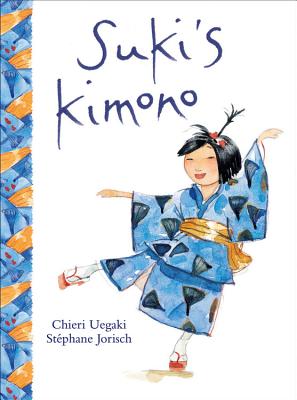
Suki's Kimono by Chieri Uegaki {The Children's Bookshelf}
As Sprout grows and makes friends, we have begun to talk about certain topics more and more. Being kind to others is a biggie, as is sharing (is this not a perpetual talk parents have with preschoolers??). But one topic I didn't expect to talk about as much as we do is identity. You see my darling son, while relatively strong-willed, is also a pleaser, and he wants very much to be just like his friends -- who among us can't relate to that? And so we've seen in the last several months a slow denying of things he likes in favor of things his friends like, or a shift in what he wants to take for "share day" based on what he thinks others will bring.
In these instances, we let him make his own choices, but we also gently remind him that he needs to be true to himself. What Sprout wants is a theme we return to again and again -- as in, is this what Best Friend of the Moment likes, or what Sprout likes? Sometimes he clings to the choice he's made, but sometimes he does rethink and select something we know is more "him". It's an ongoing discussion, and we know it's by no means going to reduce, quite the opposite. But we feel it's important to reinforce that his own identity is pretty awesome.
Naturally books that we share together are a great way to stress this idea with Sprout. One in particular that we recently checked out, Suki's Kimono by Chieri Uegaki, presents a character who's very confident and comfortable in her own skin, even after she has some brief doubts. Suki's determined to wear her favorite outfit on the first day of school. The outfit just happens to be her kimono, which her grandmother gave her on a very special outing over the summer. The outfit brings back warm memories of a wonderful day with someone she loves. Her sisters caution Suki that other kids will tease her, but Suki's unconcerned, even when her friend Penny tells her she's dressed funny ("I'm not dressed funny," Suki replies). She even shares about her kimono in front of the class, and does a little dance like the festival dancers she saw with her grandmother. But then Suki feels a little awkward -- will the other kids laugh, like her sisters warned her?
Delicate illustrations by Stéphane Jorisch are the perfect accompaniment to this tale (we've loved his previous work, especially Betty Bunny Loves Chocolate Cake). The scenes where Suki and her grandmother attend the street festival draw young readers right into the moment, as you can just about hear the beat of the drums and smell the delicious treats too. Most of all, I love Suki's confidence throughout the story. Uegaki could easily have written Suki as embarrassed or slinking off to change her clothes at some point during the day. But she didn't. Instead Uegaki gave Suki the determination to share one of her favorite memories through the clothes she wears. Even when she is faced by a silent classroom after she dances for them, Suki's never willing to hide who she is -- and fortunately, the class all applauds her performance for the wonderful experience it was.
If we want our kids to be themselves, we need to surround them with examples of confidence and self-assurance to inspire them. Suki's Kimono is a terrific instance where a character believes in herself, even when others aren't so sure. And that's exactly who I want Sprout to be, no matter what comes his way.
Suki's Kimono by Chieri Uegaki, published by Kids Can Press
Ages 3-6
Source: Library
Sample: "But Suki shook her head. She didn't care for new. She didn't care for cool. She wanted to wear her favorite thing. And her favorite thing was her kimono."
Recommended
----------------------------------------------------------------------------
This post is part of The Children’s Bookshelf, a weekly linky party with the goal of connecting parents with great books for their kids. Do you have a book review, literacy or book-related post that you think will be helpful for parents? If so, please add your link below.
NOTE: By linking up you are giving permission for any of the co-hosts to pin and/or feature a your photo on a future The Children’s Bookshelf post. Kindly link up to an individual post, not your blog’s homepage. The hosts reserve the right to delete any links to homepages, commercial links, repeat links or otherwise inappropriate links. Thank you for your understanding.
You can also follow The Children’s Bookshelf on Pinterest or visit TCB’s co-hosts: Sprout’s Bookshelf, What Do We Do All Day?, No Twiddle Twaddle, Smiling Like Sunshine, My Little Bookcase, The Picture Book Review, MemeTales and Mouse Grows, Mouse Learns. You can find more details here.
In these instances, we let him make his own choices, but we also gently remind him that he needs to be true to himself. What Sprout wants is a theme we return to again and again -- as in, is this what Best Friend of the Moment likes, or what Sprout likes? Sometimes he clings to the choice he's made, but sometimes he does rethink and select something we know is more "him". It's an ongoing discussion, and we know it's by no means going to reduce, quite the opposite. But we feel it's important to reinforce that his own identity is pretty awesome.
Naturally books that we share together are a great way to stress this idea with Sprout. One in particular that we recently checked out, Suki's Kimono by Chieri Uegaki, presents a character who's very confident and comfortable in her own skin, even after she has some brief doubts. Suki's determined to wear her favorite outfit on the first day of school. The outfit just happens to be her kimono, which her grandmother gave her on a very special outing over the summer. The outfit brings back warm memories of a wonderful day with someone she loves. Her sisters caution Suki that other kids will tease her, but Suki's unconcerned, even when her friend Penny tells her she's dressed funny ("I'm not dressed funny," Suki replies). She even shares about her kimono in front of the class, and does a little dance like the festival dancers she saw with her grandmother. But then Suki feels a little awkward -- will the other kids laugh, like her sisters warned her?
Delicate illustrations by Stéphane Jorisch are the perfect accompaniment to this tale (we've loved his previous work, especially Betty Bunny Loves Chocolate Cake). The scenes where Suki and her grandmother attend the street festival draw young readers right into the moment, as you can just about hear the beat of the drums and smell the delicious treats too. Most of all, I love Suki's confidence throughout the story. Uegaki could easily have written Suki as embarrassed or slinking off to change her clothes at some point during the day. But she didn't. Instead Uegaki gave Suki the determination to share one of her favorite memories through the clothes she wears. Even when she is faced by a silent classroom after she dances for them, Suki's never willing to hide who she is -- and fortunately, the class all applauds her performance for the wonderful experience it was.
If we want our kids to be themselves, we need to surround them with examples of confidence and self-assurance to inspire them. Suki's Kimono is a terrific instance where a character believes in herself, even when others aren't so sure. And that's exactly who I want Sprout to be, no matter what comes his way.
Suki's Kimono by Chieri Uegaki, published by Kids Can Press
Ages 3-6
Source: Library
Sample: "But Suki shook her head. She didn't care for new. She didn't care for cool. She wanted to wear her favorite thing. And her favorite thing was her kimono."
Recommended
This post is part of The Children’s Bookshelf, a weekly linky party with the goal of connecting parents with great books for their kids. Do you have a book review, literacy or book-related post that you think will be helpful for parents? If so, please add your link below.
NOTE: By linking up you are giving permission for any of the co-hosts to pin and/or feature a your photo on a future The Children’s Bookshelf post. Kindly link up to an individual post, not your blog’s homepage. The hosts reserve the right to delete any links to homepages, commercial links, repeat links or otherwise inappropriate links. Thank you for your understanding.
You can also follow The Children’s Bookshelf on Pinterest or visit TCB’s co-hosts: Sprout’s Bookshelf, What Do We Do All Day?, No Twiddle Twaddle, Smiling Like Sunshine, My Little Bookcase, The Picture Book Review, MemeTales and Mouse Grows, Mouse Learns. You can find more details here.
Sunday, March 24, 2013
Back to Front and Upside Down by Claire Alexander {The Children's Bookshelf}
Do you follow the awards circuit? I have to admit that when it comes to movies and tv shows, I'm often not especially fond of the ones that win all the major awards (though this may be down to the fact that now I'm a mom, there's precious little time to watch anything at all!). But when it comes to books I am glued to the awards and best-of lists. This is partly because I want to see my favorites win (alas, my pick didn't take the Caldecott or even an honor this year - sob!). But it's also because there are so many new books coming out each year that it's impossible to see them all, and the awards help me get a bead on some titles that flew under my radar.
Such is the case with Claire Alexander's Schneider Award winner Back to Front and Upside Down! The Schneider is one of my favorites of the ALA Awards - each year it is given to a book that best exemplifies the experience of a person with a disability. If you want to teach your kids about persons of varying abilities, this is an excellent list of titles to begin the discussion. Alexander's title won in the picture book division, and one read-through shows you exactly why, as it deals with the subject of dyslexia and dysgraphia in a sensitive manner that's spot on for her audience.
Stan is excited to be making a birthday card for his principal, Mr. Slippers. That is, until the teacher announces the students must write "Happy Birthday to Mr. Slippers" on their card. Stan panics. No matter how hard he tries, his letters don't come out the way everyone else's do. Instead, Stan's are a jumble, and some don't even look like letters! As he watches all the other children finishing their cards, with what looks like no effort at all, Stan gets more and more upset. Fortunately his friend convinces Stan to ask the teacher for help - and once he screws up his courage and does it, Stan discovers he isn't alone.
Sprout loves the part where Stan and Mimi practice their letters over and over, until they get them right. We're at the stage with him where he's just starting to string his name together, and some letters are giving him trouble, so I think he relates to how Stan feels. We work on writing the individual letters, on perfecting our fine motor skills and learning how to hold the pencil. But it's tough work, and Sprout knows the frustration Alexander depicts in her book - he's sensitive to the isolation Stan feels, I think, because other kids in his class are writing their names already, while Sprout isn't quite yet.
Readers who've felt the isolation of thinking you're the only one who can't do something the right way will instantly identify with Stan's struggle. But kids who haven't felt that way -- yet -- will connect with this one too, because of the way Alexander's text draws the reader into the emotional component of this experience. One spread in particular does this best - Stan, all alone at his desk, small against a black background. The power of this single image alone is palpable, and makes the resolution, where Stan triumphantly presents Mr. Slippers with his completed card, all the more worthwhile.
Back to Front and Upside Down! by Claire Alexander, Eerdman's Books for Young Readers
Ages 3-5
Source: Library
Sample: "Stan looked at Jack. He was busy writing his card. He looked at Lucy. She was writing her card too. Tommy had finished and was writing his name! Stan's paws began to sweat and his heart pounded loudly in his chest."
Recommended
----------------------------------------------------------------------------
This post is part of The Children’s Bookshelf, a weekly linky party with the goal of connecting parents with great books for their kids. Do you have a book review, literacy or book-related post that you think will be helpful for parents? If so, please add your link below.
NOTE: By linking up you are giving permission for any of the co-hosts to pin and/or feature a your photo on a future The Children’s Bookshelf post. Kindly link up to an individual post, not your blog’s homepage. The hosts reserve the right to delete any links to homepages, commercial links, repeat links or otherwise inappropriate links. Thank you for your understanding.
You can also follow The Children’s Bookshelf on Pinterest or visit TCB’s co-hosts: Sprout’s Bookshelf, What Do We Do All Day?, No Twiddle Twaddle, Smiling Like Sunshine, My Little Bookcase, The Picture Book Review, MemeTales and Mouse Grows, Mouse Learns. You can find more details here.
Such is the case with Claire Alexander's Schneider Award winner Back to Front and Upside Down! The Schneider is one of my favorites of the ALA Awards - each year it is given to a book that best exemplifies the experience of a person with a disability. If you want to teach your kids about persons of varying abilities, this is an excellent list of titles to begin the discussion. Alexander's title won in the picture book division, and one read-through shows you exactly why, as it deals with the subject of dyslexia and dysgraphia in a sensitive manner that's spot on for her audience.
Stan is excited to be making a birthday card for his principal, Mr. Slippers. That is, until the teacher announces the students must write "Happy Birthday to Mr. Slippers" on their card. Stan panics. No matter how hard he tries, his letters don't come out the way everyone else's do. Instead, Stan's are a jumble, and some don't even look like letters! As he watches all the other children finishing their cards, with what looks like no effort at all, Stan gets more and more upset. Fortunately his friend convinces Stan to ask the teacher for help - and once he screws up his courage and does it, Stan discovers he isn't alone.
Sprout loves the part where Stan and Mimi practice their letters over and over, until they get them right. We're at the stage with him where he's just starting to string his name together, and some letters are giving him trouble, so I think he relates to how Stan feels. We work on writing the individual letters, on perfecting our fine motor skills and learning how to hold the pencil. But it's tough work, and Sprout knows the frustration Alexander depicts in her book - he's sensitive to the isolation Stan feels, I think, because other kids in his class are writing their names already, while Sprout isn't quite yet.
Readers who've felt the isolation of thinking you're the only one who can't do something the right way will instantly identify with Stan's struggle. But kids who haven't felt that way -- yet -- will connect with this one too, because of the way Alexander's text draws the reader into the emotional component of this experience. One spread in particular does this best - Stan, all alone at his desk, small against a black background. The power of this single image alone is palpable, and makes the resolution, where Stan triumphantly presents Mr. Slippers with his completed card, all the more worthwhile.
Back to Front and Upside Down! by Claire Alexander, Eerdman's Books for Young Readers
Ages 3-5
Source: Library
Sample: "Stan looked at Jack. He was busy writing his card. He looked at Lucy. She was writing her card too. Tommy had finished and was writing his name! Stan's paws began to sweat and his heart pounded loudly in his chest."
Recommended
----------------------------------------------------------------------------
This post is part of The Children’s Bookshelf, a weekly linky party with the goal of connecting parents with great books for their kids. Do you have a book review, literacy or book-related post that you think will be helpful for parents? If so, please add your link below.
NOTE: By linking up you are giving permission for any of the co-hosts to pin and/or feature a your photo on a future The Children’s Bookshelf post. Kindly link up to an individual post, not your blog’s homepage. The hosts reserve the right to delete any links to homepages, commercial links, repeat links or otherwise inappropriate links. Thank you for your understanding.
You can also follow The Children’s Bookshelf on Pinterest or visit TCB’s co-hosts: Sprout’s Bookshelf, What Do We Do All Day?, No Twiddle Twaddle, Smiling Like Sunshine, My Little Bookcase, The Picture Book Review, MemeTales and Mouse Grows, Mouse Learns. You can find more details here.
Thursday, March 7, 2013
Of Missed Opportunities
Do you ever feel slightly let down by a book? Like maybe what you hoped it would be was just not completely realized? This is a feeling I recognize in myself more and more frequently. Maybe it's that I'm getting older (big birthday this year - keeping it in perspective). Or maybe it's just that I've reached the point where I've read so many knockout titles that when a book doesn't go deliver as much as it could, I feel a bit cheated.
I find this happening a lot now that I'm reading kidlit pretty much exclusively (with the exception of textbooks, of course). There are a ton of fantastic kid's books on the shelves in libraries and bookstores these days. Overall the quality really rivals anything I remember from my own childhood. That's especially true of multicultural kidlit, where phenomenal authors like Rita Williams Garcia and Grace Lin and Christopher Paul Curtis and Pam Munoz Ryan turn out consistently top-notch books where diversity is interwoven seamlessly into the storyline. And so when I find a book that just doesn't go quite far enough, I feel a little like it's been a wasted opportunity.
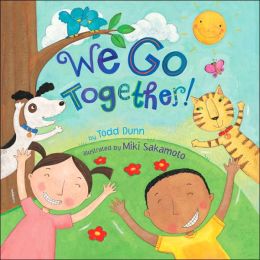
I found this to be the case with one book in particular lately. I really hesitated writing about this book, because I wanted to like it, but just couldn't 100% embrace it, and I couldn't figure out why. The book in question is We Go Together by Todd Dunn, illustrated by Miki Sakamoto. Sprout nabbed this one on a recent library visit and I suspect that's mostly because of the cover - bright sunshine, animals and birds, a white-skinned girl and brown-skinned boy with huge smiles. What's not to like?
The text and illustrations are perfectly suited, as Sakamoto's cheerful figures and palette match Dunn's bounce rhymes very well. There's no real narrative here, just a depiction of things that go very well together - like moon and night, for instance, or string and kite. Each spread has a sly joke or whimsical touch that works quite nicely. Sometimes there's a double meaning included, like "We go together like elephant and trunk", which shows a chipper purple elephant bearing a small chest on his back. Cute, in all, and upbeat, which always makes for a nice addition to any reading session.
So what was it that bothered me? It took a while to figure out, but I finally narrowed it down to the last spread. Throughout the book we have a reasonable attempt to depict diversity - most of the spreads with more than one human character has multiple ethnicities represented. But on the last page, the text reads: "We go together, that's what we do. We go together because you love me and I love you!". Sweet, but here's where the missed opportunity comes in for me: the mother and daughter depicted on the page look almost exactly identical: white skin, rosy cheeks, brown hair turned up at the ends.
For me this is a misstep - the whole book is about things that go together, so why not use this spread as a chance to emphasize that things don't have to look alike to go together? This would have been a great opportunity to depict a transracial family, or at the very least two people who looked dissimilar. Maybe mom could have red curly hair and be hugging a boy with straight black hair? Would that be too much to ask? Couldn't the creators of the book have used this as a way to drive home the point to kids that belonging isn't about looking just exactly the same, but rather belonging has to do with the feelings mentioned in the page text?
Don't get me wrong, I have nothing against this particular book, and it's not one that I would prevent Sprout from reading. It's cute enough, the illustrations are well-done, and it's something the author and illustrator should be very proud of creating. I also don't think that every single kids' book should cater to transracial families -- because come on, where's the reality in that? But I couldn't help but wonder how much stronger this little slice of kidlit could have been with just a tweak in the approach.
And here's where the missed opportunity comes in: because changing our environment and embracing more diversity is as simple as the decision to show the world families don't all have to match. The message of the title could have been that much more impactful, for my mind, with just a shift in this one editorial choice. These are the kinds of things that don't escape my notice, now that I'm parenting transracially. And you can be sure that if I'm noticing it, Sprout and all the other kids his age aren't letting these messages, however slight, pass them by. This kind of small choice strengthens the argument for kids on the playground who ask us questions like, "Are you his mom? Why don't you look like him?"
Listen, there are a host of reasons that parents and kids don't resemble one another, and adoption certainly isn't the only one. So let's be brave, kidlit creators: let's teach our kids that matching is more than just having the same hair color or wearing the same outfit. Let's throw them a curve and show them a daddy in a wheelchair or a mama and baby with different skin tones. Let's trust that kids can handle the challenge of seeing a parent and child for what they are, even when they don't look the same. Because that's an opportunity -- for thought, discussion, inclusion -- that no one should miss.
I find this happening a lot now that I'm reading kidlit pretty much exclusively (with the exception of textbooks, of course). There are a ton of fantastic kid's books on the shelves in libraries and bookstores these days. Overall the quality really rivals anything I remember from my own childhood. That's especially true of multicultural kidlit, where phenomenal authors like Rita Williams Garcia and Grace Lin and Christopher Paul Curtis and Pam Munoz Ryan turn out consistently top-notch books where diversity is interwoven seamlessly into the storyline. And so when I find a book that just doesn't go quite far enough, I feel a little like it's been a wasted opportunity.
I found this to be the case with one book in particular lately. I really hesitated writing about this book, because I wanted to like it, but just couldn't 100% embrace it, and I couldn't figure out why. The book in question is We Go Together by Todd Dunn, illustrated by Miki Sakamoto. Sprout nabbed this one on a recent library visit and I suspect that's mostly because of the cover - bright sunshine, animals and birds, a white-skinned girl and brown-skinned boy with huge smiles. What's not to like?
The text and illustrations are perfectly suited, as Sakamoto's cheerful figures and palette match Dunn's bounce rhymes very well. There's no real narrative here, just a depiction of things that go very well together - like moon and night, for instance, or string and kite. Each spread has a sly joke or whimsical touch that works quite nicely. Sometimes there's a double meaning included, like "We go together like elephant and trunk", which shows a chipper purple elephant bearing a small chest on his back. Cute, in all, and upbeat, which always makes for a nice addition to any reading session.
So what was it that bothered me? It took a while to figure out, but I finally narrowed it down to the last spread. Throughout the book we have a reasonable attempt to depict diversity - most of the spreads with more than one human character has multiple ethnicities represented. But on the last page, the text reads: "We go together, that's what we do. We go together because you love me and I love you!". Sweet, but here's where the missed opportunity comes in for me: the mother and daughter depicted on the page look almost exactly identical: white skin, rosy cheeks, brown hair turned up at the ends.
For me this is a misstep - the whole book is about things that go together, so why not use this spread as a chance to emphasize that things don't have to look alike to go together? This would have been a great opportunity to depict a transracial family, or at the very least two people who looked dissimilar. Maybe mom could have red curly hair and be hugging a boy with straight black hair? Would that be too much to ask? Couldn't the creators of the book have used this as a way to drive home the point to kids that belonging isn't about looking just exactly the same, but rather belonging has to do with the feelings mentioned in the page text?
Don't get me wrong, I have nothing against this particular book, and it's not one that I would prevent Sprout from reading. It's cute enough, the illustrations are well-done, and it's something the author and illustrator should be very proud of creating. I also don't think that every single kids' book should cater to transracial families -- because come on, where's the reality in that? But I couldn't help but wonder how much stronger this little slice of kidlit could have been with just a tweak in the approach.
And here's where the missed opportunity comes in: because changing our environment and embracing more diversity is as simple as the decision to show the world families don't all have to match. The message of the title could have been that much more impactful, for my mind, with just a shift in this one editorial choice. These are the kinds of things that don't escape my notice, now that I'm parenting transracially. And you can be sure that if I'm noticing it, Sprout and all the other kids his age aren't letting these messages, however slight, pass them by. This kind of small choice strengthens the argument for kids on the playground who ask us questions like, "Are you his mom? Why don't you look like him?"
Listen, there are a host of reasons that parents and kids don't resemble one another, and adoption certainly isn't the only one. So let's be brave, kidlit creators: let's teach our kids that matching is more than just having the same hair color or wearing the same outfit. Let's throw them a curve and show them a daddy in a wheelchair or a mama and baby with different skin tones. Let's trust that kids can handle the challenge of seeing a parent and child for what they are, even when they don't look the same. Because that's an opportunity -- for thought, discussion, inclusion -- that no one should miss.
Tuesday, February 19, 2013
Religion Around the World - Books to Share Faith with Kids
Kids are a curious bunch, aren't they? Just when you think you've heard it all from your little one, they'll suddenly take up with a topic seemingly out of nowhere. The questions will begin to fly fast and furious. I know as a parent this has already happened with me, and as Sprout grows the topics will get even more complex - and controversial. Not looking forward to some of those conversations, believe you me!
For many parents, the topic of religion may be a tough one to discuss with their kids. Faith is a tricky thing, even harder to explain than it is to hold on to. And while it may be hard to describe one's own beliefs, defining those of another religion or group can be much more difficult. After all, religions are founded on deeply personal tenets and incorporate traditions from many cultural systems and communities. Those beliefs inspire passion and honor, making them seem like subjects that are vast and hard to define.
Still, many of us want our children to grow up understanding and respecting the belief systems of people around the world. A keystone of tolerance is an appreciation of the ways others live their lives, the beliefs that guide them and the ideologies they hold dear. And as parents raising global citizens, learning about religion is a first step in understanding cultures and people around the world.
Two terrific books to help parents begin the discussion about world religion are available from noted children's publisher DK. If you're familiar with the DK list, you know they produce quality offerings. Lavishly illustrated with inviting photographs and written in clear, straightforward fashion, the books on DK's publishing roster are the cornerstone of every well-rounded nonfiction collection, home or classroom.
A great place to start learning about faith is with DK's A Faith Like Mine, written by Laura Buller. This title is of course filled with intriguing photographs of people from all walks of life, engaging in the various traditions and ceremonies of their faith. Through the perspective of children just like them, kids can learn about what members of religious traditions believe and how they practice those beliefs on a daily basis. In the pages of Buller's book we meet 10-year-old Hasini, a Buddhist from Sri Lanka; 13-year-old Erin, a Jewish girl from the U.S.; and 9-year-old Leena, a Muslim from Jordan, just to name a few. Even very young children will enjoy flipping through this title and looking at all the amazing photos, which is a great way for discussions to begin naturally; parents and children will learn a lot from this well-researched and well-rounded title.
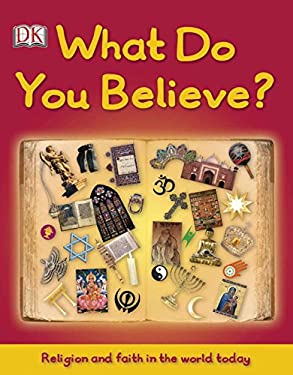
For kids who are ready to begin thinking and talking about the philosophical aspects of various religions, DK's book What Do You Believe? is a natural next step. Beginning with a discussion of why religions exist in the first place, this title examines the major faiths as well as many alternate views. I love that this book considers multiple perspectives on the same issue, and talks about how the practicalities of our lives -- how we dress, what we eat, how we celebrate -- are influenced by our belief systems. Even the origins of religious traditions are discussed, and native religions are also part of the conversation. Tolerance, peace, and the collision of conflicting beliefs is included here too, as well as a nicely rounded glossary to help define some of the basic terms. Visually, this title is incredibly impactful, and raises the same questions you might find in a comparative religion course, so it's a great educational tool.
Look for these titles, and others like them, to spark some lively debate and help you consider your own philosophies more deeply, as you examine the spectrum of belief with your children. You can use these books as a way to begin introducing complex topics with your kids, to see what they believe and to help them begin to comprehend the world around them. Yes, religion is complicated -- but never more so than when we try not to understand.
What books about belief does your family read? Have you thought about how broadening your bookshelf could strengthen your own faith?
For many parents, the topic of religion may be a tough one to discuss with their kids. Faith is a tricky thing, even harder to explain than it is to hold on to. And while it may be hard to describe one's own beliefs, defining those of another religion or group can be much more difficult. After all, religions are founded on deeply personal tenets and incorporate traditions from many cultural systems and communities. Those beliefs inspire passion and honor, making them seem like subjects that are vast and hard to define.
Still, many of us want our children to grow up understanding and respecting the belief systems of people around the world. A keystone of tolerance is an appreciation of the ways others live their lives, the beliefs that guide them and the ideologies they hold dear. And as parents raising global citizens, learning about religion is a first step in understanding cultures and people around the world.
Two terrific books to help parents begin the discussion about world religion are available from noted children's publisher DK. If you're familiar with the DK list, you know they produce quality offerings. Lavishly illustrated with inviting photographs and written in clear, straightforward fashion, the books on DK's publishing roster are the cornerstone of every well-rounded nonfiction collection, home or classroom.
A great place to start learning about faith is with DK's A Faith Like Mine, written by Laura Buller. This title is of course filled with intriguing photographs of people from all walks of life, engaging in the various traditions and ceremonies of their faith. Through the perspective of children just like them, kids can learn about what members of religious traditions believe and how they practice those beliefs on a daily basis. In the pages of Buller's book we meet 10-year-old Hasini, a Buddhist from Sri Lanka; 13-year-old Erin, a Jewish girl from the U.S.; and 9-year-old Leena, a Muslim from Jordan, just to name a few. Even very young children will enjoy flipping through this title and looking at all the amazing photos, which is a great way for discussions to begin naturally; parents and children will learn a lot from this well-researched and well-rounded title.
For kids who are ready to begin thinking and talking about the philosophical aspects of various religions, DK's book What Do You Believe? is a natural next step. Beginning with a discussion of why religions exist in the first place, this title examines the major faiths as well as many alternate views. I love that this book considers multiple perspectives on the same issue, and talks about how the practicalities of our lives -- how we dress, what we eat, how we celebrate -- are influenced by our belief systems. Even the origins of religious traditions are discussed, and native religions are also part of the conversation. Tolerance, peace, and the collision of conflicting beliefs is included here too, as well as a nicely rounded glossary to help define some of the basic terms. Visually, this title is incredibly impactful, and raises the same questions you might find in a comparative religion course, so it's a great educational tool.
Look for these titles, and others like them, to spark some lively debate and help you consider your own philosophies more deeply, as you examine the spectrum of belief with your children. You can use these books as a way to begin introducing complex topics with your kids, to see what they believe and to help them begin to comprehend the world around them. Yes, religion is complicated -- but never more so than when we try not to understand.
What books about belief does your family read? Have you thought about how broadening your bookshelf could strengthen your own faith?
Wednesday, January 9, 2013
Nonfiction Picture Book - Who's in My Family? by Robie H. Harris
We're in a phase right now around our house that is simultaneously the most entertaining and the most annoying one ever -- the "why" phase. I thought we'd been through this once before, and we had, but this new incarnation seems to be a deeper and more questioning one. Now instead of "why is the car wet?" it's more "why does it rain?". Everything is more philosophical. And it's great, if a bit frustrating when the question is something like "why are pancakes made out of eggs and milk and flour and salt?" (an honest-to-goodness query from last night's dinner).
So a quick flip through today's pick, Who's In My Family? by Robie H. Harris, told me this one would be just the thing for Sprout's current quizzical turn. Harris's goal with this and her other titles, including books on bodies, birth and health, is to present information in a clear and age-appropriate manner. And clarity is certainly the watchword here: Harris examines all the facets of what makes up a family, as well as the various aspects that different family members may either share or that may differ from person to person.
There's a lot here to recommend it as an addition for home libraries and classrooms alike. The prose is concise and straightforward, easy for kids to understand, which parents and teachers will appreciate. While the dialogue between the two main characters, Nellie and Gus, is a little stilted, the general upbeat tone works well with the pictures. Nadine Bernard Westcott did the illustrations, and they are charming, lively and fun, with lots of small details that make the spreads visually appealing. A whole chunk of the book centers around a trip to the zoo, so there are even family groups among animals shown here, reinforcing the overall message of Harris's text.
A big plus for us is the diversity - transracial families are featured prominently, as are same-sex parents, extended family members, older parents, and characters with disabilities. Differences are discussed in an open manner, and I appreciate Harris's no-nonsense approach to matters like varying skin colors within a family unit. This is great not only for kids whose families don't "match", like ours, but even more critical for families who do match, so all children can see that the bonds that unite family members go far beyond similarities in hair or skin color.
When you're looking to tackle the big topics with your kiddo, books like Who's In My Family? are exactly what you want on hand. And maybe a few adults should read it too -- you know, to remind us that "Most of all, and most of the time, and no matter what -- children and grown-ups and their families really do love one another!".
Who's In My Family? by Robie H. Harris, published by Candlewick Press
Ages 3-9
Source: Library
Sample: "Parents, sisters, brothers, grandparents, cousins, aunts, and uncles can all be part of a child's family. Often, good friends or a pet can be part of a child's family too."
Highly recommended
So a quick flip through today's pick, Who's In My Family? by Robie H. Harris, told me this one would be just the thing for Sprout's current quizzical turn. Harris's goal with this and her other titles, including books on bodies, birth and health, is to present information in a clear and age-appropriate manner. And clarity is certainly the watchword here: Harris examines all the facets of what makes up a family, as well as the various aspects that different family members may either share or that may differ from person to person.
There's a lot here to recommend it as an addition for home libraries and classrooms alike. The prose is concise and straightforward, easy for kids to understand, which parents and teachers will appreciate. While the dialogue between the two main characters, Nellie and Gus, is a little stilted, the general upbeat tone works well with the pictures. Nadine Bernard Westcott did the illustrations, and they are charming, lively and fun, with lots of small details that make the spreads visually appealing. A whole chunk of the book centers around a trip to the zoo, so there are even family groups among animals shown here, reinforcing the overall message of Harris's text.
A big plus for us is the diversity - transracial families are featured prominently, as are same-sex parents, extended family members, older parents, and characters with disabilities. Differences are discussed in an open manner, and I appreciate Harris's no-nonsense approach to matters like varying skin colors within a family unit. This is great not only for kids whose families don't "match", like ours, but even more critical for families who do match, so all children can see that the bonds that unite family members go far beyond similarities in hair or skin color.
When you're looking to tackle the big topics with your kiddo, books like Who's In My Family? are exactly what you want on hand. And maybe a few adults should read it too -- you know, to remind us that "Most of all, and most of the time, and no matter what -- children and grown-ups and their families really do love one another!".
Who's In My Family? by Robie H. Harris, published by Candlewick Press
Ages 3-9
Source: Library
Sample: "Parents, sisters, brothers, grandparents, cousins, aunts, and uncles can all be part of a child's family. Often, good friends or a pet can be part of a child's family too."
Highly recommended
Tuesday, November 27, 2012
30 Days of Picture Books - Have Fun, Molly Lou Melon by Patty Lovell
It's Day 27 of Picture Book Month. Today I have a confession: I am not a crafty mom. I wish I was, because one of the things Sprout really loves is making all kinds of art, using different materials and really getting creative. But sadly, I'm more than a bit challenged in this area. I don't sew, don't knit, don't draw, and can't for the life of me seem to finish our wedding scrapbook (or, um, start it, I mean).
But I do really admire the creative impulse, and we try to nurture it in Sprout. One of my goals for next year is to try to incorporate some more crafting time into our family activities, because I think it's important for kids to flex their imaginations. After all, childhood is the time for flights of fancy, not hunching over a screen like you're toiling away in a cubicle all day, right?
To that end, I was thrilled to find the book that's our pick today: Have Fun, Molly Lou Melon by Patty Lovell. Sprout ADORES the first book by Lovell, Stand Tall, Molly Lou Melon, and I do too. It's high on my list of books to recommend to all kids, packed with positive messages about being yourself and standing strong even when others try to knock you down. So we were pretty excited to read the next adventure with Molly Lou Melon, and I'm happy to say it does not disappoint.
In this latest outing, Molly Lou Melon is again acting on a lesson from her oh-so-wise grandmother, this time on using your imagination and the tools at your disposal to create your own playthings. Molly Lou's new neighbor, Gertie, has all the most expensive toys and elaborate gadgets around, but she's always bored. And so Molly Lou's showing her how to have fun, by being creative. Molly Lou cracks out some incredible creations, all of which come to life with David Catrow's colorful and whimsical illustrations. (Plus Molly Lou's delightfully droopy-faced dog is back again -- Catrow really draws the most terrific dogs, so perfect that you just want to reach out and scruffle their heads!)
Of this new book, Sprout says, "It's silly again!". He especially loves Molly Lou's cardboard-box race car, which she's painted and fashioned to look like the most amazingly cool paper-airplane ever (betcha that sucker is super fast!). I love that Lovell again sends a message about inclusion -- this time around Molly Lou's friend Gertie uses crutches, but it's not a plot point, just a feature about Gertie like her auburn hair or glasses. And Gertie learns that Molly Lou's way of having fun is so much better than watching TV or playing with a cell phone, so score one for old-school ways of amusing oneself.
Next time your kiddos complain that "there's nothing to do", share Have Fun, Molly Lou Melon with them, and talk about some of the ways you can inject some creativity into the day. With a little imagination (and some spare thingamajigs), you too can have as much fun as Molly Lou!
Have Fun, Molly Lou Melon by Patty Lovell, published by G.P. Putnam's Sons
But I do really admire the creative impulse, and we try to nurture it in Sprout. One of my goals for next year is to try to incorporate some more crafting time into our family activities, because I think it's important for kids to flex their imaginations. After all, childhood is the time for flights of fancy, not hunching over a screen like you're toiling away in a cubicle all day, right?
To that end, I was thrilled to find the book that's our pick today: Have Fun, Molly Lou Melon by Patty Lovell. Sprout ADORES the first book by Lovell, Stand Tall, Molly Lou Melon, and I do too. It's high on my list of books to recommend to all kids, packed with positive messages about being yourself and standing strong even when others try to knock you down. So we were pretty excited to read the next adventure with Molly Lou Melon, and I'm happy to say it does not disappoint.
In this latest outing, Molly Lou Melon is again acting on a lesson from her oh-so-wise grandmother, this time on using your imagination and the tools at your disposal to create your own playthings. Molly Lou's new neighbor, Gertie, has all the most expensive toys and elaborate gadgets around, but she's always bored. And so Molly Lou's showing her how to have fun, by being creative. Molly Lou cracks out some incredible creations, all of which come to life with David Catrow's colorful and whimsical illustrations. (Plus Molly Lou's delightfully droopy-faced dog is back again -- Catrow really draws the most terrific dogs, so perfect that you just want to reach out and scruffle their heads!)
Of this new book, Sprout says, "It's silly again!". He especially loves Molly Lou's cardboard-box race car, which she's painted and fashioned to look like the most amazingly cool paper-airplane ever (betcha that sucker is super fast!). I love that Lovell again sends a message about inclusion -- this time around Molly Lou's friend Gertie uses crutches, but it's not a plot point, just a feature about Gertie like her auburn hair or glasses. And Gertie learns that Molly Lou's way of having fun is so much better than watching TV or playing with a cell phone, so score one for old-school ways of amusing oneself.
Next time your kiddos complain that "there's nothing to do", share Have Fun, Molly Lou Melon with them, and talk about some of the ways you can inject some creativity into the day. With a little imagination (and some spare thingamajigs), you too can have as much fun as Molly Lou!
Have Fun, Molly Lou Melon by Patty Lovell, published by G.P. Putnam's Sons
Monday, November 12, 2012
30 Days of Picture Books - Thanksgiving Titles
Today is Day 12 of Picture Book Month, and since we're heading into the holiday season, it seems like a good time to share some titles to get you in the festive mood. But I can't quite bring myself to jump right over Thanksgiving, no matter how much the retailers seem to want us to. Thanksgiving is a great time to talk and think about everything we have in our lives that so richly blesses us.
And what could be a better way to be thankful than with some tremendous picture books? As is the case with so many holidays, it's not easy to find multicultural titles for Thanksgiving -- but we managed to find a few that round out the experience by helping us look at the holiday with a fresh perspective.
First up is Gracias the Thanksgiving Turkey by Joy Cowley. I love this book for its humor and heart as well as the colorful illustrations by Joe Cepeda. In the story, Miguel's Papa, a long-haul trucker, sends home a live turkey for the family to fatten up for Thanksgiving dinner. Miguel names the turkey Gracias, and as you might expect, he's reluctant to make her a meal when the time comes around. Still, Miguel's grandfather's all for putting Gracias on the turkey platter - but an unexpected intervention from the parish priest saves Gracias at the last minute. There are lots of great lessons here, including the importance of friendship and responsibility, and plenty to talk and think about.
Next is Giving Thanks by Chief Jake Swamp, illustrated by Erwin Printup Jr. Subtitled A Native American Good Morning Message, this isn't a title that should be restricted to Thanksgiving, but with the spirit of gratitude we all have in our hearts at this time of year, it seems a good fit. The text is clear and simple, filled with appreciation for all the beauty and bounty in the natural world around us. And the illustrations are just breathtaking - vibrant and warm, simple and yet full of emotional depth. Best of all, this title is free of some of the most persistent stereotypical images we find in so many Thanksgiving books, and it reinforces the idea that we all have much to be thankful for.
If pilgrims are on your mind, why not check out Molly's Pilgrim? This is an older title, written by Barbara Cohen and most recently illustrated by Daniel Mark Duffy. Though its cover is somewhat subdued (albeit beautiful), the message behind it is a fantastic one. Molly and her parents are from Russia, having come to America for freedom after the Cossacks sacked their village and burned out many other Jewish families. When Molly is assigned a project to make a pilgrim woman for the school Thanksgiving display, Molly's mama makes one that looks just like her. But it doesn't look like the pilgrims in Molly's textbooks. Will the other girls make fun of Molly for this, like they do for so many other things? A tale of inclusion and acceptance, this story speaks volumes, especially to those new to the tradition of American Thanksgiving.
Tradition is what you make it, wouldn't you agree? Still, it's hard when your family doesn't go along with what everyone else does. That's the conflict at the center of Duck for Turkey Day by Jacqueline Jules, illustrated by Kathryn Mitter. Tuyet is excited to be celebrating Thanksgiving with her family, especially her cousins and her grandmother from Viet Nam. But she's a little upset that the family will be having duck for dinner, not turkey, as she's sure everyone else will be having. Tuyet tries to talk the problem over with her mother and grandmother, but they are sticking to their guns - and Tuyet has to admit that the duck with its spicy sauce is pretty tasty. But what will happen when she tells her friends at school that her family didn't have turkey? An unexpected ending to this tale not only reassures but also confirms that there's no one right way to celebrate!
This year, add a little extra flavor to your celebration with one of these great multicultural titles -- and make it a truly American Thanksgiving!
And what could be a better way to be thankful than with some tremendous picture books? As is the case with so many holidays, it's not easy to find multicultural titles for Thanksgiving -- but we managed to find a few that round out the experience by helping us look at the holiday with a fresh perspective.
First up is Gracias the Thanksgiving Turkey by Joy Cowley. I love this book for its humor and heart as well as the colorful illustrations by Joe Cepeda. In the story, Miguel's Papa, a long-haul trucker, sends home a live turkey for the family to fatten up for Thanksgiving dinner. Miguel names the turkey Gracias, and as you might expect, he's reluctant to make her a meal when the time comes around. Still, Miguel's grandfather's all for putting Gracias on the turkey platter - but an unexpected intervention from the parish priest saves Gracias at the last minute. There are lots of great lessons here, including the importance of friendship and responsibility, and plenty to talk and think about.
Next is Giving Thanks by Chief Jake Swamp, illustrated by Erwin Printup Jr. Subtitled A Native American Good Morning Message, this isn't a title that should be restricted to Thanksgiving, but with the spirit of gratitude we all have in our hearts at this time of year, it seems a good fit. The text is clear and simple, filled with appreciation for all the beauty and bounty in the natural world around us. And the illustrations are just breathtaking - vibrant and warm, simple and yet full of emotional depth. Best of all, this title is free of some of the most persistent stereotypical images we find in so many Thanksgiving books, and it reinforces the idea that we all have much to be thankful for.
If pilgrims are on your mind, why not check out Molly's Pilgrim? This is an older title, written by Barbara Cohen and most recently illustrated by Daniel Mark Duffy. Though its cover is somewhat subdued (albeit beautiful), the message behind it is a fantastic one. Molly and her parents are from Russia, having come to America for freedom after the Cossacks sacked their village and burned out many other Jewish families. When Molly is assigned a project to make a pilgrim woman for the school Thanksgiving display, Molly's mama makes one that looks just like her. But it doesn't look like the pilgrims in Molly's textbooks. Will the other girls make fun of Molly for this, like they do for so many other things? A tale of inclusion and acceptance, this story speaks volumes, especially to those new to the tradition of American Thanksgiving.
Tradition is what you make it, wouldn't you agree? Still, it's hard when your family doesn't go along with what everyone else does. That's the conflict at the center of Duck for Turkey Day by Jacqueline Jules, illustrated by Kathryn Mitter. Tuyet is excited to be celebrating Thanksgiving with her family, especially her cousins and her grandmother from Viet Nam. But she's a little upset that the family will be having duck for dinner, not turkey, as she's sure everyone else will be having. Tuyet tries to talk the problem over with her mother and grandmother, but they are sticking to their guns - and Tuyet has to admit that the duck with its spicy sauce is pretty tasty. But what will happen when she tells her friends at school that her family didn't have turkey? An unexpected ending to this tale not only reassures but also confirms that there's no one right way to celebrate!
This year, add a little extra flavor to your celebration with one of these great multicultural titles -- and make it a truly American Thanksgiving!
Friday, August 17, 2012
Chapter Book Review - Summer of the Gypsy Moths by Sara Pennypacker
The name Sara Pennypacker is probably most familiar for her early chapter book series Clementine. In these books, our high-spirited heroine seems always to land herself in the most outrageous kinds of trouble (cutting her best friend's hair off, for instance, and then coloring it back in with permanent marker). Clementine defines the word irrepressible, and it's all her poor parents can do to keep up with her. She's a lot of outrageous fun, a Ramona Quimby for the post-millenial set.
But if you're looking for a Clementine-esque character in Pennypacker's new novel, Summer of the Gypsy Moths, you may be a bit disappointed. While the author gives us two very strong girls in the form of Stella and Angel, and while there are some funny moments, Clementine these ladies definitely are not.
In fact Stella, the narrator, is really more like a little adult than she is a girl of twelve. Most of that is due to Stella's familiarity with loss. She's had more than her fair share of it already, from the father she never knew to the grandmother who's now passed on. And Stella's mother - let's just say she's flighty at best, but far closer to neglectful. In fact, that's how Stella came to be living with her Great-aunt Louise, at the Linger Longer Summer Cottages on Cape Cod. Louise is the caretaker of the cottages, and of Stella too, now that her mother's run off yet again. And Louise has taken in another child besides, the mysterious Angel, who wants Stella to keep her distance at all times. Angel seems always poised to run, which Stella can't quite understand, since she thinks living at the Cape is the closest thing to perfect she's ever known.
And then a giant rock crashes through the clear glass that surrounds Stella's fragile world, and suddenly everything is a huge mess. Stella's used to relying on herself - she does, after all, take care of everything possible since her mother is so "restless" - but this is all very different. She needs someone else, and surprisingly enough she finds that someone in Angel. Oh, Angel's resistent to the idea at first also, but the two girls are forced to pull together in order to survive, literally. And soon they are faced with the hard truth: like it or not, there's more that unites them than sharing a roof at Linger Longer.
I won't say more (though I'm itching to) because I don't want to give away everything. Suffice it to say that these two girls are some of the fiercest seen in kidlit since Gilly Hopkins. Just when you think that they're presented with truly insurmountable odds, they manage to pull through, by working together. And in that is the real lesson, that life is difficult and the deck is often stacked against us, so we need to find strength wherever we can. Even if that's in someone we always thought we couldn't stand. When Stella comes to realize that her mother isn't just scatter-brained, but really has some emotional issues, it's a hard moment for her and for us. And as we get to know Angel, find out more about her Portuguese heritage and see the pain that drives her deep inside her shell, we come to recognize her beauty also.
Stella and Angel are high-risk kids, no question. And Pennypacker doesn't shy away from revealing that to readers, letting us see the difficult bits a little at a time. Don't be fooled by the gauzy, wistful cover art - there are some really hard moments in this book, especially at the beginning. But that to me is the real test of great writing, that an author can blindside you with events you never anticipated and you still hang on for the whole wild ride. There are a ton of quietly moving scenes in this novel, scenes that make you think about the whole notion of family and trust, and ultimately to consider what bonds really hold us most deeply.
Pair this with books like Katherine Paterson's The Same Stuff as Stars or Patricia Reilly Giff's Pictures of Hollis Woods for more about foster kids in difficult situations. And I won't be at all surprised come Newbery time if this isn't at least on the short list - it's that fine of a novel.
Summer of the Gypsy Moths by Sara Pennypacker, published by Balzer + Bray
Ages 9-12
Source: Library
Sample: "I looked over the cottages. Here were five homes to prove myself on. Below, in our backyard, were Louise's blueberry bushes. My mother's blueberry bushes. Mine, too, now. I felt a good iron-bone, lead-blood heaviness settle me into the floorboards. I couldn't tell Angel any of this, either. / I turned. 'Because, this place?' I said instead. 'I'm not leaving it.'"
Highly recommended
But if you're looking for a Clementine-esque character in Pennypacker's new novel, Summer of the Gypsy Moths, you may be a bit disappointed. While the author gives us two very strong girls in the form of Stella and Angel, and while there are some funny moments, Clementine these ladies definitely are not.
In fact Stella, the narrator, is really more like a little adult than she is a girl of twelve. Most of that is due to Stella's familiarity with loss. She's had more than her fair share of it already, from the father she never knew to the grandmother who's now passed on. And Stella's mother - let's just say she's flighty at best, but far closer to neglectful. In fact, that's how Stella came to be living with her Great-aunt Louise, at the Linger Longer Summer Cottages on Cape Cod. Louise is the caretaker of the cottages, and of Stella too, now that her mother's run off yet again. And Louise has taken in another child besides, the mysterious Angel, who wants Stella to keep her distance at all times. Angel seems always poised to run, which Stella can't quite understand, since she thinks living at the Cape is the closest thing to perfect she's ever known.
And then a giant rock crashes through the clear glass that surrounds Stella's fragile world, and suddenly everything is a huge mess. Stella's used to relying on herself - she does, after all, take care of everything possible since her mother is so "restless" - but this is all very different. She needs someone else, and surprisingly enough she finds that someone in Angel. Oh, Angel's resistent to the idea at first also, but the two girls are forced to pull together in order to survive, literally. And soon they are faced with the hard truth: like it or not, there's more that unites them than sharing a roof at Linger Longer.
I won't say more (though I'm itching to) because I don't want to give away everything. Suffice it to say that these two girls are some of the fiercest seen in kidlit since Gilly Hopkins. Just when you think that they're presented with truly insurmountable odds, they manage to pull through, by working together. And in that is the real lesson, that life is difficult and the deck is often stacked against us, so we need to find strength wherever we can. Even if that's in someone we always thought we couldn't stand. When Stella comes to realize that her mother isn't just scatter-brained, but really has some emotional issues, it's a hard moment for her and for us. And as we get to know Angel, find out more about her Portuguese heritage and see the pain that drives her deep inside her shell, we come to recognize her beauty also.
Stella and Angel are high-risk kids, no question. And Pennypacker doesn't shy away from revealing that to readers, letting us see the difficult bits a little at a time. Don't be fooled by the gauzy, wistful cover art - there are some really hard moments in this book, especially at the beginning. But that to me is the real test of great writing, that an author can blindside you with events you never anticipated and you still hang on for the whole wild ride. There are a ton of quietly moving scenes in this novel, scenes that make you think about the whole notion of family and trust, and ultimately to consider what bonds really hold us most deeply.
Pair this with books like Katherine Paterson's The Same Stuff as Stars or Patricia Reilly Giff's Pictures of Hollis Woods for more about foster kids in difficult situations. And I won't be at all surprised come Newbery time if this isn't at least on the short list - it's that fine of a novel.
Summer of the Gypsy Moths by Sara Pennypacker, published by Balzer + Bray
Ages 9-12
Source: Library
Sample: "I looked over the cottages. Here were five homes to prove myself on. Below, in our backyard, were Louise's blueberry bushes. My mother's blueberry bushes. Mine, too, now. I felt a good iron-bone, lead-blood heaviness settle me into the floorboards. I couldn't tell Angel any of this, either. / I turned. 'Because, this place?' I said instead. 'I'm not leaving it.'"
Highly recommended
Monday, July 30, 2012
Picture Book Review - Black All Around by Patricia Hubbell
Sprout recently started a new preschool, and among other things that they did his first few weeks was color mixing. These brave souls actually took it on themselves to present a bunch of preschoolers with paint colors and allow them to try mixing different shades to see what the result was. Wow, did this ever make a BIG impression on Sprout. Though he's heard a few books about the topic (most notably The Color Kittens by Margaret Wise Brown and White Rabbit's Color Book by Alan Baker), he's never seemed too interested. But give the child a bunch of colors to mix himself and the boy was talking about it nonstop.
Lesson for mommy: more hands-on art stuff at home, in spite of the mess.
Anyway, this got us talking and thinking more about colors. One of the things Sprout mentioned frequently was that when you mix up a bunch of colors, you always got black. "Just black, Mama," was how he put it. Black's a color too, I told him, but he seemed unimpressed -- and kept telling me that his favorite color is orange. Of course I felt I needed to think of a way to convince him that black is a pretty awesome shade on its own.
Luckily, there's a book for that: namely, Patricia Hubbell's Black All Around. In this fun color story, a young girl begins looking at the world around her and noticing all the places she sees the color black. It's in animals - a horse, a cat, beetles, labradors. It's in music - piano keys and clarinets. It's in the environment - fertile dirt, tree trunks, the night sky. And it's in her family - "Daddy's arm, Momma's cheek." (Of course, that last example is arguably more brown, but it's a cultural construct.)
What she notices is that there are all kinds of shades of black, and all kinds of places to find the color. I love the sense of play that's brought to the topic. You'd think a book about the color black would have a mostly dark palette, but illustrator Don Tate (who we love from Ron's Big Mission and Summer Sun Risin') brings in gobs of spirited color. While the family plays with finger puppets (black birds, goats and bunnies), Tate sets the scene against a backdrop of light walls and colorful clothing choices. The effect is that the richness of the black objects really shines through, and little ones will see black in a whole new way. No way is it boring, black's got personality!
For kids who are just beginning to think about color, this is a good introduction to the topic. No, Hubbell never dives into the either-or skin color issue, and her purpose doesn't seem to be solely racially centered. Instead, this is more of a celebration of black, a way for young children to begin noticing the shades of black and to internalize a positive message. And in a world where villains wear black and phrases like "black sheep" or "blackmail" are common, it seems to me that turning the negative connotations around has tremendous value.
And after reading this one, you'll have a new appreciation for the way the color black enriches our world!
Black All Around by Patricia Hubbell, published by Lee & Low Books
Ages 2-6
Source: Library
Sample: "Look high, look low, look everywhere. . . . The wonderful color black is there! / Sleek and jazzy, warm and cozy. Beautiful black, black all around. . . "
Recommended
Lesson for mommy: more hands-on art stuff at home, in spite of the mess.
Anyway, this got us talking and thinking more about colors. One of the things Sprout mentioned frequently was that when you mix up a bunch of colors, you always got black. "Just black, Mama," was how he put it. Black's a color too, I told him, but he seemed unimpressed -- and kept telling me that his favorite color is orange. Of course I felt I needed to think of a way to convince him that black is a pretty awesome shade on its own.
Luckily, there's a book for that: namely, Patricia Hubbell's Black All Around. In this fun color story, a young girl begins looking at the world around her and noticing all the places she sees the color black. It's in animals - a horse, a cat, beetles, labradors. It's in music - piano keys and clarinets. It's in the environment - fertile dirt, tree trunks, the night sky. And it's in her family - "Daddy's arm, Momma's cheek." (Of course, that last example is arguably more brown, but it's a cultural construct.)
What she notices is that there are all kinds of shades of black, and all kinds of places to find the color. I love the sense of play that's brought to the topic. You'd think a book about the color black would have a mostly dark palette, but illustrator Don Tate (who we love from Ron's Big Mission and Summer Sun Risin') brings in gobs of spirited color. While the family plays with finger puppets (black birds, goats and bunnies), Tate sets the scene against a backdrop of light walls and colorful clothing choices. The effect is that the richness of the black objects really shines through, and little ones will see black in a whole new way. No way is it boring, black's got personality!
For kids who are just beginning to think about color, this is a good introduction to the topic. No, Hubbell never dives into the either-or skin color issue, and her purpose doesn't seem to be solely racially centered. Instead, this is more of a celebration of black, a way for young children to begin noticing the shades of black and to internalize a positive message. And in a world where villains wear black and phrases like "black sheep" or "blackmail" are common, it seems to me that turning the negative connotations around has tremendous value.
And after reading this one, you'll have a new appreciation for the way the color black enriches our world!
Black All Around by Patricia Hubbell, published by Lee & Low Books
Ages 2-6
Source: Library
Sample: "Look high, look low, look everywhere. . . . The wonderful color black is there! / Sleek and jazzy, warm and cozy. Beautiful black, black all around. . . "
Recommended
Labels:
acceptance,
color,
concepts,
identity,
picture book,
race
Monday, June 25, 2012
Chapter Book Review - Wonder by RJ Palacio
"I know I'm not an ordinary ten-year-old kid. I mean, sure, I do ordinary things. I eat ice cream. I ride my bike. I play ball. I have an XBox. Stuff like that makes me ordinary. I guess. And I feel ordinary. Inside. But I know ordinary kids don't make other ordinary kids run away screaming in playgrounds. I know ordinary kids don't get stared at wherever they go."
Thus begins RJ Palacio's Wonder, an aptly named middle-grade novel that just may be my favorite book of 2012.
And that's saying something, because I've read some fantastic stuff this past year. But Wonder is like nothing else -- funny, heartbreaking, emotional, and absolutely an all-around incredible piece of work. I've seen a lot of hype about this one in the blogosphere, and having just turned the last page, I can tell you that all that high praise is richly deserved.
Wonder is Palacio's debut, and it's hard to know where she'll go from here, because she's definitely set a high mark for herself. The novel tells the story of August "Auggie" Pullman, who is in every way a pretty normal fifth grader, with the usual interests of a boy his age. But there's one thing very, very different about Auggie - he was born with a rare genetic disorder that manifests itself in a "craniofacial abnormality", as his older sister Via describes it. Auggie and his family have spent their lives dealing with Auggie's condition, through multiple surgeries and treatments to the looks and whispered comments from others when they first see Auggie. And the Pullmans have gotten pretty good at handling all of it.
But when Auggie starts fifth grade, his parents decide it's time for real school. No more homeschooling with his mom. Auggie's not sure he's ready, and he's more than a little nervous about how things will go with the other kids. Will he make any friends? Will the other kids ever get past Auggie's face and look at who he really, really is?
Palacio completely nails the experience of being the one who doesn't blend into the crowd. And still, she never makes Auggie a pathetic character or someone to be pitied - far from it. Writing from the point of view of Auggie, as well as several other pivotal characters, she tells Auggie's story as it impacts everyone. His presence at Beecher Prep not only changes Auggie's life, but many other people's as well, in ways that no one could have foreseen when the school year started. The reader begins to understand how Auggie's face serves as a mirror to all those around him; looking at Auggie, you see yourself in unexpected ways. How each character deals with that unexpected reaction provides the narrative drive for the story, and is what makes this an outstanding novel for everyone, not just middle schoolers. I'm hard pressed to think of a book that exemplifies the experience of empathy in such a way, by showing what it looks in real life, not after-school specials.
The center point around which Auggie's story turns is a quote by Wayne Dyer: "When given the choice between being right and being kind, choose kind." It's one thing to talk to our kids about bullying, about the importance of standing up for others and not joining in with the crowd. It's another to show them what bullying looks like. This is a book that can do that, without preaching or shutting kids down. I know it's one that I'll be reading with Sprout when he's older.
Share Wonder with the kids in your life, but read it yourself first. Auggie Pullman is someone you'll want to know.
Wonder by R.J. Palacio
Ages 9-13
Source: Library
Sample: "The thing is, when I was little, I never minded meeting new kids because all the kids I met were really little, too. What's cool about really little kids is that they don't say stuff to try to hurt your feelings, even though sometimes they do say stuff that hurts your feelings. But they don't actually know what they're saying. Big kids, though: they know what they're saying."
Highly recommended
Bonus: Hear what inspired the novel, as NPR interviews author R.J. Palacio
More reviews:
Jen Robinson's Book Page
Fuse #8
100 Scope Notes
More Than True
Abby the Librarian
Thus begins RJ Palacio's Wonder, an aptly named middle-grade novel that just may be my favorite book of 2012.
And that's saying something, because I've read some fantastic stuff this past year. But Wonder is like nothing else -- funny, heartbreaking, emotional, and absolutely an all-around incredible piece of work. I've seen a lot of hype about this one in the blogosphere, and having just turned the last page, I can tell you that all that high praise is richly deserved.
Wonder is Palacio's debut, and it's hard to know where she'll go from here, because she's definitely set a high mark for herself. The novel tells the story of August "Auggie" Pullman, who is in every way a pretty normal fifth grader, with the usual interests of a boy his age. But there's one thing very, very different about Auggie - he was born with a rare genetic disorder that manifests itself in a "craniofacial abnormality", as his older sister Via describes it. Auggie and his family have spent their lives dealing with Auggie's condition, through multiple surgeries and treatments to the looks and whispered comments from others when they first see Auggie. And the Pullmans have gotten pretty good at handling all of it.
But when Auggie starts fifth grade, his parents decide it's time for real school. No more homeschooling with his mom. Auggie's not sure he's ready, and he's more than a little nervous about how things will go with the other kids. Will he make any friends? Will the other kids ever get past Auggie's face and look at who he really, really is?
Palacio completely nails the experience of being the one who doesn't blend into the crowd. And still, she never makes Auggie a pathetic character or someone to be pitied - far from it. Writing from the point of view of Auggie, as well as several other pivotal characters, she tells Auggie's story as it impacts everyone. His presence at Beecher Prep not only changes Auggie's life, but many other people's as well, in ways that no one could have foreseen when the school year started. The reader begins to understand how Auggie's face serves as a mirror to all those around him; looking at Auggie, you see yourself in unexpected ways. How each character deals with that unexpected reaction provides the narrative drive for the story, and is what makes this an outstanding novel for everyone, not just middle schoolers. I'm hard pressed to think of a book that exemplifies the experience of empathy in such a way, by showing what it looks in real life, not after-school specials.
The center point around which Auggie's story turns is a quote by Wayne Dyer: "When given the choice between being right and being kind, choose kind." It's one thing to talk to our kids about bullying, about the importance of standing up for others and not joining in with the crowd. It's another to show them what bullying looks like. This is a book that can do that, without preaching or shutting kids down. I know it's one that I'll be reading with Sprout when he's older.
Share Wonder with the kids in your life, but read it yourself first. Auggie Pullman is someone you'll want to know.
Wonder by R.J. Palacio
Ages 9-13
Source: Library
Sample: "The thing is, when I was little, I never minded meeting new kids because all the kids I met were really little, too. What's cool about really little kids is that they don't say stuff to try to hurt your feelings, even though sometimes they do say stuff that hurts your feelings. But they don't actually know what they're saying. Big kids, though: they know what they're saying."
Highly recommended
Bonus: Hear what inspired the novel, as NPR interviews author R.J. Palacio
More reviews:
Jen Robinson's Book Page
Fuse #8
100 Scope Notes
More Than True
Abby the Librarian
Thursday, May 24, 2012
Picture Book - Marshall Armstrong is New to Our School
Sprout's at that age where anything new is automatically suspect. I served him dinner the other night in a bowl he hadn't seen before - immediately he protested and didn't want to eat because "this not my bowl". I assured him it was just the same, and eventually hunger won out, but not before a healthy dose of "I don't like this bowl". And that's just one example: try out a new pair of shoes, an unfamiliar route to the grocery store or a movie he hasn't watched and you're guaranteed to hear, at least once, "I don't like this".
This is, of course, a common developmental feature. Kids love to order their world, putting like things with like things. All the cars go here, all the books go there, you get the idea. And they do the same with people, as studies have shown (one of the reasons that skin color is noted at a very early age by children). So anyone who doesn't fit into the categories they know already is bound to be viewed with a very critical eye, if not an "I don't like him" or two.
And that's what happens to our narrator in David Mackintosh's Marshall Armstrong is New to Our School. Marshall is, as you might expect, the new kid, and he's most definitely not like everyone else. For one thing, he's very pale, with lots of red bumps from mosquito bites. He wears a funny hat and glasses and ties his shoes in a different way. Marshall reads the paper instead of watching TV, and even his lunch is not the same as everyone else's ("space food", it seems like). In short, Marshall simply does not fit in.
So when our hero is invited to Marshall Armstrong's birthday, well, he just knows it's going to be awful. Probably it will be all sitting still and being quiet and no birthday cake. "And everyone will have a terrible time. Especially ME." But things don't turn out quite like he thinks - for one thing, Marshall Armstrong's house is amazing! Where else can you do an obstacle course, play with a jungle tent, and slide down a fire pole - all inside the house? And there's even real lemonade, with seeds. Maybe Marshall Armstrong is different, our narrator learns, but sometimes different can be just as fun - or maybe more so!
I love Marshall Armstrong for lots of reasons: the engineering-inspired details like Marshall's eyes behind his glasses, the subtle and not-so-subtle ways Marshall is truly unique, and the narrator's absolute reversal on his predetermined impression of Marshall himself. Here's an "issues" book that is fun to read, never heavy-handed but just presenting the real truth: that those who look and act different from us can still be some of our most wonderful friends.
While Sprout's a little young for Marshall Armstrong yet, I'm certain this is one that we'll be returning to, for those times when he himself is on the outside just as when he is the one excluding others. Marshall's completely unflappable confidence in being exactly who he is provides just the right message for kids - that there's honor in staying true to yourself, and that you can have even more fun doing so. Brilliant!
Marshall Armstrong is New to Our School by David Mackintosh, published by Abrams
Ages 4-7
Source: Library
Sample quote: "Marshall Armstrong doesn't have a TV at home. He prefers the paper. His dad says it gives him a good perspective."
Recommended
Bonus: Daniel Handler's review of Marshall Armstrong from the NY Times
This is, of course, a common developmental feature. Kids love to order their world, putting like things with like things. All the cars go here, all the books go there, you get the idea. And they do the same with people, as studies have shown (one of the reasons that skin color is noted at a very early age by children). So anyone who doesn't fit into the categories they know already is bound to be viewed with a very critical eye, if not an "I don't like him" or two.
And that's what happens to our narrator in David Mackintosh's Marshall Armstrong is New to Our School. Marshall is, as you might expect, the new kid, and he's most definitely not like everyone else. For one thing, he's very pale, with lots of red bumps from mosquito bites. He wears a funny hat and glasses and ties his shoes in a different way. Marshall reads the paper instead of watching TV, and even his lunch is not the same as everyone else's ("space food", it seems like). In short, Marshall simply does not fit in.
So when our hero is invited to Marshall Armstrong's birthday, well, he just knows it's going to be awful. Probably it will be all sitting still and being quiet and no birthday cake. "And everyone will have a terrible time. Especially ME." But things don't turn out quite like he thinks - for one thing, Marshall Armstrong's house is amazing! Where else can you do an obstacle course, play with a jungle tent, and slide down a fire pole - all inside the house? And there's even real lemonade, with seeds. Maybe Marshall Armstrong is different, our narrator learns, but sometimes different can be just as fun - or maybe more so!
I love Marshall Armstrong for lots of reasons: the engineering-inspired details like Marshall's eyes behind his glasses, the subtle and not-so-subtle ways Marshall is truly unique, and the narrator's absolute reversal on his predetermined impression of Marshall himself. Here's an "issues" book that is fun to read, never heavy-handed but just presenting the real truth: that those who look and act different from us can still be some of our most wonderful friends.
While Sprout's a little young for Marshall Armstrong yet, I'm certain this is one that we'll be returning to, for those times when he himself is on the outside just as when he is the one excluding others. Marshall's completely unflappable confidence in being exactly who he is provides just the right message for kids - that there's honor in staying true to yourself, and that you can have even more fun doing so. Brilliant!
Marshall Armstrong is New to Our School by David Mackintosh, published by Abrams
Ages 4-7
Source: Library
Sample quote: "Marshall Armstrong doesn't have a TV at home. He prefers the paper. His dad says it gives him a good perspective."
Recommended
Bonus: Daniel Handler's review of Marshall Armstrong from the NY Times
Friday, March 16, 2012
Picture Book Review - Big Red Lollipop by Rukhsana Khan
Ah, birthday parties. Whether you lived through it yourself or via your own children (or both), most of us are familiar with the dynamic of birthday parties in elementary school. Who's coming and who's not, which of your friends are invited, what it feels like when you're included (elation!) and what it feels like when you're not (depression). For girls especially, this whole birthday party thing can take on a life of its own, and make or break you -- or so it seems.
In Big Red Lollipop, author Rukhsana Khan presents us with Rubina's dilemma: she's invited to her first-ever birthday party, but her mother insists she bring her little sister Sana along. Rubina protests, sure that her new friends won't understand, but Ami stands firm. Of course Rubina's friend says it's all right, but Sana doesn't know how to act at the party. Rubina's only consolation is the huge red lollipop that Sally's mom gives out as party favors. While Sana gobbles hers down right away, Rubina saves it for the next morning, dreaming all night about her sweet treat. But Sana manages to spoil that as well.
Rubina is so mad at Sana - about the lollipop, yes, but also for ruining Rubina's chances at being invited to more parties. Until Sana receives her own invitation to a party. . .
Lollipop is amazing on so many levels, and it is one of those rare titles that works for just about any child. In one sense, you have the sibling relationship: older sister plus pesky younger sister. The way Khan resolves the conflict is surprising, but completely perfect, and it speaks volumes about how we really should treat others. On another level, this is a story about fitting in: the cultural norms that Rubina's family is familiar with don't fit with the society they are living in. Rubina is caught between what the kids at school think is normal and what her mother wants her to do. And on yet another plane, this is a story about right and wrong - when doing what you want to do is not the best solution.
Wrap all that up in a multicultural package and you have a charming yet deep picture book. The illustrations by Sophie Blackall are beguiling in her signature fashion - colorful and energetic, simple and expressive, perfectly suited to Rukhsana Khan's story. I love the hidden depths that are hinted at in this one, something that the pictures really carry forth. There's a lot to think about here; this would be a perfect classroom pick as the possibilities for discussion are numerous.
Big Red Lollipop is the kind of book you need to read through more than once, for each time another aspect of the story reveals itself to you. Khan has given us a sensitive and thoughtful story that will make you laugh, and think, in equal measures. Don't miss this one!
Big Red Lollipop by Rukhsana Khan, illustrated by Sophie Blackall. Published by Viking
Ages 3-7
Source: Library
Sample: "I beg and plead, but Ami won't listen. I have no choice. I have to call. Sally says "All right." But it doesn't sound all right. I know she thinks I'm weird."
Bonus: check out this interview with Rukhsana Khan at Paper Tigers
In Big Red Lollipop, author Rukhsana Khan presents us with Rubina's dilemma: she's invited to her first-ever birthday party, but her mother insists she bring her little sister Sana along. Rubina protests, sure that her new friends won't understand, but Ami stands firm. Of course Rubina's friend says it's all right, but Sana doesn't know how to act at the party. Rubina's only consolation is the huge red lollipop that Sally's mom gives out as party favors. While Sana gobbles hers down right away, Rubina saves it for the next morning, dreaming all night about her sweet treat. But Sana manages to spoil that as well.
Rubina is so mad at Sana - about the lollipop, yes, but also for ruining Rubina's chances at being invited to more parties. Until Sana receives her own invitation to a party. . .
Lollipop is amazing on so many levels, and it is one of those rare titles that works for just about any child. In one sense, you have the sibling relationship: older sister plus pesky younger sister. The way Khan resolves the conflict is surprising, but completely perfect, and it speaks volumes about how we really should treat others. On another level, this is a story about fitting in: the cultural norms that Rubina's family is familiar with don't fit with the society they are living in. Rubina is caught between what the kids at school think is normal and what her mother wants her to do. And on yet another plane, this is a story about right and wrong - when doing what you want to do is not the best solution.
Wrap all that up in a multicultural package and you have a charming yet deep picture book. The illustrations by Sophie Blackall are beguiling in her signature fashion - colorful and energetic, simple and expressive, perfectly suited to Rukhsana Khan's story. I love the hidden depths that are hinted at in this one, something that the pictures really carry forth. There's a lot to think about here; this would be a perfect classroom pick as the possibilities for discussion are numerous.
Big Red Lollipop is the kind of book you need to read through more than once, for each time another aspect of the story reveals itself to you. Khan has given us a sensitive and thoughtful story that will make you laugh, and think, in equal measures. Don't miss this one!
Big Red Lollipop by Rukhsana Khan, illustrated by Sophie Blackall. Published by Viking
Ages 3-7
Source: Library
Sample: "I beg and plead, but Ami won't listen. I have no choice. I have to call. Sally says "All right." But it doesn't sound all right. I know she thinks I'm weird."
Bonus: check out this interview with Rukhsana Khan at Paper Tigers
Labels:
acceptance,
girls,
immigrants,
Muslim,
picture book,
siblings
Subscribe to:
Posts (Atom)