Showing posts with label Africa. Show all posts

Sunday, January 11, 2015

Picture Book Review - Imani's Moon by JaNay Brown-Wood

Oh my word, such a stack of books to blog about! I've been reading and loving so many books lately - it seems like a great season for multicultural and diverse titles, at long last. Lots of these titles are by authors or illustrators whose work I've previously enjoyed, but every once in a while a new artist sneaks in and captures my heart. I *love* when that happens!

Today's pick is just such a title - one that I saw the cover for and instantly knew I had to read it. Take a look at this image and tell me Imani's Moon isn't going on your TBR list for that picture alone:


I'm quite happy to say that the book delivers nicely on the promise of that cover. Author JaNay Brown-Wood based Imani's Moon on the legends and culture of the Maasai people, who can be found in Kenya and Tanzania. Sprinkling in a bit of Maasai tribal dancing and a good dose of traditional Maasai storytelling, Brown-Wood created the story of Imani, a tiny girl who is mocked by others for her small stature. Imani is captivated by her mother's stories of Olapa, the moon goddess, and longs to touch the moon in honor of her heroine. But the task seems impossible, and Imani's initial efforts fail, garnering more jeers from the children in her village. Should Imani give up her unachievable dream?

Brown-Wood does an excellent job of blending mystical and realistic in Imani's Moon. Talking animals and feats of the fantastic are key components of her story. While kids aren't likely to believe that (spoiler alert) Imani really touches the moon, they will internalize the message that Imani's mama tells her: "(a) challenge is only impossible until someone accomplishes it." Those are powerful words, just the kind of thing I want Sprout to have implanted firmly in his head as he goes forth in the world.

I can't close out this review without mentioning the illustrations by Hazel Mitchell, because they really tremendous. Brown-Wood's text pays honor to the Maasai, as do Mitchell's illustrations, showing them as a joyous and soulful people who live close to the land and revere their traditions. Sprout especially enjoyed the spread showing the Maasai warriors dancing - it's an arresting image that evokes the spirit of this gathering, a celebration and a ritual that is deeply embedded in Maasai culture. Mitchell uses color to evoke emotions as well, keeping the moon a focal point as it is for Imani herself.

Don't miss Imani's Moon, a great addition to collections for its focus on bravery, honoring oneself and never giving up. Let the magic sweep you up, as it does Imani, to touch the moon.

Imani's Moon by JaNay Brown-Wood, published by Mackinac Island Press
Ages 4-6
Source: Library
Recommended

Bonus: read more about author JaNay Brown-Wood in the Multicultural Children's Book Day Spotlight

Saturday, November 15, 2014

30 Days of Diverse Picture Books - Faraway Home by Jane Kurtz

It's Day 15 of 30 Days of Diverse Picture Books. We're halfway through the series, can you believe it? What's your favorite title so far? I hope you've seen some old favorites as well as some new titles to add to your wish list!


Tonight's pick is one by the amazing author Jane Kurtz - one of her older titles, Faraway Home. We've read many of Jane's picture books and look forward to reading more, but I recently realized that somehow I've never reviewed any of her titles on the blog. (What the what?!? Fixing that now!) We feel a special connection to Jane because she grew up in Ethiopia, and is a fierce advocate for the country and its people. I especially admire her work for Ethiopia Reads.

Faraway Home is about Desta, an American-born girl whose father must return for a visit to Ethiopia because her grandmother is ill. Desta doesn't know Ethiopia and it makes her a little sad to hear the longing her father has for his homeland -- she's afraid her daddy won't return to America. But the more her father talks about the beautiful country, the more Desta is reassured, and the more she feels connected to the Ethiopia that lives in her too. Jane tells the story beautifully, thoughtfully and tenderly, and the breathtaking illustrations by E.B. Lewis evoke the spirit of the tale. This one always makes Sprout thoughtful as well, and I love to read it to reinforce his own ties to the land of his birth, which will always be in his heart.

Include Faraway Home in your collection for many reasons - its gentle reassurance, its exploration of the lives of immigrants, its celebration of family and connection. It's tough to get (come on, let's see this one back in print!) but well worth looking for!

Faraway Home by Jane Kurtz, published by Gulliver Books

Saturday, September 6, 2014

Celebrating Grandparents - Our Multicultural Picks!


In the U.S., tomorrow is Grandparents' Day. This isn't as big a deal for Americans as Mother's Day or Father's Day, not by a long shot (you don't see ads like "buy Grandma a diamond necklace for Grandparents' Day", for instance). I'm not sure why this is, although it's an interesting commentary on our culture. The sociologist in me is fascinated by this kind of thing. But the mother in me is busy making sure we have a homemade card and a picture for Oma -- no diamond necklaces here, that's just how we roll.

A fun way to celebrate Grandparents' Day would definitely be an intergenerational storytime. I think this would be an awesome program for a library or bookstore to host, but you could certainly do an impromptu one at your own Grandparents' Day celebration or the next time an extended family get-together comes around. I've gathered up some terrific picks to share for such an event - none of which are specific to Grandparents' Day itself, making them the perfect titles to share for the holiday or any time you want to celebrate these important folks in your kiddo's life.


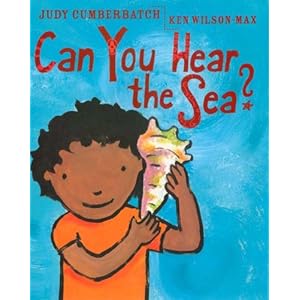
1. Can You Hear the Sea? by Judy Cumberbatch - this vibrant title, set in West Africa, catches readers right from the front cover (got you, didn't it?). The story is simple enough for the youngest listeners, but works on multiple levels to teach concepts and share relationships. I love the messages about trust and caring for one another.


2. All the Way to America by Dan Yaccarino - kids will recognize Yaccarino's whimsical style, and adults will appreciate his intergenerational theme of a family's immigrant heritage. Based on the author's family's journey to America from Italy, this story of perseverance and connections will get kids thinking about what pieces of their own family are being handed down for generations. A lovely title on all levels.


3. Hot, Hot Roti for Dada-ji by F. Zia - this was one of Sprout's favorites for a long time, for the fun illustrations and the playful text. This one's great because it really shows the relationship between Aneel and his grandfather, whom he idolizes. And the elements of tall tales that Zia weaves in make this a true joy to read aloud - over and over again!


4. Suki's Kimono by Chieri Uegaki - a classic title that speaks very much to identity and being confident in your own skin. Suki decides to wear her kimono to school because it reminds her of a special time with her grandma - even though she knows that other kids might make fun of her. All is well in the end, though not unrealistically so. A good choice for older kids just starting to find their identity.


5. Rainbow Stew by Cathryn Falwell - Falwell's books are always a hit in our house and Rainbow Stew is no exception. This one not only has a grandpa taking care of all three of his grandkids, it also emphasizes the appeal of growing and preparing your own healthy food. Great for late fall storytimes about harvest and togetherness.


6. Lottie Paris Lives Here by Angela Johnson - it's hard to say how much I love Lottie Paris. She's pretty much everything I adore about kidlit today - a dynamic personality, full of flair and life, and just a little bit of naughtiness (which makes you love her even more). Lottie's just right for kids who like all things color and sparkle, and will add a burst of liveliness to storytime for sure.


7. My Granny Went to Market by Stella Blackstone - a rhyming book! What fun! This rollicking read features a grandma who's getting around - around the world, that is. Kids will enjoy counting along with granny's purchases even as they are introduced to the concepts of global citizenship. Full of small details that make this entertaining even after the story is done!

There are so many more titles that we could have included, but I hope this list gives you just a taste of all the wonderful intergenerational titles that populate the shelves at your library or bookstore. What are your favorite grandparent stories? Please share in the comments!


Monday, July 14, 2014

Read Around the World Summer Series

If you haven't been following us on Facebook or Twitter (and why not?!), then you've been missing out. As part of the Multicultural Kid Bloggers group, we're happy to be sharing some terrific picks from the Read Around the World Summer Series. Today's it's our turn, so I've picked one of our favorite picture books set in Africa: Rain School by James Rumford. Read our review here, and hit up your library to find a copy of this one-of-a-kind picture book -- this is a great one to read before your kiddos start school!


Wednesday, December 4, 2013

30 Days of Picture Books - Don't Spill the Milk! by Stephen Davies

It's Day 26 of our 30 Days of Picture Books. Last night I wrote about giving books as gifts, which put me in mind of the books I received as a child myself. One of the best gifts I ever got was a boxed set of the Chronicles of Narnia, when I was about 5 years old. I was a precocious reader, but even still I didn't get around to reading The Lion, The Witch and The Wardrobe for a couple of years, when I was sick in bed with the flu. From the very beginning I was hooked, and I raced through the rest of the series shortly thereafter. I still have fond memories of finishing one book and knowing that the next was right there waiting for me - my guess is I probably put the first book down and picked the second up immediately!


Tonight's choice is a title that reminds me a lot of the kinds of picture books I loved as a kid. Stephen Davies' Don't Spill the Milk! is lively and full of action, with lots of little details embedded in every spread. Kids love books like this - at least every kid I've ever known certainly does, and Sprout is no exception. The first time we read this title he was picking out things I never noticed when reading it on my own. So don't think you're going to flip through this one super fast, because you'll want time to linger.

Davies' story takes place in West Africa, specifically Niger, which we find out from his author's note. (I wish he had specified this in the text itself, rather than using the generic "Africa", but that's a small enough quibble since we were able to look up the country name for Sprout.) Penda's father is far away in the grasslands tending the family's sheep, and she volunteers to take him a bowl of milk. You can tell right off that Penda's a sparky little firecracker. But she channels her energy by telling herself to walk slowly, slowly, slowly so she doesn't spill Daddy's milk. On she walks, past distractions like a herd of giraffes and a flock of masked dancers, and even takes a boat - but will she make it to Daddy without spilling the milk?

Davies could easily have left this as a fun tour through a West African country, but instead he uses it as a vehicle to explore the love between family members. I absolutely adore that touch, because it shows a strong African family united through caring for one another, a message I very much want to crystallize for my own son. The pictures by Christopher Corr are absolutely stellar, and work not only to give a specific sense of place but also to bring Davies' themes to life. There's a folk-art flair about them that perfectly suits the setting, and the sun-drenched colors will cheer up even the most dreary winter day.

If your library or bookstore doesn't yet have Don't Spill the Milk!, by all means ask for it. This is a terrific title that far deserves a wider audience - you can bet that, like Penda's milk, we're sharing it with the ones we love!

Don't Spill the Milk! by Stephen Davies, published by Andersen Press

Monday, November 25, 2013

30 Days of Picture Books - Old Mikamba Had a Farm by Rachel Isadora

Today's Day 18 of our 30 Days of Picture Books. Tonight I'm sharing a new book from one of the authors that first made me want to blog about multicultural kids' books. When we began our process to adopt a boy from Ethiopia, Rachel Isadora was one of the artists whose work I found especially inspiring and really wanted to add to our collection. I've blogged about a number of Isadora's titles thus far, and there are many more to come. One of our absolute favorites is her version of The Night Before Christmas, which has become a tradition in the Kinser household for the way it marries African sensibilities with the familiar Christmas poem.


Sprout was super excited to see tonight's pick by Isadora, Old Mikamba Had a Farm. The detail he seized on right away was the houses that Isadora has on the front cover, which echo the style of his Ethiopian family's home. We talked a bit before we read the book, because I wanted to explain the back story - Old Mikamba is, as you might expect, a riff on Old McDonald, but instead of domesticated animals, he's a keeper on a game farm in Africa. (Pet peeve: I really wish we could have a specific country identified, rather than the all-encompassing but so generic "Africa".)

So, rather than cows, sheep and chickens, Old Mikamba has zebras, baboons and elephants. Isadora keeps with the format of the song ("E-I-E-I-O" and all), so kids will have fun singing along and inserting the names of different animals along with their characteristic sounds. Sprout liked the baboon best, with his "ooh-ha-ha" noise -- it's tons of fun to get into this! I also love that we have some diversity with the animals here, including less familiar critters like springbok, dassies and warthogs. A nice author's note at the end offers some explanation of the stars of each verse.

And as you might expect with Isadora, the illustrations are fantastic. She blends drawings with collage, and I love the mixed media she uses for each piece. The elephants are our favorite, with their collaged newspaper skin - so adorable! And around each page are lovely borders with scenes from the East African countryside. The gorgeous orbs of orangey sunset are especially nice, and definitely add to the feel that we are close to the land with this one (a close second are the leaping springboks, which pay homage to Isadora's connection with ballet).

If you're looking to refresh your collection of classics at home or in the classroom. Old Mikamba Had a Farm is a terrific choice. It's familiar enough for kids to identify with, but broadens everyone's world nicely. And that, dear reader, is the sign of great kidlit!

Old Mikamba Had a Farm by Rachel Isadora, published by Penguin Young Readers

Tuesday, September 3, 2013

Nelson Mandela by Kadir Nelson {Picture Book of the Day}

I'm thrilled to be participating in the Picture Book of the Day project with a host of other awesome kidlit bloggers! This is a very cool meme that is great for building your library list -- each day a different blogger posts his/her picture book choice, which is shared via Facebook (you can also follow the picks on Pinterest). I've shared many of these in the past, and have found some terrific books for Sprout from the daily meme, so I'm especially excited to be part of the project this year!

For my first daily pick, I'm pulling out the big guns: Kadir Nelson's new picture book, Nelson Mandela.


It's hard to imagine how any reader could not just fall in love with Kadir Nelson's work after reading any of his books, but this one in particular seems to prove the benchmark of his talents. Naturally his breathtaking paintings are on full display here -- Sprout's favorite is the cover image, which honestly I could stare at myself for hours as well. But his narrative skills also come into the forefront again, as we read of the background and history of Mandela, from his early days as a barefoot boy playing at fighting, to his years imprisoned for the cause he could not abandon. Each image and its accompanying prose shows a facet of Mandela's life that will build in readers the admiration Kadir Nelson so clearly holds, for a man whose tireless fight at last culminated in a free South Africa.

Explaining to Sprout just what Mandela was fighting for was a little tricky; while he knows that people come in all different colors (and shapes, sizes, ages, abilities, etc.), it was hard for him to understand that some people are benefited by the hue of their skin while others suffer for it. Honestly I didn't force the issue too much, but neither do we sugarcoat these things with Sprout. It will be a feature of his life in this country, where he is bound to bear the weighty history of African Americans and their struggle for equality. So for him, the two spreads that most hit home were the first image of a "whites only" beach, followed by one later in the book where families of all colors enjoy the sand and surf. He lingered on the integrated image, and I can only guess at the message Sprout internalized from that.

My hope is that parents and teachers (and librarians too) will share Nelson Mandela with young readers not just as history lesson or a snippet about a great man. Though Mandela is without question the latter, I believe that the message of his life's work is larger than that - it's one that we need to carry forward into all our interactions of everyday life. Because open or hidden, racism is about fear, and only light will drive out that kind of darkness.

Slip this title into your book basket for bedtime, or for your kiddos to browse in the car. Let your middle schoolers read it, and share it aloud with your preschoolers as well. And read it yourself, for history and memory and celebration of one man, one extraordinary ordinary man, who saw a wrong in his society and never gave up the dream to change it.

Ages 4-8 (and up)
Source: Library
Sample: "Rolihlala played barefooted on the grassy hills of Qunu. He fought boys with sticks and shot birds with slingshots. The smartest Madiba child of thirteen, he was the only one chosen for school. His new teacher would not say his Xhosa name. She called him Nelson instead."
Highly recommended

Sunday, May 26, 2013

The Matatu by Eric Walters {The Children's Bookshelf}

Note: The Children's Bookshelf is going on vacation! We're taking the summer off with this linky, so we can all read even more terrific kidlit titles to share with you in the fall. Enjoy today's posts and remember you can always read any of our past posts for The Children's Bookshelf here.

Why read multicultural books to your kids? There are lots of reasons, many of which I've talked about here in the past. First and foremost, it opens up a child's mind to the notion that there are many people the world over who live in ways both different and the same. It helps connect them to their heritage, which is especially important for families who share multiple ethnicities. Multicultural literature develops tolerance and understanding, making kids mindful that we are all global citizens. And it's fun - young readers can travel around the world through litearture, all the while learning about traditions, customs and backgrounds from various countries.


Today's pick is a perfect example of a book that can accomplish all of the above, and that's got a good dose of humor besides. A brief note at the beginning explains that Eric Walters has been accepted as an elder of the Kamba people in Kenya; as such he is a cultural insider with the authority to relate one of the Kamba's stories in the form of his picture book The Matatu. What I love about this book is that Walters just tells the story - he doesn't exoticize the matatus, the buses that carry passengers and goods from village to village. And the traditional Kamba tale is tucked nicely into a story about young Kioko and his grandfather.

Kioko is excited to be celebrating his fifth birthday with a ride on a matatu! He rushes to get on board, then waits impatiently for his Babu, who seems to be taking forever. When the pair is finally settled in their seats, Kioko notices the dogs chasing the bus and asks his grandfather about them. Babu instructs Kioko to first look for sheep and goats, and see how they react when the matatu comes past. Then Babu tells Kioko the story of Dog, Goat, and Sheep, and how these animals took a ride on the matatu together. When it came time to pay, each animal had a different experience - and these encounters are why the various species run from or toward an approaching matatu. (No spoilers here - but if you've ever driven in Africa, you'll know the animal behaviors are spot on!).

An author's note explains the details of matatus and their role in Kenyan daily life, which adds even more authenticity to the tale. Eva Campbell did the illustrations and they are as colorful and lively as an African village. There's no shortage of excitement when a matatu rumbles through, and Campbell captures that spirit perfectly. Though the story of the dogs, goats and sheep forms the center of this story, the real heart of the book is Kioko's relationship with his Babu. It's terrific to see the the esteem with which the other villagers treat Babu, and this and his wonderful stories add to Kioko's appreciation of all his grandfather is for him.

The Matatu is a text-heavy title, which makes it a perfect choice for older preschoolers. Its sly humor is also best received by a slightly older audience (or really, their parents). This is a great addition to any unit about Africa. The genuine respect Walters feels for the Kamba people is evident throughout, and Campbell's illustrations bolster that feeling, which will translate to readers as well. Just don't be surprised if your kiddos want to jump on a matatu themselves!

The Matatu by Eric Walters, published by Orca Book Publishers
Ages 4-8
Source: Library
Sample: "Kioko raced toward the market. He passed huts, houses and stalls, not even glancing at the sweet mandazi for sale. / He ran past people, pushcarts and bicycles. Then he saw it - the matatu. A crowd of passengers waited to board. The roof was heavy with bags of maize, bundles of grass, a bed frame, a mattress and three chairs."
Recommended

Bonus: check out this clip of a matatu from Eric Walters' website

----------------------------------------------------------------------------

This post is part of The Children’s Bookshelf, a weekly linky party with the goal of connecting parents with great books for their kids. Do you have a book review, literacy or book-related post that you think will be helpful for parents? If so, please add your link below.

NOTE: By linking up you are giving permission for any of the co-hosts to pin and/or feature a your photo on a future The Children’s Bookshelf post. Kindly link up to an individual post, not your blog’s homepage. The hosts reserve the right to delete any links to homepages, commercial links, repeat links or otherwise inappropriate links. Thank you for your understanding.

You can also follow The Children’s Bookshelf on Pinterest or visit TCB’s co-hosts: Sprout’s Bookshelf, What Do We Do All Day?, No Twiddle Twaddle, Smiling Like Sunshine, My Little Bookcase, The Picture Book Review, MemeTales and Mouse Grows, Mouse Learns. You can find more details here.


Thursday, February 21, 2013

Mom's Bookshelf - The Book of Happiness: Africa by Joseph Peter

You know what's great about book people - once they hear about a particular subject you're interested in, every time they come across something related to it, they can't help but share it with you. I'm guilty of this myself (as many who have had books eagerly foisted upon them by me can attest). And I love love love when it happens to me in reverse. Because let's be honest, even I can't spot every cool book on my lonesome, no matter how hard I try.

Today's pick is a perfect case-in-point, as it's one that one of our catalogers found and alerted me to. Though I like to think I'm pretty savvy with what's coming out in the world of kidlit, this one is an adult title, so it completely passed under my radar. And I'm so glad that Kim pointed it out, because it is an absolute keeper, one anyone with any sort of connection to Africa needs on their bookshelf. Really.


The story behind Joseph Peter's The Book of Happiness: Africa is a pretty terrific one. In 2010 Peter, a photographer and former pro soccer player, traveled the continent of Africa, visiting 50 countries in 75 days as part of the FIFA World Cup Trophy Tour. While he was there, he ended up shooting an incredible amount of images. The bulk of these were portraits of the faces of Africa, people from all regions and walks of life. When the project was completed, Peter had a stunning collection of photos, a selection of which are compiled in this volume, a twin to one that Peter made and presented as a gift to Nelson Mandela.

And let me tell you, the photos in this book are stunning. Jaw-dropping, heart-stopping. For all those who refer to Africa as though it were one country, waiting to be rescued by wealthy foreigners -- this book is the rebuttal to that argument. Here is the gorgeous diversity that comes from a continent of extraordinary richness. Here are the faces of Africans, celebratory and joyful, mischievous and sweet, elated and proud. Here is the fabric of life in a world of contradictions and contrasts, bursting from the page to bring a smile to every reader's face.

Peter has given the world a truly incredible piece of art in this collection, something that kids and adults alike will enjoy. I love that he's included a short blurb about each photo in the back, including where it was taken and some thoughts about the photo. All the photos are collected in an incredible montage of Nelson Mandela's face, that closes the book in perfect harmony. We couldn't get enough of looking at this title as a family, and explaining to Sprout that all of these faces were Africans, just like him, as we pointed out the countries where they lived.

Next time someone refers to "African" traditions or "African" people, whip out this terrific book and help them see how truly complex is the makeup of this diverse continent. And help them too see the joy in Africa, the pure and uncomplicated beauty that is manifested by the faces seen here through Peter's lens. Because yes, there's poverty, and yes, there's war. But there's hope too, and honor, and sheer delight in the bounty of life.

And that, my friends, is real happiness.

The Book of Happiness: Africa by Joseph Peter, published by Spiegel & Grau
All ages
Source: Library

Friday, February 15, 2013

Teen Review - Endangered by Eliot Schrefer

Last month at ALA I ran into a former colleague from my bookselling days. It was great to catch up with her, and hear all about what her amazing children are up to. She's now working as a sales rep for Scholastic, so of course I asked what new books on their list I should be sure not to miss. And without missing a beat, Chris whipped a copy of Eliot Schrefer's Endangered off the display shelf behind her and proceeded to tell me it was the best thing she'd read in ages.

Well, that's high praise coming from a former bookstore owner and children's book expert. I wasn't about to waste time debating her recommendation, so I hightailed it to the library holds list. And I'm pleased to say that Chris was 100% right - this is a stunningly written book and perhaps the most evocative, compelling novel I have read in quite some time.

And that cover - in a word, breathtaking.


The plot of Endangered is really unique by current teen fiction trends, and I think that's a big selling point. Sure, we all love our fantasy, but what about a great adventure novel? Survival is what drives the story of Sophie Biyoya-Ciardulli, a narrator whose voice is completely unforgettable. Sophie is "home" in Congo, visiting her mother who runs a sanctuary for bonobos there. Sophie and her mother have a complex relationship, made even more fraught by the fact that when Sophie and her father moved back to Miami, her mother stayed behind with the bonobos. For Sophie, who spent a large chunk of her childhood in Congo, the trip is emotional to begin with - but then when she rescues a young bonobo from a trader, Sophie finds herself involved on a much deeper level.

And then war breaks out.

It is Congo, after all, and so not terribly unexpected that there should be political upheaval. But this is like nothing Sophie's ever dealt with - her mother is away, and Sophie's alone with the staff at the sanctuary when rebels come and take it over. Forced to flee with her young bonobo, Otto, Sophie first seeks refuge in the bonobo enclosure, a large parcel of land where the rehabilitated apes roam free. But it isn't long before even the enclosure isn't safe for Sophie and Otto, or the rest of the bonobos, and the fight to survive becomes a conflict of all new proportions.

It's not often that a book has me on the edge of my seat but Endangered absolutely did. There's no guarantee that Sophie will make it out alive, much less that her primate friends will, but as a reader I was pulling for all of them. The odds are more than insurmountable -- disease, dehydration, starvation, and exposure are all very real threats, equal to those faced at the hands of rebels with guns, not to mention the dangers of predators. Just when you think all is lost, Schrefer turns up the intensity a little more, and suddenly new elements of the story come into play. This is an author who's not pulling any punches, which makes the reading experience that much more intense.

Schrefer's made his way onto my list of must-read authors, and I can't wait to go back and explore his other titles as well. Give this to teens who crave adventure, but read it yourself as well. Trust me when I say that this stacks up against any adult title - it's sharply written, with compelling characters (human and bonobo), and enough thrills to keep you turning pages like a crazy person. And the emotion -- and relationships -- are as raw as the jungle itself.

Endangered by Eliot Schrefer, published by Scholastic
Ages 13+
Source: Library
First Words: "Concrete can rot. It turns green and black before crumbling away. Maybe only people from Congo know that."
Highly recommended

Friday, December 21, 2012

12 Days of Christmas Picture Books - Grace at Christmas by Mary Hoffman

It's Day 9 of our 12 Days of Christmas Picture Books series. Today's choice, like yesterday's, is part of a series. I've written before about the benefits of series books -- they help readers be drawn deeper into the lives of characters, they can be a powerful draw for reluctant readers who want to know more, and they satisfy young children's love for repetition (while providing parents another option rather than rereading the same book every night!). It can be especially hard to find series featuring characters of color, which is why I try to highlight good examples when they come up (see our Pinterest board for some we especially like).


Mary Hoffman's series begins with Amazing Grace, which has been recognized on a number of "best of" lists and has real staying power since it's still popular more than 20 years after its publication. Since then Hoffman has published a number of books in the series, including today's pick, Grace at Christmas. All are beautifully illustrated by husband-and-wife team Corneilus Van Wright & Ying-Hwa Hu, who capture Grace's humor and spirit in their snapshots of her world. I love that this is not only a multicultural series in terms of characters, but also in terms of contributors!

In this outing, our vivacious heroine is really looking forward to Christmas, and all the traditions that she has with her Ma and Nana. Unfortunately, though, Grace will have to share her holiday with Savannah, the granddaughter of her Nana's friend who isn't able to get home to Trinidad for Christmas. Grace is pretty put out by this, and she lets it be known -- but after reflecting on how much she misses her father, who is spending the holiday in Gambia with his new family, she decides maybe it's worth reaching out to Savannah after all. And in the process, Grace may just have the best Christmas ever (you'll have to read to see why).

Grace is an especially great character because she is *realistic*. In this volume, she's annoyed about sharing her Christmas, and Hoffman allows readers in on this, which makes Grace much more relatable. Instead of being some super-human who welcomes all strangers with an abundance of cheer, Grace learns that it's just as tough for Savannah, who feels like an outsider. And so the spirit of giving, which comes on Grace gradually, seems much more genuine to readers.

This title's a bit long, so best with older preschoolers and elementary ages. Kids who love drama and dress-up, like Grace does, will particularly enjoy this outing, and young ones who have family far away at the holidays will also find a lot to relate to. In Grace at Christmas, as with her other outings, Hoffman's Grace hits all the right notes.

Grace at Christmas by Mary Hoffman, published by Dial Books for Young Readers
Ages 4-8
Source: Library
Sample: "'We can't say "no room" at Christmastime, can we, Grace?' said Ma. / 'Christmas is a time for families,' said Nana. / Grace thought, But they aren't our family! I wish we had a stable for them. But she didn't say it."
Recommended

Thursday, December 13, 2012

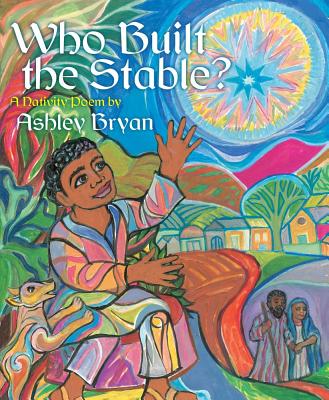
12 Days of Christmas Picture Books - Who Built the Stable? by Ashley Bryan

It's finally here! Our series on 12 Days of Christmas Picture Books resumes for 2012. We've been looking forward to reading holiday books all year, and we're especially excited about some of the finds we've got this time around. I hope you'll join us for each of our daily picks. And don't forget, you can leave us a comment here on the blog or connect via Facebook or Twitter to share your favorite Christmas titles with us.


And so, on to our first Christmas title! Today's pick is one of the most vibrant and visually stunning books you're liable to find on a holiday shelf. Who Built the Stable? by author/illustrator Ashley Bryan is a fresh and accessible look at the nativity story, with a multicultural slant. In Bryan's version, a young shepherd boy builds a stable to shelter his livestock. When Joseph and Mary aren't able to find room at the inn, the boy offers up his stable as a place for them to stay. And so it is that when the babe is born, the shepherd's own manger cradles the child on that first Christmas morning.

Bryan's bio indicates he first began thinking about the title question when he was visiting Africa, and that inspiration shines through in his gorgeous paintings. Every page bursts with life, and the more you look the more there is to see -- multicolor stars twinkling in a swirling sky, mud huts peeking out from a hilltop. The animals are more than background filler here, just as colorful as everything else in Bryan's landscape. And as with all his books, Bryan's text is stellar here too, a thought-provoking piece of poetry that even the youngest children will appreciate.

This vivid take on the nativity is one that begs to be read and re-read, a perfect frame for holiday conversations. Whether you're looking for a new title to share with your own kids or a gift idea for someone on your list, Who Built the Stable? is a memorable addition to the Christmas story canon.

Who Built the Stable? by Ashley Bryan, published by Simon & Schuster
All ages
Source: Library
Sample: "The little shepherd sheltered them. / For one night he saw a star, / And -- Lo! -- it grew in brightness, / Approaching from afar."

Friday, December 7, 2012

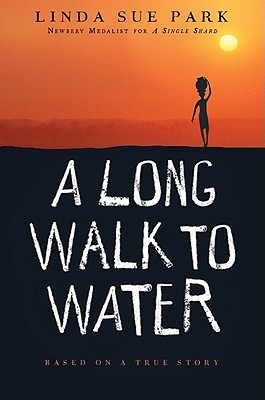
Chapter Book Review - A Long Walk to Water by Linda Sue Park

It's the holiday season, and at this time of year thoughts naturally turn to all we have to do. Gifts to make or buy (and wrap), rooms to clean, meals to prepare, cards to send -- it can get a little bit overwhelming and crazy. I myself am very far behind this year. Though we have our Christmas tree up, I've yet to even order cards and still have quite a bit to do on holiday gifts. And like most Americans, these are things that seem important to me.

Until I stop to consider the daily reality of most people around the globe. To them, priorities like trimming the Christmas tree or baking cookies aren't even on the radar. Instead, they're laboring every day for food, for shelter, for clean water and for safety for their children. And that thought humbles me, as it does every time I open my cupboards and find them full of food, or look through my closet and consider all I have to wear. It humbles me, and it makes me mindful of all I have that others do not.


That thought was ever-present in my mind as I read Linda Sue Park's short but powerful novel A Long Walk to Water. Park based her book on the real-life experiences of Sudanese-born Salva Dut. The novel opens in 1985, when Salva is eleven, on a regular school day. Suddenly rebel forces open fire and the students are forced to flee into the bush, leaving their families behind. In the ensuing scuffle, Salva ends up being left behind by the group of survivors. Alone, he struggles to find safety, looking for news of his family and village as he walks to who-knows-where. Along the way he encounters many who are kind and helpful, some who mean him harm, and much tragedy. Even when Salva finds shelter in a refugee camp, the trouble isn't over, and it is many, many years before Salva will know what became of his loved ones on that terrible day.

Park intersperses Salva's story with that of modern-day Nya. Nya's tale is much shorter, but no less moving. We learn of the girl that much of her life revolves around water. The process of getting clean water for her family takes up an enormous amount of Nya's time, as she must travel many miles on foot each day, carrying a large plastic container on her head. Though at certain times Nya's family lives near a lake, the fighting between neighboring tribes means that it's only really possible to stay there during the dry season, when the warring factions are preoccupied with survival. The rest of the year, Nya must walk to water, and doing so is consuming her life and that of her friends as well.

The stories of Salva and Nya are different but parallel, and when Park draws the two disparate threads together it is with a satisfying sense of rightness. Though sparely written, A Long Walk to Water is emotionally charged, and readers will feel a connection to both main characters from the first page on. Park's voice throughout this novel is respectful but never patronizing. While we empathize with the situation, Park never makes either character an object of pity but instead helps readers to recognize the extraordinary dignity and strength that both Nya and Salva display. You cannot help but be moved by this story -- as I envison Nya walking miles each day to gather water that is very likely contaminated, my heart simply breaks.

In reading Salva's story, kids will be inspired to action, to find out how they can help provide clean water for those in Sudan and so many other nations around the world. Salva Dut's organization Water for South Sudan is doing amazing work providing safe drinking water and changing lives. This holiday season, as you make your gift list, consider adding the gift of clean water for someone you've never met -- I guarantee it will be a gift that is never forgotten.

A Long Walk to Water by Linda Sue Park, published by Clarion Books
Ages 8-12
Source: Library
Sample: "The water that filled the hole was filthy, more mud than liquid. It seeped in so slowly that it took a long time to collect even a few gourdsful. Nya would crouch by the hole, waiting. / Waiting for water. Here, for hours at a time. And every day for five long months, until the rains came and she and her family could return home."
Recommended

Bonus: Linda Sue Park and Salva Dut discuss the book and the mission of Water for South Sudan

Saturday, November 3, 2012

30 Days of Picture Books - The Lion and the Mouse by Jerry Pinkney

It's Day 3 of Picture Book Month, and what's on my mind today is story. Sure, picture books are all about illustrations, but the story's pretty important too, right? Word choice had better be spot on in a picture book, nothing out of place because you're communicating a narrative all in the scantest of lines. I don't know about you, but if there are more than a few paragraphs on each page, I'm sure to have a restless little one on my hands, and then we're off to find another choice. So the first credo of picture book writers would seem to be choose your words carefully.

But what if you decide not to choose your words at all? I'm speaking, of course, about wordless picture books, something that might not immediately seem strong in narrative, but which have a hidden strength that goes beyond the written word. You see what's so great about wordless books is that you get to tell the story any way you want to. Kids love this - it's what they do, after all, as pre-readers when they sit down to "read" a book to their stuffies. And with the wordless picture book, adults get to experience that phenomenon too. The book's creator gives us the framework within which we can emphasize whatever aspects and nuance seem most significant to us.


In our home library, one wordless book in particular stands out, and for good reason - it's easily one of the best examples of the genre out there. I'm speaking of Jerry Pinkney's The Lion & the Mouse, a Caldecott Award Winner and all-around gorgeous piece of graphic storytelling.

The plot is of course based on the fable by Aesop, wherein a tiny mouse is captured by a lion who then, for whatever reason, lets the mouse go. And soon the lion finds himself in trouble, as he is ensnared by hunters - but the little mouse and his friends come to the rescue, chewing through the net that holds the lion and setting the mighty king of the jungle free. As in all fables, we have a lesson to take away: always perform an act of kindness when you have the opportunity, for you never know when you will need kindness in return.

In Pinkney's skilled control, the narrative becomes so much more. Honestly, if you're looking for visual splendor you couldn't do better. Even the end pages are a feast for the eyes, as we're taken immediately into the landscape of Eastern Africa, where Pinkney's version is set. Young readers will love poring over the detail of each page, noticing the curls in the lion's mane or the spiderweb clinging to a strand of grass. And they'll revel in the chance to tell you a story, if you let them - one time through is all most kids are likely to need before they want to relate the tale in their own words, a recounting that's never the same twice.

Linger over the experience of The Lion & the Mouse together, for it really is the kind of book you want to visit again and again.

The Lion & the Mouse by Jerry Pinkney, published by Little, Brown

Tuesday, October 23, 2012

"The Danger of a Single Story"


"The consequence of the single story is this: it robs people of dignity." -- Chimamanda Ngozi Adichie

Are our children hearing a single story? Or a multiplicity of voices that tell of many stories, from many places, about many experiences?

Saturday, September 29, 2012

Cinderella Around the World - Mufaro's Beautiful Daughters by John Steptoe

I'm thrilled to be participating in the "Cinderella Around the World" project dreamed up by Becky of Kid World Citizen. A ton of very talented bloggers, and yours truly, are posting their reviews of Cinderella tales from many different cultures. Once all the posts are up, I'll link to a complete list of all the reviews. Until then, here's my take on one such tale!

If there's one thing that unites us as people, all around the globe, it's story. Stories tell us not only where we've been, but where we're going and what we hold dear. When you study the storytelling traditions of a particular culture, you learn something about the unique perspective of its people, not to mention its history. For centuries stories were passed down in the oral tradition, and as that happened the tales themselves deepened and changed, becoming particular creations of the teller and inspiring others to put their individual spin on the tale. As cultural values changed, so stories changed with them, blossoming into what we today consider folklore.

Or, as the author Rafe Martin put it:
Folklore maps the territory, shows us the roads before us, and sets us free to walk the roads we choose-after allowing us to experience each road for ourselves. For, in stories, folk stories, all the characters are so universal as to be not individual characters as in fiction, but more generally recognizable aspects of our own psyches; characters common to all.
  
And with only a quick study of folklore, it becomes readily apparent how universal those characters and themes truly are. From fables to myths, from tall tales to epics, the same themes continue to emerge, across cultures and countries. Sure, the setting may be different from one place to the next, and the values may change, but it's remarkable how much of the essence of the story stays the same.


Take Cinderella, for instance. Most of us grew up with the cotton-candy Disney version, all taffeta and glass slippers. [Disney based their take on the Charles Perrault version, finding it a lot more palatable than the Grimm brothers tale, in which the stepsisters maim themselves in order to fit into the slipper (shudder).] And the moral of the Disney version, naturally, is that Cinderella is rewarded for her goodness by marriage and "happily ever after". Fine, of course, but hardly the end of the story.
 
What's interesting is that Cinderella stories are not solely a Western European construct, but rather pop up all around the globe, from China to Ireland, Indonesia to Appalachia. Name a culture and you can probably find a Cinderella version for it. And why is this theme so popular? Most likely because we all want to see good rewarded and evil punished. We all want to think that the honest, hardworking person will eventually get her due, and those who made her life miserable will get theirs in the end, too. It may seem simplistic in this modern age, but look at the way folktales are pervading our culture and you can see that there's still plenty of appeal in this familiar theme.


So, on to the title at hand: Mufaro's Beautiful Daughters, a gorgeously wrought Cinderella story by John Steptoe. This version is based on a Cinderella story from Zimbabwe and Steptoe populated his illustrations with scenes representative of the country. The pictures are lush and detailed, capturing perfectly the African nature of this story; ball gowns and pumpkin coaches are replaced with fine linen and festive drummers. In the book, the two sisters Manyara and Nyasha are as different as can be. Though both girls are beautiful, Manyara is concerned with power and position, while Nyasha is kind to all. When the Great King announces that he is seeking a wife, both girls prepare to travel to the city. On the way each encounters a number of individuals, and their responses couldn't be more different; while virtuous Nyasha shares her food with a beggar and gives gifts to an old woman, haughty Manyara rushes on. Once each girl reaches the city, they are surprised to find that the King does not appear in his human form - to Manyara, he is a vicious monster, while Nyasha finds only a small garden snake that she has already befriended, and which soon turns into the King himself.
 
Of course, the moral here is consistent with that of all Cinderella tales and justice is served: Nyasha, the good sister, triumphs, while Manyara is forced to become a servant in Nyasha's household. But the story stays true to its African roots, keeping the focus on community and the necessity of helping others. Because Manyara is selfish, she does not get the spotlight; instead her sister, who gives freely to others, is rewarded. Rather than the emphasis being on material comforts, Steptoe suggests that a life of worth is one that is lived in service to others. Food for thought, for those of us who grew up with castles and princes and glass slippers, after all.
 
Sprout's still a little young for Mufaro, though he did enjoy flipping through the pages and browsing the arresting pictures that complement Steptoe's words. I'm looking forward to exploring more folklore with him, including other Cinderella tales, in the years to come - there's so much to learn from these stories, lessons that truly span the globe.
 
Mufaro's Beautiful Daughters by John Steptoe, published by HarperCollins
Ages 5-9
Source: Library
Sample: "Mufaro knew nothing of how Manyara treated Nyasha. Nyasha was too considerate of her father's feelings to complain, and Manyara was always careful to behave herself when Mufaro was around."
Recommended
 

Monday, September 24, 2012

Library Find - Can You Hear the Sea?

The other day, I was headed back to my work area when something on a cart caught my eye. I should mention, in case you don't already know it, that I am privileged to work at the administrative center for a regional library system. The building I work in houses not only all the staff who support our system, but also shelves containing older titles and materials that are in transit to one of our library branches. Books are coming in and going out literally all day long. It is a bibliophile's dream and nightmare all at the same time. Small wonder my library card gets such a workout.

Anyway, right off I recognized the book in question as being illustrated by Ken Wilson-Max. Eons ago, before Sprout came into our family, our children's librarian recommended some titles she thought we might like (and she was spot on, by the way). Among them were Karen Baicker's I Can Do It Too! and You Can Do It Too!, both illustrated by Wilson-Max. Sprout loved both of these books from the first time we read them and they have been frequent revisits since. This new title, Can You Hear the Sea?, written by Judy Cumberbatch, appealed to me right off (don't let anyone tell you we don't judge books by the cover, we all do it). I was pretty sure Sprout would like it, and -- no surprise here -- he firmly declared it "really just good, Mama!"


The story is set in an unnamed country in West Africa but the author's bio notes that she grew up in Ghana so it's not too much of a leap to think it was set there. The narrative explores the relationship between Sarah and her beloved grandfather. On a Saturday before he leaves, Grandpa gives Sarah a beautiful seashell; he tells her to hold it to her ear and listen closely, for she will hear the sea. Though Sarah knows that Grandpa would never lie to her, she can't hear the sound, no matter how hard she tries. Instead, each day of the week, Sarah only hears the sounds of the everyday world around her - the drums in church on Sunday, the monkeys in the trees on Wednesday, the honking taxis on Friday. But then Grandpa returns and shows Sarah just how to listen. And suddenly there it is, the sound of the waves on the shore and the roaring, rushing power of the ocean.

What I love about this simple story is all the layers it incorporates. There are the building blocks of learning, like the progression of the week which teaches about sequences and the passing of time. There are the vivid colors and multilayered illustrations, which stimulate young readers' senses. And then there is the emotional component, in which Sarah knows she should trust her grandfather but then begins to doubt his word. In the end, Sarah's trust is restored as she learns to listen, just as her Grandpa has instructed her. This reaffirms the bond between the two, and provides a gently reassuring ending to this sweet story.

Though I wish there were a few more cultural details - a further development of the setting and the use of culturally correct names or language terms - this is a solidly written and gorgeously illustrated story that will engage any child. Use with other West African stories like Jane Kurtz's In the Small, Small Night or Penda Diakite's I Lost My Tooth in Africa to build a unit about this diverse region of Africa.

Can You Hear the Sea? by Judy Cumberbatch, published by Bloomsbury
Ages 2-6
Source: Library
Sample: "On Monday, Sarah listened to her shell by the river as she and Grandma did the washing. But what she heard was. . . water splashing, Grandma beating out the sheets, and the clothes flip-flapping in the wind."
Recommended

Friday, August 10, 2012

Picture Book Review - Rain School by James Rumford

One of the things you learn very quickly when you're in the process of an international adoption is that much we take for granted in the United States runs a bit differently in other countries. Electricity, for instance, isn't always a guarantee for many reasons, and so communication via email or even telephone can be quite difficult. That's especially true during certain periods of the year. In Ethiopia, during the height of the rainy season (roughly August through late September/early October), the courts actually close down. It's just too hard to do business, to get around to where people need to be and to be assured that the lights will be on when they do get to work. For Americans, this can be incredibly frustrating; for Ethiopians, it's an inconvenience that is just part of daily life. Not good, not bad, just a feature of what you have to do.


And that's pretty much the premise of Rain School by James Rumford, the notion of working around the seasons in order to get things done. The book takes place in Chad, where Rumford and his wife were stationed while in the Peace Corps. The storyline was inspired by Rumford's encounter of the ruins of a primary school in one village, a school made from mud that was destroyed during the rainy season. The experience fixed itself in Rumford's mind, and years later he used it as inspiration for a bold and evocative picture book.

So too goes the story of Rain School, where incoming students learn that the first lesson is one of construction, as they must assemble their own school building from the ground up. Working together, the younger students learn how to make mud bricks, drying them in the sun until they are ready to be used in the construction. Built around a simple wooden frame, the school also features mud desks, wood stools, and a simple thatched roof. Once the school is assembled, the students gather inside to begin. They find that the learning process is accomplished in much the same way, by first acquiring the building blocks to literacy (learning to recognize and write letters), and then gradually adding to that structure through the other lessons the teacher shares.

At the end "(t)he students' minds are fat with knowledge", and the teacher is bursting with pride. Not much longer, the rains come, and the school the students worked so hard on is reduced to nothing. But the school has served its purpose for that year, as the lessons are carried forward by the students into the next year of learning - and building - the Rain School.

This is a sensitive, deftly written title, one that celebrates the ingenuity of individuals to accomplish their goals. Rumford clearly has great admiration for the Chadian people, which comes through in this story of perserverance. Let's be honest, many of us would give up, wouldn't we? But the ability of the citizens to recognize the value of education is clear, and even the youngest student is willing to work hard to build the school because the payoff is great. I love the students' enthusiasm, particularly Thomas, a new student at the beginning of the book who by the end is a "big brother", anxious to teach others what he learned the year before. And I love that this is a story where no one swoops in to save the day, but where the residents of the village take on all the work themselves.

Rain School is an excellent look at what learning is like in other countries, but at its heart, it's about community and the strength of everyone pulling together as a group. Pair with books like The Weber Street Wonder Work Crew by Maxwell Newhouse or Rent Party Jazz by William Miller for other looks at community and the power of togetherness.

Rain School by James Rumford, published by Houghton Mifflin
Ages 3-8
Source: Library
Sample: "Thomas arrives at the schoolyard, but there are no classrooms. There are no desks / It doesn't matter. There is a teacher. 'We will build our school,' she says. 'This is the first lesson.'"
Recommended

Bonus: fascinating interview with James Rumford from Paper Tigers

Monday, February 27, 2012

Library Find - Beautiful Bananas by Elizabeth Laird

Story is so critical to us as human beings. Literally every culture has storytelling as a fundamental component of socialization and community. In many cultures oral history is passed on from generation to generation through stories, some of which seem mystical and fantastical to outsiders but which, upon further examination, speak volumes about the values that are central to that culture's way of life.

I love folk tales for this reason - you can really get a sense of what makes a particular population tick when you examine the elements that occur over and over again in their stories (it begs the question, doesn't it, what outsiders would think of a certain spate of vampire lit -- most especially sparkly ones!). In East Africa, like other regions, stories are related not only to connect with the past but to instill a sense of pride, of connection with the land and the people who came before. Animals are often central figures in these tales, because animals represent character traits and nature and the gifts the earth gives to us. Which makes them an ideal type of tale to share with young children, who still are in a sense of awe around animals of every sort.


Sprout's been going through a particular fascination lately with elephants. I wish I could say this was due to some great developmental teaching or experience, but really it's probably because there's a Thomas episode he likes where one of the trains encounters a tunnel that's blocked by an elephant (don't ask). So when he pulled the book Beautiful Bananas by Elizabeth Laird off the shelf at the library recently, he immediately screamed "Elephant, Mama, elephant!". (Thank goodness our librarians are indulgent about excitable child noise!)

Well, we had to stop and read the book right away, because not only does the cover feature the aforementioned elephant, but also bananas, a frog, and a little girl with brown skin. Perfection, no? And the perfection carries through the story, which is a circular tale that comes from East Africa. Our heroine, Beatrice, is headed off to visit her granddad with a bunch of bananas to give as a gift. Right off the bat she runs into a giraffe, whose "tufty tail" sweeps the bananas off Beatrice's head and into the river nearby. Beatrice is upset, but the giraffe offers her some flowers for Granddad instead -- which is a great solution, until a bunch of bees come along and the flowers get crushed (here Sprout always whispers "Bees!" and shivers with the delicious dangerousness of these stingy critters). But the bees make it right by giving Beatrice some honey, which is taken by monkeys.

And on and on it goes, each page featuring an African animal or insect that is more beguiling than the last. Really, those monkeys? You can see why Beatrice isn't too upset, because they're so darn cute. Illustrator Liz Pichon brings Laird's funny and fantastic story to life in just the right way. Beatrice is vivacious and bubbly, whether she's being frightened by a lion or sneezed on by an elephant. And the colorful spreads provide plenty of fun details, especially the last one that features each of the animals Beatrice encounters.

This is a simply delightful tale and a great way to introduce young children to folklore. Plus, for us, it was fun to point out to Sprout that he once lived in a home much like Beatrice's and may just have been told a similar story by his Ethiopian relatives. Love it when a great book helps make important connections!

Beautiful Bananas by Elizabeth Laird, published by Peachtree Publishers
Ages 2-6
Source: Library
Sample: "Some naughty monkeys see the honeycomb. 'We like honey!' they cry. They snatch it away from Beatrice. All the honey drips onto the ground."
Recommended

Bonus: more about author Elizabeth Laird

Thursday, December 29, 2011

Picture Book Review -- Lala Salama by Patricia MacLachlan

One of the things I was most looking forward to, in the days and weeks and months and (yes, even) years that we prepared to become parents was the prospect of reading to our Sprout. Cuddling up with my kiddo in a cozy chair, with a big stack of picture books -- pretty much my idea of heaven.

And I'm pleased to say that, more than 18 months into the process of parenting this little bug, the experience continues to delight me. It is without question our favorite time of day, and it's time we spend as a family, since Daddy and our puppy dog join us too. Most of our reading is done while Sprout's in the bathtub, which works for us, but we always save at least one book for when he's tucked up in bed. Usually I try to steer him toward more "active" titles at first, and then pull out a gentle, calmer tale for that last title of the night.


In that vein, Patricia MacLachlan's Lala Salama: A Tanzanian Lullaby could not be more perfect. Gentle and soothing, this would be a fantastic choice to read with a drowsy baby or toddler, or even an older child who may be reading parts of it to you. The book follows a Tanzanian family through their day, as mother and child spend the day together, working in the fields, preparing meals, enjoying the cool breezes from Lake Tanganyika. Elizabeth Zunon brings MacLachlan's simple text to life, capturing the rolling rhythm of the day in the serenity of the mother's countenance and the bright eyes of her baby. At the end of the day, Mama and baby watch  Baba's boat out on the lake, and Mama rocks her child to sleep, safe in the knowledge that he is loved and well cared for.

I'm always on the lookout for quality titles about East Africa to share with Sprout, and the sensitive portrayals in Lala Salama fill the bill. Plus, it's a simply gorgeous title for us to marvel over and read aloud, in that hushed cocoon of evening when stories bring us all together. Add this to your family bedtime routine -- after a busy day, it's just the thing.

Lala Salama by Patricia MacLachlan, published by Candlewick Press
All ages
Personal collection (full disclosure: I won this from a contest hosted by Cynthia Leitich Smith on her blog Cynsations -- if you don't read this a-ma-zing blog, you should!)
Recommended